
46:41 Webinar
Unlock AI Capabilities Best Practices for Risk-Free Oracle 26ai Upgrades
This session explores how to remove this infrastructure friction from Oracle 19c to 26ai upgrades by leveraging non-disruptive storage operations, snapshot-based rollback, and consistent performance at scale.
This webinar first aired on April 16, 2026
The first 5 minute(s) of our recorded Webinars are open; however, if you are enjoying them, we’ll ask for a little information to finish watching.
Click to View Transcript
Hi, and welcome to today's tech talk. AI is pushing every part of the data stack to evolve faster than ever. And for many organizations, that puts Oracle environments right at the center of change. But here's the challenge, upgrades, especially to something like Oracle AI 26ai, aren't just technical events, they're moments of real risk.
Downtime, performance, uncertainty, and operational disruption can quickly outweigh the benefits if not done right. So today's tech talk with Ron, we're gonna focus on how to take a different approach, how to modernize and unlock AI capabilities without introducing that risk. Specifically, Ron's gonna walk you through best practices that let you upgrade with
confidence and maintain continuity, and actually come out ahead in performance, efficiency, and AI readiness for workloads. So let's take a look. Let me introduce you to our Ron Eakins, one of the best speakers I've had the pleasure to know. Ron, take it away.
Thank you, Melody. Thank you for those kind words. So yeah, so Ron Eakins, Director of Field Solution Architecture at Everpure. You can see my handle there. I've been at Pure a long time, Everpure a long time, ron@puresstorage.com, and, X and Blue Sky account there if you wanna get ahold of me.
I have an Oracle-themed blog at roneakins.com. And, lots of the code that I present at conferences, I share at my GitHub repository. And also you'll see there, I'm an Oracle ACE director. So today's agenda, I'll introduce, Oracle twenty-six AI, or, talk about how you can plan and what steps you should be taking in that assessment before you
even start the work, and give you some ideas about some of the tooling that you can use to get there. And then we'll, we'll show how Everpure can help you do that. Firstly, so Oracle and Everpure, we're a technology partner, we're an Oracle partner. We're proud to be a partner with Oracle, we've been a partner now for, for ten years.
So we, we work with Oracle closely to test integrations of operating systems and of our clustering technology. So that's who we are, and, this is our platform. So the Everpure platform supports all databases. I'm gonna be talking about Oracle, but many of the topics I'm covering, from a snapshot point
of view are equally true for SQL Server, MySQL, MariaDB, Mongo, Postgres. Whether you're deploying on-premises, in the cloud, or on the edge, we have a solution for you. Okay, let's crack on. So start by saying, what is the Oracle AI Database? And is it enterprise-ready? So Oracle Database 26ai.
You can see the AI is in there twice, so that's how critical it is to the database and the, the version. So Oracle AI Database 26ai is the latest long-term support release. It has over three hundred new features, but the, the marquee feature is AI, and that's why Oracle focused on AI and put it at the front of the database name as well as
Some of the features which, are drawing big attention around AI, but the number one is vector search, similarity search. And this changes the way we're using our database. It changes the IO patterns as the way we store our data, whether we store them inside the database or externally.
And Oracle has all bases covered here. So let's have a look at the release plan. So here you can see the, the current release schedule. So there's a Moss note down the bottom if you want to track this one. It's always a good one to, have in your, in your browser history, so you can go back
to it and have it bookmarked. But there we are in, middle of twenty twenty-six, and you can see nineteen C has a long way to go still. So that is a long-term s- support release, which is overlapping with twenty-six AI. So the decision to move to nine- from C to twenty-six AI isn't just we are
of support, we need to have the latest and greatest. It has to be driven by business reqs. Some of the features that are going into twenty-six AI will never be backported into nineteen C. Some are, and it's on a case-by-case basis. But today I'm gonna be focusing on how you can move from nineteen C to twenty-six AI.
So let's talk about general availability. So it came out generally available on-premises at the beginning of the year, on the twenty-seventh of July. And it's now available on-premises in the Google Cloud, in OCI, in AWS, Microsoft Azure, and GCP. So, it's got lots of places where you can run it.
From an on-premises point of view, it's X eighty-six sixty-four only. And that's, that's the big change that came out on the twenty-seventh of July. So it's replacing twenty-three AI, and this has led to some confusion 'cause twenty-three AI has been out for, for a couple of years now. So twenty-six AI, if you look at the database version, in the banner it says
dot twenty-six, and that's the naming standard Oracle adopted for this release. So it's a really, it's a, it's a version of twenty-three AI, which means it's hardened, it's battle ready, it's ready to go. Developers have had a chance to ex-To play with 26AI, as 23AI3, and that's been available to be downloaded, and developers have been using that for a couple of years.
So there is lots of people already deploying 26AI, because it's an it's name it's a new form, actually a release version, it's, it's tested. It's widely tested. It's been tested a- on Exadata for several years, and in the cloud. So it's a very mature release.
So it's not a .1 release, it is actually a .10 release. So upgrade plan, so you can go directly from 19c to 26AI. You can go from a 21 database to a, a 26AI. So 21c was an innovation release, so a lot of the features in 21c, were made available. They weren't back-ported to 19c, so it was really a version that you should be getting
off as quick as you can. So, 21c has got hasn't got long to go. So if you're on 21c, you should definitely be looking at 26AI, 'cause you took that for the innovations. If you was on 23AI, it's just the October patch set. So as I say, 23.6 is really 23AI.
When we look at the release, we can actually see the versions. There is a really good support note down the bottom, and you can see the link there, and it talks about all the different upgrades. But from 19c or 21c, you can go directly there. Slightly a bit more complex if you're on old, 12c, release two,
and a little bit harder if you're on release one or 11g. But they're both out of support, so I wouldn't expect any customers to be using those now. So when you start planning for the database, what do you need to do? Well, we wanna start off with an assessment. So before you do this, you know, understand what your environment looks today.
So the number of database versions, configurations are you using, traditional database, plugable database, CDBs, PDBs. And what is the business reason for doing this? It could be that you want to take the new releases, and you want to, experiment with them and start development activities, but really it should be tied
to a business requirement. You know, are you looking at AI features? Are you looking at the vector search, or is there something else in this that's gonna drive the business case? Because it does take testing, it does take, its infrastructure changes, and it will take a
business effort to do testing, so there has to be a business need for the upgrade. So determine the business case, and then start planning for the, the project. Identify if any additional infrastructure requirements, compute, network, storage. The database upgrade will require more, environments, and this is gonna have an impact on your infrastructure. So the preparation steps I would re- recommend,
start with developing a project plan, have it resourced, so know the people that you need on the plan, including business users to do regression testing, and a communications plan. You know, who are you gonna tell when it's happening? Agree with the line of business when the database is gonna be upgraded and the application's gonna be upgraded.
Provision additional environments. So if you're talking, you If you're looking at 19c and you're going to 21, 6AI, you're gonna have some parallel environments. You're gonna still need to support your 19c projects and applications, so you will need the development, test, UAT, QA support environments for your 19c environment, as well
as additional environments for your 26AI upgrade program. When we talk about upgrades, typically we're talking 12-plus additional environments, and these could include development, test, QA, pre-UAT, UAT, integration, performance, educational environments. So many, many environments.
And some of the cycles, test development will have multiple days in that phase. So, you know, plan for that, understand the infrastructure requirements and the, the need for additional environments. And then the cut-over methodology. Do you have to, do this in place? Do you have to do an upgrade? Do you have to How Are
you allowed any downtime? Are you gonna transition the database on the existing infrastructure or are you gonna migrate to new infrastructure? So, it's an opportunity to refresh your infrastructure, get new database servers, new storage.
So understand the cut-over methodology, where you're doing it. Are you doing data guard? Are you gonna do it on the current version? How Are you allowed any downtime? So all of that should be in your plan, and you should identify how long it's
agree that for the business up front so you know what you're planning towards. Before you start the actual upgrade, really we should have some, some baseline. So the business would know how the application works, but we really wanna some performance baselines so we can see whether there's any regressions, whether the SQL statements are behaving the same way, whether the cost optimizer is behaving
slightly differently. So capture some ba- baseline performance before you do an upgrade. And if you have the same platform, it's good it's a really good way of actually capturing it on the 19c environment and then capturing it on the 26AI database version. So once you have your baseline, we need to look at provisioning new environments, and
this is one where Pure Fusion can help. So we want a brand-new environment, how can we get there? So we can have Pure Fusion with presets to give us consistent deployment. So if we're talking about 12 new environments, we can use Fusion to help us get. So we've defined the presets, we create a template, and then Fusion can help us deploy
this across our Pure Fusion fleet. So we have our workloads, and these will all get recommendations, and we'll place those on the right infrastructure. So if we're doing this in Oracle, we can make some rules. So the number of default volumes you want to have.
Maybe the size of the, the volumes. So here I'm saying four volumes, each are five hundred GB. And I can set some minimums and maximums.And then additional parameters, maybe lines of business, maybe the development environment, test environment, so you can set up an environment name. So we can put metadata on our environments to
describe what they are. This one here example, does this database include TDE? Once we have the, preset, the template in place, we can then create a workload. Very simple. So here I've specified the volume count, I've let the defaults go through, and I've got those prompts there, business unit, I've input
development, and TDE, I say yes. If we wanna share the configuration, we can download this as a JSON file, we can upload this into configuration control, we can edit, share and upload into our environment. So it's a great way of capturing how we initially built those environments. So this is the flow. So once we have our workload, of which we'll
show the quick video, we'll have the user initiate the, the workload called ORDB one with all the configuration set, so quality of service, tags, the volumes replication, snapshot, schedules, all defined within the preset, which will then have a task which creates the workload called ORDB one. So let's, see this in progress.
So here I am. I've speeded this up for the video. So I go to my preset, I create this one called Oracle Standard. I click on this, I can edit it, I can see the values that we just talked about. There's my database volumes and my log volumes and some, parameters I've got a, snapshot schedule, and I've got a replication schedule.
So I'll confirm that that's all okay. There we have the workload type, it's Oracle, good. So I can now take this and go onto workloads and say, "Create a workload from that template." So I select the Oracle Standard one here, and it's version six. I hit continue.
It makes the recommendations from the defaults. I can give this a name, so I said ORDB one. Populate that. Accept the defaults, give it a b- business unit, as per the screenshot development, and then I have a, true flag there for TDE, and I agree that I'm happy for it to be deployed on one of my arrays in the STaaS lab.
And that's it. That's how simple it is to deploy a And you can see the workload's been created. I can go onto that workload now, and I can drill into that, and I can see there's my four data volumes, my two log volumes, and they're the sizes from the template. It- they're protected through a protection group, and then there's a
schedule assigned to those. And there's the volume snapshots taking place. So that's, that's the, that's it. That's how easy it is to take a, a workload. And if we can create it, we want to be able to destroy it.
We're taking to vest When we're doing our program, we will create new environments periodically, so we want to be able to clean up afterwards. And if we destroy this, it doesn't just destroy the workload, it actually goes away and deletes all of the other components inside that. So I can say, "Immediately do this," take out Otherwise it's gonna be
there for twenty-four hours. So eradicate it, and then that would delete the volumes to tidy it all up. So everything that we do at, Everpure is REST-based, so we have that command line interface or the web UI, which I just showed there. So we can use REST to automate this.
So if we, if you use REST, through a high programming language, you can call the REST APIs to drive the workload creation. So we can have it fully automated. We also have this a bit exposed through Ansible, so I, I have lots of my automations using Ansible, and I'll use Ansible for my database refresh, which I'll show you shortly.
But we can also use Ansible here to create the workloads and to, and to that's really powerful. So one of the features I wanna introduce is Oracle Upgrade. So the Oracle Upgrade is a utility Oracle provide to make upgrades easier. So there's different ways we can do the upgrade.
We could do it through, Data Guard, we could do this through RMAN restores, and we could- we have different ways of, addressing the, steps from an upgrade point of view. But Oracle Auto Upgrade gives us one solution to manage the end-to-end process. So it updates the, pre and post-steps, it does check-in, it can analyze the environments, it can download your patches for you, so it makes it really easy to do upgrades.
So it's the Oracle recommended approach for it, and it's supported on all platforms. So let me, show you what you can do. So first of all, you wanna get the Auto Upgrade. So here I'm using Wget, and there it's, pulling it from OTN. So once we've downloaded it, check the version, you're on the latest version,
Java installed, and you're good to go. First thing you wanna do is create a sam- a sample file, and then that's You can see what the, what it's gonna look like. So if we look at this sample config, and you can see it's got the Oracle home there, and it's, it's a placeholder there, which you can then edit, and populate.
But it gives you somewhere to start. So that's the, the sample file. So it gives you some context, and all the parameters that you can populate. So to download the patches, we use Auto Upgrade again. We can still use this, go to OTN and, go to MOS and download the software.
But Auto Upgrade simplifies everything. So here I've defined where I want my patches to go, the platform, the patches I want, the version. So I've got some folders there to, to manage where the log files end up. A key store, so this is where I have my credentials stored, and a folder where the
patch is gonna go. And then that's it. One liner to, pull the patches back.Can always use this to create an Oracle Home. So we have a brand new environment which we've provisioned by Fusion. Now we have downloaded the code, we can now create an Oracle Home with auto-upgrade.
So that's it. We have some brand new environments, and we can create as many of those as we want, to satisfy our development environment. But we're doing an upgrade. First we should analyze our production system, and we can use the analyze mode for that. So you need to make sure that the database is ready to upgrade, and
any issues with data types, with configuration, and that's what this does. So it's, it's a read-only process. It's only running select statements. So you can run this on your production environment, so it's not gonna insert or create any or delete any data, or alternatively you could clone from production
and run it there. But it's a great place to start is on production, 'cause then you can start fixing the environment there if you need to. So to run it, Java or to upgrade dot Java file, and then the config, and then the mode here is analyze. Here's my configuration file, so you can see that I've got a source Oracle Home of nineteen
zero zero and a target of twenty-three zero zero. So I run my script, logs on. You opens up the, key store, and I use LSJ to list all jobs, and it repeats So it logged onto the database, it's inte- checking the integrity of the database, and it's gonna make some recommendations if it finds any problems.
So this has been speeded up for the, for the video, and we'll see that it's complete. Say, on the right-hand side you can see the message, "Executing checks." it tells you when it started and the database, now it's finished. And then that finishes and that links two links to the log file and to a status dot HTML file which you can upload and watch in your browser.
Okay, getting from nineteen C to twenty-six AI. So we've analyzed our production database, and we our test environment. We're, we're happy with those. We've created Oracle Home for the database to go into. So how do we start testing?
So test programs should really include your upgrade process, some database performance. So that's why it's important to have that benchmark, so you know what performance was like before. We need to include database and application regression testing. Has this upgrade changed anything? So you need business users to be able to test functionality, make sure reports still work,
make check UI and, application experience. But don't just end at the application. Look at your operational s- steps, you Is this going to, impact your backup and restore? Your Oracle Home's changed.
Have you hard-coded that anywhere? Is RMAN gonna ha- behave the same? I use any backup software, Veeam or Commvault. You know, are they configured to, to use the names in the new Oracle Home? And the new database clone scripts.
Revisit your cloning scripts to make sure that they support twenty-six hour. So you need to do all this on your development environment before you start going live. And here we're gonna show how Everpure can help with that process. So it's rinse and repeat. So we wanna establish our baseline, our nineteen C database.
So this could be from a snapshot from our production system, which is preferable, but you may, if you're new to Everpure and you haven't got Everpure in production, you know, we'd have to stand up that environment on the FlashArray. So we have our baseline. We now to need to do the analysis, we need to do the testing, all the steps we do to do
before we do the upgrade. Once we've done the, the upgrade and we've signed that off, we've now from nineteen to twenty-six, we need to start doing Between each test, each scenario, we can take a storage snapshot. So these gives us logical recovery points.
So on those purple dots you can see down the bottom, we have now the flexibility to go right back to the beginning if our failed, or if a step failed, we can go back one or two steps. If we find we've gone too far backwards, we can go forwards. We can also branch from any of those, recovery points.
So maybe we've done some done the upgrade, and now we wanna share that with the performance team. Maybe we've done step one and step two, we wanna share that version from that snapshot with the, the business user, so we can branch from each one of those and share those for different testing. So if we have a problem, we can go right back to the beginning without having to do a, a
restore from an RMAN backup. We can roll back to and repeat a test, results, and if we go too far back, we roll forwards. So we've got complete flexibility along that timeline. So rather than doing restore and restarting the database upgrade, once we've done the
upgrade, it's the rinse and repeat to get the business outcomes that we're looking for. I've also down the bottom said, "Use data masking and obfuscation to protect database clones." So maybe during your first on the database, during your first step, we upgrade, maybe the very first thing is to remove some sensitive data, mask that can't be removed, empty workflow tables, so that there's nothing sensitive in the
database before you do your development and testing activities. So I'm gonna introduce now ORCA, Oracle Rapid Clone Automation. So this is a an answerable playbook which can manage the process end to end. So ORCA's available in GitHub. So it's, you can download this from the, the GitHub repositoryUh, in my lab I
have six virtual machines. It could be one, it could be 60, it doesn't really matter. The way, Ansible works, it works in parallel. And, but it won't move on to the next step till the all of them are completed. So the process here is very similar for other database technologies.
So what we do here is we perform a production database storage snapshot. We don't touch production, we don't stun the database, we don't stop it. It's fully live and the storage snapshot is invisible to the database performance and to the operating system. So no agents running on the database, no additional operating system accounts, no additional database accounts.
So completely invisible to the database, and, the processes running on the server. So once we take the storage snapshot, I then automate the shutdown of all my target databases. I unmount the database volumes, I refresh the database volume, so that's just an overwrite, so that's a metadata for operation.
So it doesn't matter the size of the database, whether it be ten GB, a hundred GB, five hundred terabytes, it doesn't matter. Whatever size the database, it's just metadata. And we can also, replicate between arrays, if it's between production site to DR site, that's all handled by ORCA as well.
So once we've refreshed our volumes, we then mount the volumes. I'm using the file system in this example. It also could be ASM disk groups. So we, we mount the, the database volumes and we restart the database. Once the database is up, we could leave it there, but that does lead to confusion.
So we have the same name as our production database and all our dev servers and test servers. It can lead to developers, business users questioning what are they connected to? How are they connected to production by mistake? So I'd always recommend you rename the databases and the data file name.
So ORCA does this as well. It uses Oracle nid to rename the databases, and we then use a, a SQL statement to rename the, the database directories and, data files. So all of this is dynamically discovered, at runtime, and this is what ORCA does. It runs a It, it brings up the database as the original name, it, it dynamically creates the
rename scripts from the prompts you provide, to do this. And then we rename the data files. So let's say that So replaying that back, we can see we shut the database down. We unmount the file systems, refresh the volumes, and bring the database up after the file system's been mounted.
So let's just watch this. I'll do this in the command line interface. I could put a web UI in front of this. I use Ansible Automation Tower, but for this example, I'm saying OH equals refresh, so this means I'm gonna refresh my Oracle Home. So in the bottom panel, you can see I have my database running on z
Oracle two called C- CDB2. So the first thing I do is I shut that database down on the listener. In the top, so you can see the progress it's going through. So here I've unmounted the file systems, the database file system, and the Oracle Home. I wanna refresh my Oracle Home, so I've got exactly the same binaries
that I have in production. So now I've got no file systems mounted. I then mount the database volumes and the Oracle Home. I then create and copy over the, the init ORAs for the database, and I create all of the audit and udump, cdump directories Oracle requires to start the database up.
We then bring up the database, and this is gonna come up with the original database name, which was CDB1 in production. So database has come up with that. It's running it out of the, the, the 19c Oracle Home. So the time here is all Oracle time, rather than Everpure time.
So the snapshot was instant, the overwrite was instant. Now it's just having to wait for the database to do its thing. So this time here is very much dependent on the power of the physical or virtual machine you're using. So you can see in the top panel there, database has started. We're now on change database name step.
If we're running more than one server, we'll see all of the, the servers there. I've got z Oracle two 'cause that's the only server I'm talking to. This one, I've limited it to one server. I wanted to keep the other ones at the same version. So now I am renaming the directory.
You can see it's moved it from U02 CDB1 to U02 CDB2, so there can be no from the operating system point of view. And then we get a trace, of all the steps there. So really powerful. ORCA's available, to download from, code.purestorage.com, which links to the, Everpure GitHub repository.
So there's the, the notes there, so you can do this. I've upgraded it now to support 26 AI, and it has a flag there for do you want to refresh Oracle Home? And with 26 AI, container databases are no longer an option, as they are in 19c, they are mandatory. So it now has a flag there for your to say that you are using a container
not a containerized database, so a container database as in CDB. So we've upgraded it. So we've, we've tested the platform, we've We analyze, we've created some net new environments with Pure Fusion. We've used the auto-upgrade to create an Oracle home, and we've used ORCA to refresh
our development environments. So now we can use auto-upgrade to, to, to actually migrate from 19c to 26 AI. So before we're doing this, we'll be doing the execute and operate phase. So we've, we've done all our testing.
We've done, we've done this multiple times on our development test environments, so we know how long it takes. We've tuned the process. We come to a point where we wanna execute this for real. So before we start, doing the upgrade, uh-Use a storage snapshot to protect the database and environment.
What I'll say is have a protection group for your database, but have a larger one for a- the application, so inclu-include the Oracle Home. So if the Oracle Home patching doesn't go quite right, or the database upgrade doesn't go right, we can instantly go back in time. So do the pre-upgrade activities, any housecleaning that Oracle requires on the,
source database, secure it, and then run the upgrade process. Once you've upgraded, there will be some post-upgrade activities, some configuration and tunings you need to apply, and then you wanna mo-monitor the database for a period of time afterwards to make sure that what you're seeing is what you experienced in your development test cycles.
So to upgrade the database, we use AutoUpgrade again with Mode Deploy. So we've used mode create Oracle Home. We've done mode analyze, and this is mode deploy. So we have our configuration file there, upgrade 26ai.cfg, which we're using. So this is the version that I've shown you here.
So I can see that I've got my Oracle Database Home is nineteen zero zero, and twenty-three zero zero, and I'll the SID CDB two, which we saw on the Oracle. So in the bottom corner, top right corner there, you can see that where I'm focusing in on the message. So I'll kick this off with my upgrade script.
You can see the version of Java, it needs to be one point eight or one point eleven. I'm using LSJ minus A again to track the progress. And this runs for a considerable amount of time. So on my small little lab, this ran for a couple of hours, but I've obviously speeded this up. So you can see how it's progressing through.
It's upgrades the root container. Once the root container is upgraded, it then moves on to all the-the pluggable databases. So it does the CDB, and then it will do the-the PDBs. Just have a look in the chat, was anything coming up there? No questions as yet.
So we can see up to seventy-four percent, seventy-eight, eighty-one, ninety-four. And then once the CDB, we'll start going on the PDB. So this is what needs to be, be tuned. You need to understand how long it's gonna take, and whether the
business can support this. So we're doing a Applies all the p-patches, and then it moves on to the PDB once. So it'll do PDB one, then PDB and the PDB seed. So you can see on the, it says one CDB plus two PDBs to be processed. So if you have a, a nineteen C environment, you-we-- and you've gone to a container-based,
you may have one and one, one PDB and the, and the, seed PDB. But if you've got multi-tenancy, you may have three or more PDBs. So we're doing PDB one, we're up to thirty-one percent, and that's gonna to, a hundred percent. So if we were looking at the operating system point now, we would see that it's,
upgraded, and it's, it's available, but we wouldn't wanna release this until we've completed it, we've signed it all off. So I've just got to the, full screen, so we can see that it's on stage PDB subJ, executing. And ninety-six. We're pretty close now. So use,
AutoUpgrade, use the LSJ command to set the progress. You can look at the job, so that's list all jobs. You can look at individual jobs. You can leave this running and then rejoin it afterwards. So you can s-see it skips between the C database and the PDB, and that completes.
And once that's completed, hopefully you get jobs finished one, finished, no failed. If you did get failed, this is where you'd use your snapshot that you do to protect the environment. So at this point, we would shut the database down, and then we would unmount the volumes and then revert to the snapshot. So we're using snapshots to give us that recovery point, not just of the database, but
the Oracle binaries as well. So we have a log file there, which you can read at dot log, status dot log, and there's the directory there, and also the status.json HTML, which we can look at, which gives a-a nice pretty format that you can read. So this gives you all of the stages which we saw flash up in the, top right corner
as a report for all the individual logs, how long it took to run them all, and then a, the report if it needs any action to be recovered. And you can see all the stages of success. So, if you had any failures, that would may be a-a reason to, restart it. If the failures were significant enough, that might be require you to restore it.
But you can see the durations there. So some of the steps there took over an hour. And I say this is down to the, the power of my virtual machines. But, what we do see at the top corner, the database version before the upgrade, nineteen thirty, and then afterwards, twenty-three dot twenty-six dot one, which is the latest Oracle
twenty-six database.So that's it. I've showed you, how to use AutoUpgrade and to use, Everpure storage platform to take snapshots and protect it, how we can accelerate, development life cycles by doing rinse and repeat, and having automation, things like O- ORCA to, to stand up environments.
One thing I'll s- I wanted to share with you today is, Everpure are up for an award. So it's a global, program. But the UKUG have an award ceremony, in May, to recognize partners and individual contributors. So Everpure are up for Industry Partner of the Year Award, so we're finalists there.
So there's a link there if you wanna click there and vote for Everpure. And if you want to l- vote for myself, I'm up for Speaker of the Year and Leader of the Year, so really proud to, be nominated for those, categories. It's the Oscars of the Oracle world, so it'll be a black tie event and a round table. I'm sure it's gonna be a fun night, but it'd be lovely to, be able to go on stage and, pick
up a, the equivalent of an Oracle Oscar. So that's, that's what we got to look forward to in May. And thank you for all the messages of congratulations, that I've seen in the chat and also, I've seen online. So now we, we always like to have some time for some questions at the end.
Melody, I, I guess you've been, tracking the, the web chat. Has anything come up in there that you would like to, spend some time on? Abs Yeah. And, congratulations, Ron, on being a finalist. That's, a huge honor. So of course, as a great speaker, we, we love the fact that you've been honored.
But of course, there are questions, so let's get at those. Snapshots, are snapshot-based rollbacks to handle infrastructure, friction, you mentioned that. So in the event of a post-upgrade performance anomaly in Oracle 26AI, how does the storage layer coordinate with AutoUpgrade to ensure a
zero data loss revert without the hours of downtime that are typical? What would you recommend? So it's easy to think of snapshots as a way of going back in time, and they're just for development activities and testing activities. For me, and it's very much depending on the, the scenario, for many applications, once you've deployed, you can't ever do a restore.
There, there is gonna be some data loss. If we keep our database structured correctly, we have our snapshots, configured so we have our volumes with data and, with logs separate, we could do a point in time We could take a snap- shut the database down, roll leave the log files alone, files backwards, to be- before there was an issue, and then roll forward if we knew what
time it was. So we can do an SCN-based or time-based recovery that way for a point in time DR. But in the event of we've, we've, we've just upgraded, to 26AI, and we've hit a major problem, that would mean that you'd probably wanna just roll back the whole application, the whole stack.
So that would be back to that secure point that you took before you, you did the upgrade. If you've been running for a number of hours, and that is no longer a, a would use a storage snapshot and do a surgical fix. So what I mean here is you maybe you take down your web application server, maybe stop new transactions there, or make the database, read-only for some, some parts of
the business, until while you're identifying the problem. But use a storage snapshot to, to create a parallel support environment that your business analysts can work offline, develop a data fix script from, from the application side, test that on that, support envir maybe do it multiple times, have multiple copies, keep doing it until you get the
outcome that you want. And then once you have that data fix, apply that to the production, with confidence. So that way you can preserve the service or, but you have you're stopping more corruption going into the database. But you, you have the option there of a, a minimal service up while you're rectify the, any upgrade, post-upgrade steps.
So there's different options there depending on the scenario. Either go right back to before the upgrade, try and fix it where you are, or if it's one transaction, you know, actually use a environment to find out what went wrong and then create a data fix for it. Excellent. Thanks for that.
Okay. Thank you. then the next question is more about, how Oracle 26AI introduces significant AI-enabled features which change the IO profile of the database, like vector search. Yeah. So what specific storage performance metrics should we be monitoring during that, 19c to 26AI transition to ensure that the infrastructure isn't just compatible but
actually optimized for these new vector workloads? What would you recommend? Okay. So when we go from 19 to 26, that's, that's more of a patching upgrade exercise. So you may not be using the, the 26AI features. So, but if part of the upgrade includes application enhancements, and you're taking
advance, taking advantage of these, then you need to, to check the those, additional modules that you've on from the application point of view. So-There will be additional capacity for if you're starting to create vectors in your database, so you need to be tracking the capacity utilization. You need to be looking at, data reduction, to make sure that your, your database capacity is
in line with where you thought it was during your testing. But most importantly, you wanna be checking the latency of the transactions user experience, so that, you are, you are maintaining a performance. And we could do this through the, the Pure, Array directly. So you can look at the array that's been deployed and, and check the progress there.
Or we can use the observability. We have a, a Prometheus exporter for the FlashArray, and we also have the same for the database, database exporter that Oracle provide. So you could have a unified dashboard with Grafana and Prometheus, so you could see all the performance of the transactions as well as the storage impact.
So that's how I would observe it. But yeah, I'll be looking at to see the, latency, end user experience for long-running jobs, and to see what's changed. But think about the capacity, and if you're doing that during your test, understand when you vectorize something and you're storing the data inside a database or external, it's gonna
need more space. I've tried different models. Some of the smaller models can be a 10X size growth. Some of the larger models could, could equate to 20 or even 30% more space the original table. So it has significant impact if you are
turning on, some of the vector capabilities. And then you have the, where do you have your modules? If you have the modules installed in a database, you, you need to create a space for those as well. Excellent. Is it- Many teams str- struggle with
performance variability when moving to a unified data platform. How does this stable foundation, that we've been talking about handle multi-tenancy resource contention? And would it require any kind of manual tuning at any point? No, not typically. So, being on an all Pure, all-Flash platform,
the Pure Storage platforms don't suffer from the traditional, noisy neighbors. So we can have production workloads, development test workloads on the same platform without, any issues. So, the people that run databases on storage platforms in years gone by, they may have seen a development query impacts production workloads.
So heads move one way for one query, and then they're competing as they move, back and forward. So there's no longer a reason to keep competing workloads on different arrays. Likewise, we can have a, an Oracle Database coexisting with a SQL Server database on the same array without them, being, compromised in any way.
Excellent. Well, that's all of our questions for today. Let's see if I can Can you move to the next slide? Yes. Do you wanna introduce, Accelerate? Yeah, if, if you haven't already, please register for our Pure//Accelerate event. Scan the QR code on the screen, and it will take you to our website to register.
And- I'll give everyone a few, few to, to grab a picture of that QR code. And then the next slide. For our Pure customer community is a great place for collaboration and to continue the conversation for this webinar. Please scan the QR code on your screen to join our Pure Storage community.
Hope to see you there. Thank you for joining us today.

Ron Ekins
Director, Field Solution Architecture EMEA & LATAM, Everpure
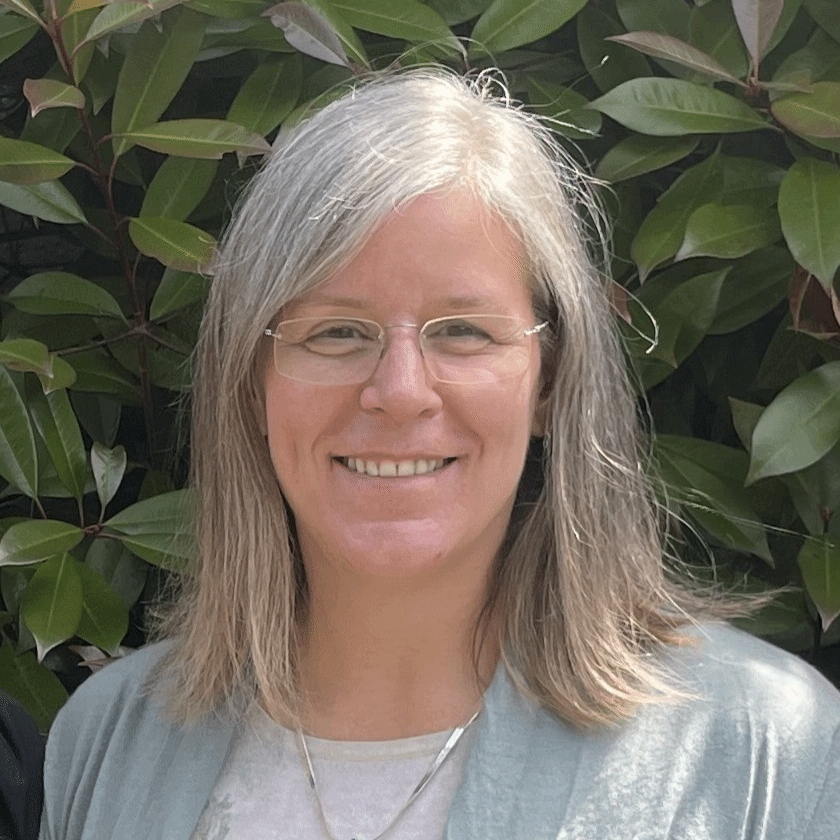
Melody Zacharias
Technical Evangelist Director, Everpure
Upgrading to Oracle AI Database 26ai with AutoUpgrade simplifies the database process. Yet many teams can struggle with the storage infrastructure risk from performance variability, downtime and operational complexity during the transition.
This session explores how to remove this infrastructure friction from Oracle 19c to 26ai upgrades by leveraging non-disruptive storage operations, snapshot-based rollback, and consistent performance at scale.
Learn how to:
- Upgrade to Oracle 26ai using infrastructure best practices
- Align to a unified data platform
- Provide a stable foundation for AI-enabled workloads
We Also Recommend...
Personalize for Me
My Updates
No updates at this time.