
1:01:34 Webinar
Ask Us Everything with Everpure Founder John "Coz" Colgrove
This month we're celebrating one year of Ask Us Everything with a special guest: Everpure founder John "Coz" Colgrove.
This webinar first aired on August 28, 2026
The first 5 minute(s) of our recorded Webinars are open; however, if you are enjoying them, we’ll ask for a little information to finish watching.
Click to View Transcript
Welcome, everyone. This is an incredibly special Ask Us Everything. My name is Kevin Rikson. This is our one-year anniversary episode, and we have a special guest that we've been trying to rope in here for quite a while, Mr.
John Colgrove, affectionately known by all of us as Coz. Welcome, Coz. How you doing today? I'm doing great. How about you? Doing great now. Yeah, we've been, we've been trying to put this one together for a minute.
You, you can guess as the, as the co-founder and technical visionary of everything that we've done here at Everpure, formerly Pure Storage, I've been fortunate enough to witness it for the last 10 years. I just, I just hit that mark a couple of weeks ago. And, you know, everything when we, we talk amongst ourselves as what we used to call
Puritans, I guess we still are, as folks who've had the great opportunity to work at Everpure is, the culture. And I know almost all of that springs from Coz himself. But you as customers, I know, really benefit from the vision that Coz has been able to bring because of the, you know, the power that has been built into all of our different
products and, and the entire Everpure platform, but the simplicity as well that was baked in. And I know I've witnessed a couple of those innovations over the years, you know, Evergreen Storage, absolutely revolutionary. The idea that you can not only swap out, software versions, but in essence have hot swappable hardware and storage and not take systems offline just still, still hasn't been
duplicated by anybody else. You know, and the other one that I always think of is ActiveCluster, you know, 'cause there were times, Coz, when I know you were getting beat up by sales. Like, when are we gonna have this feature that all these customers and prospects are asking for?
And the answer was always, "Look, we're gonna have it when it is done the Everpure way," you know? When it's simple and automatic and, you know, we're not just gonna rush a feature. A- and that was mind-blowing to me because, you know, my, my, my experience both in software and in, other storage companies was that, no, no, no, it was all about just get
the stuff out the door and the customers can figure it out later, and that's the exact opposite mindset. And, and you feel that. I know our customers say that all the time. Like, it just works, you know?
And I know that a lot of that really came from your vision. So, y- the floor is yours right now. Y- you can let us know any of the behind-the-scenes thinking about that vision, or I think what everyone wants to know, what's next? You know, what, what do, what do you have on your to-do list?
What, what, what's the vision for the future for Everpure? Sure thing. So for the intro, you know, as far as, you know, where some of that stuff came from a- and such, in one sense, I, I sort of jokingly say it was my chance to fix everything that ever annoyed me about the storage industry. You know, 'cause I worked at Veritas for a long time.
I'd seen a lot of storage. But yeah, think about it. I mean, we all, like, you know, you have your favorite restaurant that you like to go to where, you know, it's a small business. The owner, the manager, the, you know, the, the staff, they're out there.
They're taking great care of you. They make sure you have a good time. They know you, and you like going there, and you like going there, you know, maybe, you know, they probably have good food. It might not be the best food you ever get, you know, compared to some really fancy
restaurant, but just comfortable. It's nice, right? And we want to build storage that works. Why do people struggle with it? And, you know, I was moving my, youngest son into, his room at
college, and we purchased, you know, some cheapo furniture for him online. And, you know, it's like, okay, we get the bed frame, and it's really easy. Th- this- he's sharing a, a, a house with five other guys, so that's why we're getting a bed frame. It's not a dorm room. But, like, the bed frame, it, you know, fits together.
You don't even really need to read the instructions. It's like, okay. And then I, I got this desk for him, and we're trying to put it together, and the instructions- they just like, they have bad pictures. Things don't fit well.
It's just like, oh, here's these two pieces that look to be exactly identical. And they're like, oh, you, you have this dowel you're supposed to put in one hole and a big screw in another one, only they don't Like, there's two of them, and one goes left-right, the other goes right-left, and they don't tell you anything about it, and then you- Right start putting it in the wrong one.
And s- to shove the dowel in, it just goes right all the way down the hole, and we had to drill it out. It's just like- why you ever want to put out a product like that? And so, yeah, I mean, it, it, it, it really, all started from, you know, w- downtime's annoying. Why have it? Upgrades.
Yeah. I hated upgrading my laptop all the time at home or my desktop. Why should I make people do upgrades? And, and that's where all those things came from. And, you know, we started the company to do all that.
To your point, there's, you know, 100 features, you know, or more that you wanna do. And every feature, as we add it, it's a trade-off. You know, the feature, it adds complexity. It adds something. Right. And you've gotta think carefully how to fit it in, how to make it have a good default so that
people don't have to configure it, how it doesn't add complexity. And, also, you know, you got to do it with quality. This is storage, right? I mean, quality- Right is job one. And so- And especially at scale, you know, because that's the thing is it's one thing to have that vision when you start an organization, and maybe even in your- Yeah
first product or the first thing out the gate, but that erosion that normally happens over time of, yeah, hitting the bottom line, growing your market, you know, time to market, all those different pressures that, you know, everyone at Everpure has felt, and yet we keep- Yeah that simplicity and the, like you said, let's It, it's gonna add complexity. Let's add the least amount of complexity possible.
That, that, that still- Yeah exists. Well, I'd sort of also say even let's try to take some complexity out of somewhere so the sum total of complexity- stays the same. I mean, that's another part of the, the, the thought process too. And so, yeah, you know, we started out the company doing that, and yes, it takes time to
do everything right. And so we've tried to do things in that kind of order. And, you know, I'm You know, the other part of it, you know, we started this company, we want it to be around in 100 years, and I will not be here in 100 years, unfortunately. And so another big part of it is setting up the culture so that when I'm no longer around,
it still continues that way, and that, that's something that's, been a big part of it too. But I, you know, as far as, you know, the other sort of part of your, curiosity or is what's next, what I would say is, in general, yeah, there's still features and things we're gonna add to FlashArray and FlashBlade that are around the more data storage-y layer.
But, And this kind of ties into why we renamed things Everpure. The bigger value going forward, right? I mean, we've got all the different kinds of replication. Yeah, we got a little more work to do there. We got this feature, that feature.
But the bigger value is gonna be helping people manage their data and understand their data, right? And so that's where the data intelligence comes in. It's where the data streams, helping people prepare their data for AI and use it with AI. The enterprise data cloud, helping people manage their data sets and understand like,
"Oh, I made this volume or file system here. I made a copy of it there. I made a snapshot, a clone. I've got three backups over there." People don't understand all of the storage assets they have and, and, you know, what they've stored and where.
And then of course, well, I have a file system, but what's in that file system? You know, I have an object bucket. What's in that bucket? And so data intelligence looking at that. And so I think the bigger value add for our customers, that's the focus of the next
several years of, you know, more R&D focus and adding another whiz bang feature to a core FlashArray or something, is going to be understanding the data, understanding the data sets, and helping people manage that. It's gonna add tremendous value. And as we move beyond just providing storage boxes, you know, and you have PoorWorks as
well started that journey, we chose to rename the company earlier this year. And I will tell everyone out there, I don't think marketing was ever more terrified than the day they came to me and wanted to suggest changing the name of the company. 'Cause they're like, "Well, you know, gee, you named the company that, it's gonna be like re- really upsetting." I sort of pointed out to him, you know, like, again, you have a kid
and they're like Jimmy, and then they get a little older and they're Jim, and then they get a little older and it's like, James, what on earth did you do? What's What How did you wreck the car or whatever, right? It's like their name changes as they mature. No different than with the company.
And, so you know, we started that process, last year. Actually, it was probably a little bit earlier, a little bit more than a year ago. It was probably July of last year that they came and approached the subject, and it took us a while to pick a name. We were very clear that we did not wanna walk away from anything that Pure stood for.
And so we wanted a name that would keep Pure, and we tried Pure every word you can think of after it, and couldn't come up with a good one. And also it's tough to get legal trademarks and things like that- Right on. Yeah. And, we ended up with Everpure, and we like that for a few reasons. One is when you abbreviate it, it still nicknames to Pure.
Nobody's gonna call it Ever. It's like- oh, Pure Storage was Pure, Everpure, Pure. It works out good for me. I can just say, continue to say Pure all the time and- Right I'm not off-brand. But, you know, the name ideally reflects that we are doing a lot more than storage, but that
we are forever going to remain Pure, and all the good things that we think customers liked about it related to Evergreen, related to the customer service, related to the quality of the products, will continue forever, but we'll expand beyond that. And so that's kind of, you know, a bunch of the next focus. You know, the other thing I, I would be remiss without touching on, 'cause, a lot of people
are very, interested in it these days is AI. We are using AI a lot internally. We're trying to, do more and more of that. Um- And, and make ourselves more efficient and, and, and better with it. But, you know, as far as our products go, you know, we always had FlashArray and FlashBlade,
'cause you could not span the entire, range of storage with one architecture. And we've added FlashBlade//EXA to scale FlashBlade up further effectively, to address the highest performance AI needs, that you see in some of the neo clouds and things like that. We're also focusing on data streams, which is, helping people prepare the data
for AI. Data intelligence, again, understanding the data you have for AI. And then there's a lot of features going into Pure1 that, use AI to, you know, all the co-pilot type things to help people. Same kind of thing with EDI, using AI to help you manage your,
data estate, more effectively. And so that's also a big, thrust in the future. And I will- A- a- and hey stop there there, there that's a great spot for me to throw in a plug for our next Ask Us Everything, which is gonna be around AI copilot, and especially how we bring in, with the MCP server and stuff, the ability to use AI agents with Pure1 and
Fusion and all that great goodness. So that's, that's, that's great to hear that it's, it's still, you know, a focus for us going forward. Yeah. So anyway, I'm gonna stop there, and let's get to people's questions 'cause, they don't want me to talk- We got a ton they want to have me answer questions.
Well, the great thing is, I think, you've touched on some of these. Klaus was asking, "What's the next big thing you will announce in the near future?" Obviously, we don't do pre-announces even on a special Ask Us Everything, but if there's anything you want to sh- I mean, you kind of touched on it in the sense that we're gonna be doubling down on the, this whole idea of data intelligence.
But if there's anything else you want to add, go for it. I would just say think more in terms of data than storage mechanics. Right. Yeah. And I, yeah, I'm not gonna pre-announce. You know, we have our London Accelerate coming up, September 28th or 9th.
So one month- Just about a month, yep basically, from now. And, keep an eye out. Stay tuned. Exactly. All right. Thanks so much. Let's see. We also have, couple other ones.
1touched on what we were just discussing with the name change. And I think, you know, I, I have Being in Everpure Marketing, I, I can touch on some of it, but it, just sort of the confusion of the fact we landed on Everpure, turns out there's a water filtration company who actually owns that, you know, website domain, so we're Everpure Data. I, I think it's more like, you know, it, it
sounds like from your perspective you were still okay with it no matter what, because of the reasons that you cited. But yeah, I mean, we're gonna Any organization that changes, especially in this day and age with there being existing, you know, domains out there and brands and different things like that, it really is a, a difficult process.
But like you said, it's a growing process, too. Well, you know, we looked at a lot of possible names, and I, I will point out, y- you know, you do have things like this before. For example, Apple Computer versus Apple Records, which was The Beatles record label, is a very famous one, 'cause of course then when Apple went into music, The Beatles- Yeah
sued them, o- over it. But, you know, we looked at a lot of names. We tried Pure and, like I said, just about every word you could think of. And, it was funny in, in like the first round of suggested names, we had some that used Pure in them, and actually the first thing that was suggested in that was Everpure Data Systems,
and that's just too long. So- Yeah. But- Goes against your simplicity mantra. Yeah Everpure survived, survived the first round. And look, like we looked at UltraPure and, yeah, you know, the problem is Pure as a, a sort of good and simple word is used with all the prefixes,
suffixes you could imagine. And so y- you have to pick it. You know, then the other thing, like one of the first things all our employees were like, Uh, well wait, we don't have Everpure.com. And someday we may get it, right? If, i- if you happen to own Everpure.com, if you're listening out there, the folks,
that own the water filter, we'd be interested in buying it. But, you know, I mean, how many times these days do you actually type out a website, you know? You go to like, you, you, you, like, just type into your search bar- Right the name of the company or something about the product or whatever, and you go to the website by,
that way. So not having Everpure.com isn't the same as it would've been 20 years ago. Yeah. Great point. Great point. Okay, here's another one, one of the first ones that we got, probably an easy one for you to answer. Will there be fusions, and so I think you can
take this any direction you want, with other storage companies? Yes. With other storage companies? Yeah. It was, it was that simple. And you know, what popped to mind to me was Nutanix- Oh where, you know, again, going back a few years here- Yeah it felt like this giant dog fight that we were in, and lo and behold,
we realized our customer bases could really benefit from the fact- Yeah that, you know- So- if our technology worked better together, especially in the changed, you know, Broadcom, VMware world G- go ahead Yeah, no, I, well, so to take Nutanix as an example, you know, I've always, felt that, hyperconverge is a fantastic solution for, like, edge places and stuff, but it doesn't work as well in the data center because it,
it isn't efficient. It sort of doesn't scale to, you know, you don't, you don't see people creating nodes of, you know, 50, 100, 1,000. And so i- in that sense, they sort of had a great product for certain things. I think that it wasn't the right architecture for everything.
And with the, shift in ownership of VMware and everybody looking at alternatives, you know, well, okay, we've got, for example, Portworx, OpenShift, as a great alternative. I will say I've always been shocked. The open source community was always really good at taking a, product or
thing that they liked and doing an open version of it. I was always shocked nobody ever did a real open version of VMware to try to, replicate everything in there. KubeVirt has been making a lot of improvements in that of late, but, you know, the point is we're all about giving customers choice.
If they want to stay with VMware, great, we're gonna keep supporting them and do that. If they want to shift, you know, we've got Portworx and, you know, with KubeVirt, and OpenShift, or we've got our partnership with Nutanix, and I think, you know, any of those are good solutions. You do have to kind of recognize that, even if you pay your Broadcom bill, they're gonna come
back next time and potentially make you pay a lot more. And you can't wait until a month before the bill's due and say, "What's my alternative?" Right? You've got to be going well in advance. And so I, I think it's prudent in the same way that I would advise any major company,
much as Pure's got all the best storage products and they should go all Pure, you got to keep a little bit of a foothold into another camp so that if Pure//E ever stumbles, you have that alternative built in. And I think that same thing's true for VMware, and everybody should develop like, "Hey, I've got two environments for virtualization, and then if I don't like, the terms I'm getting
from Broadcom, I can go shift, you know, off of them." so, you know, I, I think you, you know, see that. In terms of other sort of other storage companies, I really I think we're better than they are, so I don't like to talk about them a whole lot- 'cause I don't like to say bad things, about other people, even when they're not listening or
they deserve it. You, you, you listened to your mother when she said, "If you can't say anything nice, don't say anything at all." Something like that. Well, that's, uh- It's just not worth talking about that's about right. Okay, well, here, here's another great one. Travis asks, "Looking back, what technical bet seemed the riskiest at the time,
but ended up having the biggest impact?" oh, that one's tough. Um- Yeah. I mean, I, I mean, like all-flash was kind of a founding idea. It's tough to But I would maybe say building our own hardware.
And again, we don't really build it. We have a contract manufacturer that builds it for us, but designing it. You know, we get a great benefit out of marrying the hardware and the software together. Our software is super, super well-tested on that hardware, the whole thing.
It works. It makes it much more reliable than software-defined will ever be, simply because with the software-defined, the control, the consistency is input on that, hardware. But, you know, for a relatively young startup at the time, uh- Yeah doing that was, you know, a much more of a risk, and especially going down the path of
doing direct flash, right? Yeah. And the, and the direct flash, I would say that's, that's really the, the key answer. It's not just doing our own hardware. You know, we took back then, we had, a typical system would be, like, two controllers cabled together externally and, like, a couple of storage shelves also cabled externally to both
of the controllers, and all these cables, four chassis you'd have to mount. It just, you know, wasn't a great solution. And then going to the FlashArray//m, you know, we sort of put it all into one chassis, got rid of all those external cables, made it more reliable, denser, more power efficient, lower cost.
It was just a huge win. But then the transition a year or two later, which we actually planned in 2013, but we didn't come out with the first direct flash modules till, I guess, it was 20- late 2017. Yeah. And that was because, we sort of said, "Okay, it's too big to do it all in one step." the direct flash module really
unpacked flash. From day one, we would take SSDs, and we would Like, I would put them in a test setup, and I would experiment with them and try to figure out how to take all of the really bad behaviors in their firmware and get around it by doing weird IO patterns- Right by unpacking and remapping everything in extra time.
Um- The way a lot of the SSDs work, you know, you write, you know, you write your first page and it goes onto your first flash chip, your, or, or your first flash die even, and your next page goes onto another one, and your next page goes onto another one. So if you didn't want to involve all of the flash dies in a transaction, oh, okay, I can write I can take this thing that I'm writing one multi-page thing, and I can write
it on, sort of page 0, page 512, page 1024, page 1536, you know, and sort of stride it across. Or I might say, oh, I want to involve two dies, so I'll write it on pages 0, 1, 512, 513, 1024, 1025, you know, and, and do that. We used to do remappings like that to get around quirks in the SSDs.
Right. And DirectFlash let us get away from all that, and really, you know, with the DirectFlash we're way more efficient, with the flash. We are way more consistent in the IOs, so our- Yeah long IOs, you know, you're using flash drives, and everybody focuses on how their average speed is super fast, but every once in a while the drive's like, "I'm gonna go do garbage collection," and your IO takes a
quarter of a second. And we were able to get around that. So, when we went to DirectFlash, the longest IOs that we had dropped, from about, 600, milliseconds down to about 40, so 15 times better. Yeah. And they only happened about 1/10 as often.
So you got far more consistent performance. And then the other thing with the DirectFlash is we get huge reliability gains, even over- Right SSDs, because the thing that fails in all the SSDs is the firmware, and we've taken that out. So I would argue the biggest bet that, you know, was doing DirectFlash, and it's paid off big time.
Excellent. Yeah, thank you so much. I, I did not grok how revolutionary DirectFlash was, right, until these other use cases started coming out. We started seeing You knew, and the designers knew, about all the benefits you just ticked off, but it really didn't show up, even for those of us, you know, in marketing or in
sales, or especially as customers, yeah, until you started seeing how much more reliable it was as efficiency, once again, gained prominence, you know. And, and even more so today with all the You know, pri- you know, fir- first it was resources, and then it was pricing, you know. There's always gonna be a reason to be more efficient.
And then I think especially this is what This has been the magic key that's unlocked the hyperscaler market for us, you know, and as a stockholder, I really appreciate that, when every couple of years we get to announce yet another hyperscaler win because they see, yeah, this is, this is a lot better than that other stuff over there that we've been building things with. So yeah, that- Right that,
that's a great answer. Okay. Let's see. Here's a, hopefully a little easier one for you. Will Everpure From, Klaus again. Will Everpure ever be using AI agents more in the future to support, to fully
automate things like updates?" So, we're heading, more and more towards self-service updates. If you are not doing self-service updates, you should be looking at that. And you know, our goal, by the way, with the updates is I want to make the update easier for you to do than bothering to contact somebody in service to arrange it.
Right? That, that And that's the key. If I can make the update easier to do than to schedule help with, you know, then people will use them. So we have rolled out self-service updates. I think right now about half, maybe a little bit more, of all the updates, that we do are, self-service.
And, you know, we'll continue to add help for making that easier, and AI agents are definitely, one area we'll be doing that with. We are not yet to the point where, we would roll out AI agents for assisted support and things like that, and- Yeah y- y- you know, I mean, come on, we all still know when we call into some, you know, consumer company like, "This isn't working,"
and the first question is like, "Is it plugged in?" And- Right okay, maybe once in a blue moon you find that it wasn't actually plugged in, and you feel like an idiot for even calling them, but come on. I hope everybody on this call, like, doesn't actually- Right do that, and it's actually plugged in. We- Most of us on this call are not the reason
that there are warning labels print- printed on- Yeah at least we think that about ourselves, so. Yes. I, okay, I will tell you I'll, I'll tell you a funny one about this. So, you know, I have a home file server, right, that I had, years ago, and I called in for support.
And of course the first thing they do is like, "Well, is it plugged in?" And gee, I had already rebooted it. I had already power cycled it. It's like, come on. But in order to get past the script that the person has, I'm like, "Okay fine, I'll unplug it." And they're like, "Well, unplug it and keep it out for 30 seconds." So I start quizzing them like, "Do you know why you asked
me to keep it unplugged for 30 seconds?" And they didn't, and I explained, "Well, there's capacitors in there. Trying to make sure all the capacitors have drained so everything's really shut down." And then as I'm rebooting the thing, they start explaining to me how RAID works, to protect my disk devices. Or act- in my case, it wasn't disk devices
'cause I had thrown out the disks that came with the system and purchased flash drives and- Right put them in. And so this person starts explaining, trying to explain RAID to me, and I pointed out to him that I have the original patent on it. I have about 300 patents on this.
I kind of have an idea of how it works. But, you know, your AI agent- Uh-huh they're gonna give you that kind of support, and until we can get- Yeah past that kind of support, we are not gonna use independent AI agents, but we will happily continue to use AI agents to augment, what people are having. And as they get better and better, we will switch to where you do more AI, but, not until
it's a lot better than it is today. Right, right. S- I knew I was gonna laugh. I didn't know I was gonna laugh quite that much. That, that, that was a great one. Okay, all From Joel s- from Joel, again, we're just trying to use, first names only.
We've partnered with Pure Storage for 12 years. Given the recent changes introduced by Broadcom, we kind of touched on this a little bit earlier, can you advise whether Pure offers any tools, migration frameworks or, best practices to support customers migrating from their current hypervisor platform? Well, as I said- And I'm assuming the other part of there is to Everpure, but yeah.
Well, well, nor they're probably running Everpure underneath- Right VMware at the moment. Okay. Take a look at Portworx and Convert, so we can happily talk to you about that. Take a look at, you know, Everpure running with Nutanix, and their AHV hypervisor.
Take a look at our Azure cloud-native, solution where you can use the Azure, licenses. And so we're happy to, come and chat with you about any of those choices. You know, I think, you know I mean, our first choice tends to be Portworx, Convert, but, you know, any of those are good. Yeah, and I know that we do have solutions around that in terms of- Mm-hmm you know, I'm not, not sure if there's bespoke tools,
but there's definitely plenty of services and easy buttons that have been arranged to m- to make that as simple as possible. Yeah, no, there's, there's some tools. We have, we have the ability also to do, sort of in-place migration, for some of that. There's, some tooling with Portworx that can
let you do effectively in-place migration of your VMs. Awesome. Okay, thanks so much for that. Let's see. From Levi, we've got one: Do you see a future for the Pure product where there is a single plane, pane of glass to manage all your types of data between different back-end data
storage types, whether it be block, file, object, et cetera? So if you mean all of your Pure assets, yes, and you see Pure1 moving in that direction. You see the Enterprise Data Cloud, moving that. Anyone who is not switching to using Fusion to manage their fleet in the
Enterprise Data Cloud, you really should be. Yeah. If you mean non-Pure back-end storage, then the answer is maybe someday, but not right now, and part of the reason is other people don't like it when we manage their storage, so they don't give us access to the right APIs. They make it difficult.
They make changes in, from release to release without working with us to make sure that your overall, solution would still work. So we can't deliver at, at this point the kind of quality that you would expect, or even keep the system working steadily as they go change their releases. And, you know, this is something I think it was, like, probably about 95, so 31 years ago,
that I first ran into people trying to do this single pane of glass for all the different types of storage people had, and nobody's made any progress on it because the storage industry doesn't manage their boxes to standards and have that kind of cooperation. Excellent. Let's see.
Let's switch gears a little bit, but keep it on the technical side. Both David and Terry asked about our, CPU load. David was, Well, Terry was coming at it from the standpoint of, he feels that there are times that we may be pushing too much to the CPUs within the Everpure systems, and was wondering if there's more that could be pushed maybe to the DFMs.
And then, David was just asking, is there any way we can get more transparency into what that load actually looks like, I'm assuming through, you know, Pure1 or, or something like that, that's not delayed by Th- that's more real time. Yeah. So, okay, let's actually start with the second question first.
Okay. The CPU load isn't something that you can necessarily easily look at and determine how busy the box is. We have, you know, a lot of processing cores, and we have times when some of them will do a bit of a busy wait loop for something. For example, oh, I picked up an IO, I've done some stuff with it.
It's now waiting. I'll do a little bit of a busy loop to see if there's another IO before I go to sleep. And so that shows up as load on the CPU even though it isn't. And if you were to actually get on the box and look at the CPU load, the box hits 100% CPU load more or less around 50% of its actual,
capacity for, for doing work. And so we created a busy meter, and busy meter understands things like, oh, where there's a busy loop, or it understands that, all of the network interrupts come in on certain CPUs that are dedicated to that. And we do that because it's more efficient, to have, this small group of cores that
process all the network stuff so the cache lines and buffers stay affiliated with, those particular cores. And so the busy meter can look at the memory consumption, the particular cores that where things are tied to, the, inter-socket communication between the two sockets, the PCI bus, the networking, limitations, everything on the box, and sort
of tell you what's busiest. So, that's why we came up with busy meter and, you know, so that's the sort of tool to look at. And then as far as the first part of the question, you know, we've done offloading at times, and the offloading doesn't work as easily necessarily as people think.
So for example, like you buy a FlashArray//XL and there's an I-I a card in there that is designed to accelerate compression, and compression is a very CPU intensive thing. You can always burn a lot more CPU to get a little bit more compression. And so by having this offload card, we're able to do more aggressive compression,
'cause we can, you know, burn more CPU cycles on it. But now you think about it, okay, you have a request to, you know, write 4K and we go through and send 4K over the PCI bus to this card, and it goes and crunches off on it and sends it back to us. Well, there's overhead talking on the PCI to send the data.
There's overhead talking on the PCI to get it back. If we were doing really big chunks, then, that overhead is a lot less. But a lot of the transactions that you see in a mission critical system are smaller, 4K, 8K, 16K, and, you know, so a lot of the things you might do besides compression, people talk like, "Oh, do you have an offload card for computing your parity?" The parity computations are
really quick. So no, we don't, because the overhead of sending the data to the card and getting it back, doesn't, pay for it. So there's definitely some things, that we will do. Some things we will do more in the DFMs, in the future, and we are doing, some changes like that.
But, we're always looking at what's the best way we can use the CPU every generation. If we put in this IO card or th- some other accelerator card, could we get something? How much processing do we do in the network cards for the network? And we're always looking at those trade-offs. So we're looking at it all the time.
You know, when we started the company, we actually thought, you know And, and again, you got to go back to 2009, so things were a little different then. But we actually thought, "Okay, we'll have basically an Intel-based system, and we'll add a GPU to do a lot of this advanced computation we were gonna do for deduplication, compression, remapping, et cetera." And we didn't have to because, A,
Intel at that time came out with a Nehalem architecture, which made a gigantic leap forward in the speed of the memory bus. So how much data you could send to and from memory. And that was actually a bigger bottleneck than the CPU at the time. But the other part of it was, again, all these smaller operations that our earlier workloads
were all focused on the overhead of going back and forth. And now remember too, back then, the GPU wasn't gonna be some NVIDIA super-duper thing for a couple hundred thousand dollars to, to, you know, do wondrous AI things. It was gonna be the same kind of GPU you put in a laptop sort of thing. So we've looked at this stuff all along.
We continue to look at it and, you know, we will, see how that equation continues to translate over time. I will say, I think the next generation, of, FlashArrays and FlashBlades, you will see a pretty significant move forward in performance, right? Now, that's the generation coming out in effectively calendar '28.
So, you know, a year and a half, two years away, basically. But, you know, we already know that. And, and some of it's just to do with, okay, making the choice of what CPUs are you gonna put in, what's their power dissipation, how much are you cooling? Okay. Thank you for that very detailed, answer to
that one. Let's pull the lens out a little bit, take a look at the, the future a little bit more. Travis asks, "What should infrastructure teams be focusing on today to stay relevant in an increasingly cloud/AI-driven world?" I would say adaptability. Um- AI is changing so rapidly right now that
the only thing that we really know is next year it's gonna be completely different than it is this year, and in fact, next month it might be completely different. And with the changes going on so rapidly, and obviously there's the equipment, right, the, that, that you might buy for it or use, but there's obviously then the use cases you put on top of it. All the You know, like, at Pure our finance
team is doing a bunch of stuff with AI, our HR team, our legal team, our engineering team, our support team, everyone who's looking at any metrics and running thi- And, and they're all doing new experiments, and there's new models that come out all the time, and then there's the open-weight models. We've recently set up, internally a group of GPUs to run open-weight models
internally, for some of the tasks. Because again, you know, there's the latest and greatest models that are pretty darn expensive for certain jobs, and then there's models that are like the open-weight models that can get the job done just fine on certain tasks, right? There's other tasks where you need the better model.
So what are we doing? We're saying, trying to figure out what things do we want to run on open-weight models internally, what things do we maybe want to run in, a, the latest models that, that we're getting externally. Are there things we could run on the GPUs and TPUs in people's laptops, right?
Or their Well, not their phones really, but, you know. And so it's changing, and that means as an infrastructure team, you've got to be adaptable. You've got to be ready for that change. When the company comes to you and says, "Hey, we've figured out this fantastic thing, but we
need to be able to, you know, shift our, the, you know, the amount of processing we do up 5X," you want to be ready to do that, and so adaptability. Now, I'll also argue that one of the big keys to adaptability is simplicity. If your infrastructure is simple, flexible parts, here I'm putting in a plug very much like Pure Arrays for your storage as an example, you can change what you're doing a
lot more easily. And if you're managing it cleanly, and this is again where something like the, you know, enterprise data cloud comes in, if you're managing your fleet simply and uniformly, and here, you know, I'm talking about one of the big things that the enterprise data cloud allows you to do, you define a few simple service classes of storage, and then you stamp
those out. Right. So now you're approaching your storage infrastructure, and you're thinking, "Well, I've got 30 arrays, but I know I've really got five different kinds of storage configuration, and so I can take my tier one that is replicated from site A to site B, and snapshot it seven times a day, and runs on the highest performance things, and I can say, oh, I need
to snapshot it nine times a day now." And it's like having one of those smart thermostats, and you change the dial a little bit, and you know it's gonna cost you $1.86 a month. You know, which of course it won't really, 'cause they don't know your utility bill, but it's a good estimate of are you going up or down, and how much. Flexibility, adaptability, and simplicity, and, and,
and discipline in how you configure things are your biggest advantages in adapting to the future. Love it. Great advice. Great advice. Let's see. Iqbal has a great question.
Databases, that's been a core we- we've added tons of value to folks who are managing databases, and especially from the storage angle over the years really, really, you know, the- there's such a great fit there. Asking, "Can DBAs reliably, snapshot and restore their databases without an intervention from a storage engineer?" In other words, are we gonna extend that
self-service out to the clients of our, of our storage managers? And that's So a couple of answers to that. One is, how much do you want the database, guys doing ad hoc snapshots that then you don't track, but stay around forever? And so that ends up being security issues, because, "Gee, I didn't know this copy of the
data existed, and it maybe doesn't have the same permissions and things, so I can leak data." you want to plan your snapshots better, and you want to control them better and have them more uniform. Why do I want seven snapshots of this database from today, but only f- you know, three of this database? So, you know, there are tools where they can do that, where you can let the
DBAs effectively make snapshots. The Enterprise Data Cloud, also enables a bunch of that. But I, I would point out, you really want to get away more from the ad hoc snapshots, and more into regularly managed snapshot schedules that are properly protected against ransomware with SafeMode, the ones that need to be, and the ones that don't need to be aren't.
Right? Another thing that drives me bananas is the number of people that make a whole bunch of extra snapshots with SafeMode enabled when they were just designed to be a temporary snapshot, and then they have to call us up to help get rid of the space. And because getting rid of the space usually involves violating your SafeMode, which means
generally turning it off, cleaning up the stuff, turning it back on. And I don't like the idea of ever turning off SafeMode, because if I were an attacker, I'd be lurking there waiting for the moment that that happens to do something. So, yes, there are tools where people can do the ad hoc snapshot, but I would go to much more of a planned set of snapshots.
That's a much better way to run things. Yeah. And it, it sounds like a great use case for Fusion as well in the sense of you could at least make with some different restrictions, like you were just talking about setting up, you know, it a little more self-service, but where then it's somewhat- Yeah constrained in terms of either who, first of all, and then
how often, you know, could be part of the, of the preset and the, and the, and the workflow on it. So. Yeah. Yeah. Great. That's great question. Love that. Okay, Klaus, he's been our rock star today on questions.
I just, I just have to give him a shout-out here. He's had some great ones. Has a great one about, He's very, very, you know, happy with, the Everpure arrays that they have, asking about the It looks like they're gonna need to do some expansion given the rising, you know, the current economic conditions, the rising price of, of, all the components at this
point, for flash storage. You know, one, what's our advice, on, on what customers should be looking at to help control their costs and plan effectively and all those things? And two, he was asking specifically what's our ability to, to deliver given this, current what it- was it Ramageddon?
Is that, was that the old term for- uh- Yeah people have used plenty of terms about it. Right. It affects a lot more than just RAM. So our ability to deliver is, still fine. You know, we Earlier this year were a lot more concerned about that, and, that actually affected our financial guidance with Q1 because we were concerned we might not
be able to deliver products, in, in Q2. That's gotten a little better now. So, you know, our lead times, I think now the official lead time's nine weeks. We're generally beating that by, a, a little bit, but, you know, we're able to deliver product.
A- as far as what you should do, I'd say number one, make sure you're using the resources you have efficiently. You know, people often, they don't believe how much data reduction they're gonna get, so a lot of times they've over-purchased on some of their products. Mm-hmm. And so, you know, sort of rebalance and fill them up.
Again, this is the kind of thing that being able to look at your whole fleet, with the enterprise data cloud really helps because you can see, oh, I've got You know, I'm out of performance and space here, but I've got some extra here. Okay, let me, you know, rebalance a little. So I think, you know, making sure you're fully utilizing what you have,
is probably the simplest and best, thing that people can do. Great. And then, yeah, obviously we've got huge benefits of things like, the Evergreen//One consumption model, which can obviously not only match exactly what you're using and being charged for, together, but then also spread those costs out in a way that makes it a lot more palatable, I
think, given rising and falling. Yeah. And we, you know, we've, we've had a very, I think, I, I, I know I've heard back from a lot of customers and partners, very appreciative of the fact that we've, you know, offered those lock-ins, at current rates and, you know, it, it, it has scaled up a couple of times as prices have gone up, but not for existing Evergreen//One contracts, so that way you can-
Well, if you have a contract, it's a contract and we're gonna honor it. Exactly. Yeah. And the other thing I would say is, y- yes, Evergreen//One also, Look, as we had to raise prices because all of the input costs are a lot higher. Evergreen//One, we've been able to raise a lot less- Yeah because Evergreen//One, you're
pricing on a subscription basis over a long term, not like what does it cost right now to manufacture and ship it. And so Evergreen//One is a great thing to use to help manage costs. And it also takes away the risk of, you know, way overbuying, that people often have when they, actually buy the equipment.
Yeah, exactly. You know, over-provisioning because the Whether or not you trust the, the data reduction, it's just, it's a, it's a standard thing. Well, if we need 2X, why don't we get 4X just to make sure? Yeah. Yeah. Okay.
So, the, other main question that we have is, it could get us into the weeds, but I know that you can probably keep this, keep us on time with this one. It has to do with end of life, for our hardware. And I know that we have, you know, some good timetables that are available on that, but it
looks like at least a couple of our customers, William and Chris, feel like the communication about end of life on some of their systems came up rather short term, like within months of an EOL date. Do we have any plans to, I, I, I guess, communicate this better or make sure that all of our customers are better informed about, what their, existing hardware will look
like, you know, and, and over time? Well, okay. I'm gonna start this by talking about Evergreen//Forever, right? And Evergreen//Forever is a fantastic, solution to this problem because with Evergreen//Forever, every piece of hardware that you have,
as it gets to think of it as towards the end of where the bathtub curve's gonna start going up on failures, we replace it. So your power supplies, your controllers, your flash modules, your chassis, all non-destructively replaced. We've got at least a dozen arrays that people bought 12 years ago.
I, I should look up the number so I know the exact number, but a lot of them, 'cause I know we have some dating back to the very first array we sold in 2011. It's still in service with Evergreen//Forever. Think about that. That arr- that array is coming up on 15 years old.
It obviously is all new parts. Right. It looks nothing like it did then. Uh- The, the array of Theseus, yes. The array of Theseus, yes. And, you know, obviously it has 100 new features that didn't exist, when it was
purchased, and, you know, Evergreen//Forever lets you do that. You buy it, and you never have to think about, replacing it. So if you go with Evergreen Foundation, then, yes, the equipment does age out. And if we have not done a good job of, notifying you about end of life, I apologize
for that, and I will, actually make sure to talk to, the Pure1 team. That is where the heart of that stuff is tracked, and, notifications would happen. You can, through Pure1, you know, go in and see, you know, things like your contract status and, you know, end of life and that sort of stuff.
So that's the place to go look for it, and if there's a piece of information that you need that's missing there, please, let us know so we can, look at adding it. And, like I said, I apologize if we didn't notify you far enough in advance, and, I will, get somebody to take a look at that and make sure we do better in the future. Expect nothing less.
Thanks, Kazz. Well, we're coming up on time, so, do you have any closing thoughts, things that we didn't touch on that you have an opinion on and would love to share with, all our customers out there? You know, I think, we're at a really interesting time in the world. You know, AI, make no mistake, it will go through some ups and downs, but it's going to
change everybody's lives the same way that I would argue the combination of the internet and smartphone changed everybody's lives, right? And if you think about it, you know, before the internet and smartphones, and really it's the internet paired with the smartphone that took it, think of all the people you'd interact with in person.
Oh, I have to call up this, company I'm dealing with. I have to go to the I want restaurant reservations. How do I get it, right? I mean, just everything you do now is online. On that phone you do it, you're carrying it with you all the time.
You're fully con- AI's gonna do that, and it's gonna be a really interesting ride, and there's gonna be some ups and downs, but I'm really excited to see what it's going to look like, in the future. And, you know, Pure's gonna be there to help everybody with their, you know, IT issues related to it a- a- and as it evolves.
So, thank you everybody for being a customer, and if you're not a customer, talk to some of the people on the call who are customers and find out what you're missing. And, you know, thanks for having me on this. Oh, it was our pleasure, and, again, we're so grateful for you to help us, celebrate our one-year anniversary of Ask Us Everything.
We've explored a ton of amazing topics, not just today, but, you know, throughout the last year. As we mentioned, next one coming up is around that Pure1 that we just had. Oh, and that's I totally forgot. We have got a poll for those of you who are still here.
We've still got, still got quite a few of you out in the audience. If you are interested in joining an upcoming session as a subject matter expert, yes, we want to make sure that some of the folks who are being asked the questions that are in the Us are actually some of our dedicated, Everpure customers. So if you are interested in that in any way, shape, or form, let us know.
We can guarantee you a very smooth and easy experience. But it is something that we would love to know, if, if you're interested in that at all, because one of, one of the great things I love is going to Accelerate every year, and seeing the amount of orange that is not on my fellow Puritans, but that our, our customers are wearing, and the, you know, the passion, that these folks bring to what is
essentially, you know, could be the most boring part of any infrastructure stack, is instead this thing that has transformed, you know, careers and, trajectories and made their lives simpler and, and, you know, it's, it's just great to see. And I know a lot of that comes down to you, Kazz. So thanks again for being here with us.
We really appreciate your time. And everybody, have a great day, and we'll see you on September 18th. Bye-bye.
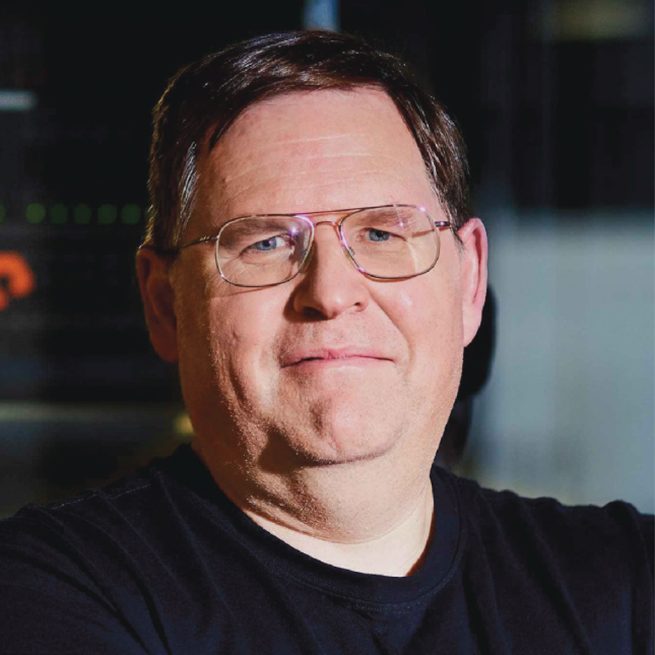
John “Coz” Colgrove
Founder and Chief Visionary Officer, Everpure

Kevin Rickson
Product Marketing Director, Everpure
Got questions for Everpure founder John "Coz" Colgrove? Get answers.
This month we're celebrating one year of Ask Us Everything with a special guest: Everpure founder John "Coz" Colgrove. After 15 episodes of answering your technical questions, we're opening the floor to the person who knows Everpure best—its past, present, and future.
Whether you're curious about product innovation, the evolution of the Everpure Platform, the future of infrastructure, or the stories behind the technology, this is your opportunity to get answers.
We Also Recommend...
Personalize for Me
My Updates
No updates at this time.