

What Is Ransomware and How Does It Work?

Ransomware is a type of malware that prevents or limits access to your data or applications by encrypting files, typically requiring payment of a ransom in return for restoring access to your data.
What Is Ransomware?
Ransomware is a type of malware that encrypts your files and requires payment of a ransom in return for restoring access to your data. If the ransom is not paid, your data could be deleted, held hostage, or exfiltrated to the dark web or other sites for malicious intent. As there’s no guarantee that a perpetrator will honor the terms of the ransom, preventing ransomware by building a data resilient architecture that employs cybersecurity best practices and immutability is your best option.
How Does Ransomware Spread?
Like all malware, ransomware must be downloaded onto your machine or network for it to gain access to your data. The most common way to contract ransomware is through a downloadable attachment delivered via a phishing email, but thumb drives, compromised apps, infected websites, social engineering, and insider threats are also viable attack vectors.
Once downloaded and executed, ransomware encrypts the host system’s files, rendering it computationally inaccessible without the right decryption key. Typically, a ransom note is presented to the owners of the compromised system with details on how and how much to pay to have files released. More sophisticated ransomware can deliver its payload without relying on human error, and instead, by exploiting critical software vulnerabilities in your system.
Signs of Ransomware Infection
Recognizing the signs of a ransomware infection is crucial for early detection and response. Here are key indicators to watch for:
- Locked Files: You discover that your files are suddenly inaccessible or have unusual file extensions added to them.
- Ransom Note: A message appears on your screen demanding payment in exchange for a decryption key.
- Changed File Extensions: Your files have unusual extensions added to them, indicating encryption.
- Unusual Network Activity: Increased network traffic, especially to unknown or suspicious domains.
- Sluggish Performance: Your system or network experiences a significant slowdown in performance.
- Disabled Security Software: Ransomware often attempts to disable antivirus or security software.
Impact of Ransomware Attacks
Understanding the potential consequences of ransomware attacks is essential for preparedness. The impact of these attacks can be far-reaching and includes:
- Data Loss: The encryption of your files can lead to permanent data loss if you don't have backups.
- Financial Loss: Paying the ransom doesn't guarantee the safe recovery of your data and can result in financial losses.
- Operational Disruption: Ransomware can disrupt your business operations, causing downtime and productivity loss.
- Reputation Damage: Falling victim to a ransomware attack can harm your organization's reputation and erode trus.
- Regulatory Consequences: Data breaches resulting from ransomware attacks may lead to legal and regulatory penalties.
What Is Ransomware as a Service?
Ransomware as a service (RaaS) is a criminal enterprise model in which affiliates pay ransomware operators a subscription fee for access to RaaS kits that may be used to deploy, monitor, and manage their own ransomware campaigns.
RaaS kits often include dedicated “Command and Control” dashboards for the affiliate to track and manage their campaigns, giving them visibility into encrypted files and infected machines. The RaaS portal also allows users to set custom post-compromise user messages, set ransom demands, and track profits.
RaaS kits may be found on the dark web, complete with 24x7 support, user reviews, forums, and other features typically associated with legitimate SaaS providers. They can be accessed with a flat subscription fee or through affiliate programs with a percentage of the profits going to the ransomware developer.
What Is Wiper Malware?
Wiper malware, also known as wiperware, is a type of pseudo ransomware where the goal of the malware is to destroy a victim’s systems and data rather than extract a ransom in return for decrypting the files. Wiperware may still use ransomware messaging to dangle the hope of recovering all your files, but this is a delay tactic used to buy time to gain access to more systems, spread to other users, and increase the damage footprint. The ransomware messages also serve to disguise the true intent of the attack long enough to execute. Since a ransom is not the goal, these attacks are typically carried out as cyber espionage by governments attempting to damage infrastructure.
Preventing Ransomware Attacks
Proactive measures to prevent ransomware attacks are paramount in safeguarding your organization's data and operations. Consider the following preventive strategies:
- User Education: Train employees to recognize phishing emails and avoid downloading suspicious attachments.
- Software Updates: Keep your operating system and software up to date to patch known vulnerabilities.
- Cybersecurity Solutions: Invest in cybersecurity tools like firewalls, antivirus software, and intrusion detection systems.
- Access Control: Limit user privileges and access to critical systems to minimize the attack surface.
- Data Backups: Implement regular data backups with offsite storage to ensure data recovery options
- Incident Response Plan: Develop a comprehensive incident response plan to minimize damage in case of an attack.
Responding to Ransomware Attacks
In the event of a ransomware attack, a well-defined response plan is essential to minimize damage and facilitate recovery. Here's how to respond effectively:
- Isolate the Infected System: Disconnect the compromised system from the network to prevent further spread.
- Assess the Damage: Determine the extent of data encryption and assess the impact on operations.
- Report the Incident: Notify law enforcement and relevant authorities as required by regulations.
- Don't Pay the Ransom: Paying the ransom is discouraged, as it doesn't guarantee data recovery and funds criminal activities.
- Restore from Backups: Use your secure backups to restore encrypted data and resume operations.
- Improve Security: Strengthen your cybersecurity measures to prevent future attacks.
How to Mitigate Ransomware Attacks
Beyond prevention and response, here are steps you can take to mitigate damage and downtime, including:
- Creating a resiliency architecture with tiered backups to keep data safe and available
- Keeping your operating system and technology stack up to date to stay ahead of known exploits and vulnerabilities
- Investing in cybersecurity (e.g., InfoSec training, network security audits, and vulnerability testing)
- Controlling access to secure files and data through admin rights and privilege management
- Backing up your files through frequent snapshots and other data protection methods
Find out why data resiliency is top priority in the White House cybersecurity strategy. >>
How Everpure Secures Your Data from Ransomware
Conventional data protection measures were designed to safeguard your data from natural or human-made disasters, data corruption, or accidental deletions. However, ransomware attacks can stress existing data protection infrastructure that may be built on legacy architectures, such as disk and tape, more than expected. To respond to ever-evolving threats like ransomware, data resiliency must be baked into the architecture from the ground up.
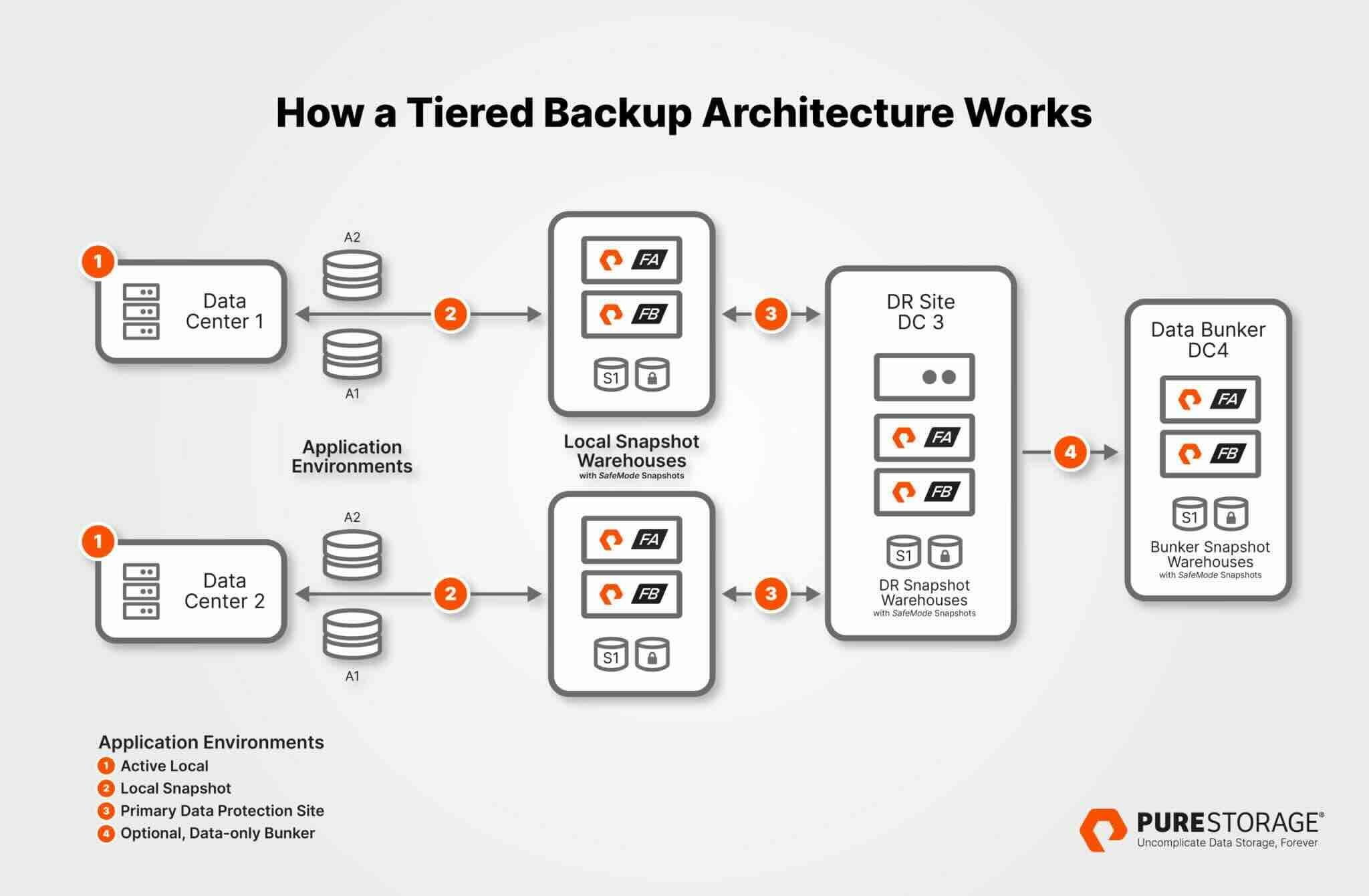
Everpure SafeMode™ Snapshots provide built-in protection for your data in the event of a ransomware attack by frequently backing up your system to read-only snapshots from which you can recover your data. SafeMode helps secure critical data since these snapshots can’t be modified, deleted, or encrypted, even if admin credentials have been compromised. Think of these immutable snapshots like airbags—they won’t prevent a crash, but they’ll increase your odds of walking away from the crash unharmed.
Ransomware Protection, Detection, and Recovery. Strategies for Before, During and After an Attack
According to IDC, over 90% of organizations admit to being hit with malware—87% successfully. Victims scramble to respond after an attack, but the right time to deal with the threat of ransomware is before it strikes.
5658
min.
5658
min.
Available with all FlashBlade® and FlashArray™ systems, SafeMode is included with the Purity operating environment as part of your Everpure subscription.
Fast Ransomware Recovery with Everpure Secures Your Data from Ransomware
When ransomware strikes, you need to restore your data quickly. But legacy systems and purpose-built appliances are notoriously slow and not designed for recovery. Rapid Restore, powered by Everpure FlashBlade systems, dramatically increases the speed of data restoration without the need to change your backup software. FlashBlade delivers Rapid Restore and petabyte recovery at scale with up to 270TB/hr data recovery performance.
Browse key resources and events
PURE360 DEMOS
Explore, learn, and experience Everpure.
Access on-demand videos and demos to see what Everpure can do.

WEBINAR
Ask Us Everything about Accelerate Announcements
Got questions about what’s new in your Everpure platform? Get answers.

VIDEO
Watch: The value of an Enterprise Data Cloud
Charlie Giancarlo on why managing data—not storage—is the future. Discover how a unified approach transforms enterprise IT operations.

2025 GARTNER® MAGIC QUADRANT™ REPORT
Highest in Execution, Furthest in Vision
2025 Gartner® Magic Quadrant™ for Enterprise Storage Platforms.
Personalize for Me
My Updates
No updates at this time.