1:00:47 Webinar
Virtualisation Will Never Be the Same: Nutanix and Everpure Change the Game
Join us to explore a game-changing solution: the convergence of Nutanix Cloud Infrastructure (NCI) powered by the AHV hypervisor with the Everpure data storage platform.
This webinar first aired on 08 January 2026
The first 5 minute(s) of our recorded Webinars are open; however, if you are enjoying them, we’ll ask for a little information to finish watching.
Click to View Transcript
Well, hey. Good afternoon, everybody. I'm Don Korman, Senior Technical Evangelist for Nutanix. Welcome to a tech talk today, where we're actually gonna think outside of the box for us today and not just make it about Pure and how our storage is best armed for your next generation data and management needs, but we're also gonna talk about the ground swell
shift that's happening in the virtualization space, and more about our partnership with Nutanix and what we've been doing in a joint engineering project that was just generally avail- made generally available a few weeks ago. So for the next 45 minutes, we're gonna have a conversation that goes into depth motivations behind it, what it kind of looks like, and what you can expect when you adopt
this idea of taking two best-of-breed technologies with Nutanix's AHV, Acropolis Hypervisor, and pairing it up with Pure Storage. One of the interesting things about being a technical evangelist here is that I get to talk about these advanced concepts, and this one today is kind of special to me because it's sort of a homecoming.
I, I came to Pure from Nutanix, so I've deeply embedded in this project since it started, and I'm really excited to get out here and talk to everybody today about it. I'm joined by Dan Angst, who's a Global Director Practice Lead for Data Services at Nutanix. Dan, give an intro to yourself, what you're all about.
Sure. So, that's a, a, a long title, and what it means is I'm I, I go to market for the sales side, the technical and sales side, for everything storage. You know, both unstructured and structured data, and also securing all that, data, which is kind of a, a passion of mine, and also a passion of both Pure and Nutanix.
Great point. All things data, right? Mm-hmm. And I think the advantage that we gain out of this new dimension of what Nutanix has worked with us on is a really great story as it relates to being able to provide optionality as it relates to data when it comes to virtualized environments. And, you know, it's no secret, Dan, you know this, I know this, we've been wrestling th-
with this for, you know, the last few years. There, there are challenges with virtualized infrastructure. We, we know that the Broadcom acquisition of VMware has a little bit of a catalyst to do with all of this, but there's a lot of uncertainty and there's a lot of cost disruption going on- Mm-hmm in the market today that I think we've reached a critical
mass as it relates to people just continuing to do the same thing with virtualization, right? Mm-hmm. And I, I, I think we're at a point now where people are starting to say, "Well, that was good for the last 15 years or so, but now we have to look forward to where things are going, not just from a data management perspective, not just from an OS
virtualization perspective, but an entire workflow, workspace, workload, ecosystem rethink." And I, I'm sure that's what you've seen over there on the Nutanix side, because we, we- Oh, yeah have nothing but conversations like that, right? Yeah, and, you know, the, the blatantly obvious reason why this is happening, is because both of our customers, Pure customers and Nutanix customers,
are asking for it. Yep. It's You know, they need a choice, and the nice thing about it is, is, you know, both Pure and Nutanix are very similar, companies. Yes, we are publicly traded companies, but we have that, you know, that founders, that, that entrepreneurial attitude.
Yep. And we want to give our customers that choice. And when they come to us and, you know, it's a Pure Storage customer who has just spent a money on, you know, Pure FlashBlade in the data center but says, "I need either your dual vendor or a single vendor strategy for my virtualization," well, here you go. We do it now.
We're, we're giving you what you want. Yep. And when the announcement was- Mm-hmm first talked about last year, I was really genuinely impressed because, like I said, I had been at Nutanix. Yeah. So the whole concept of anti three-tier
architecture and all of that, it was ingrained into the DNA, right? But I admired the fact that Nutanix wanted to stop and say, "Listen, HCI..." And I agree, HCI is still a very, very viable solution. Right. But there's a bigger market to address. Oh, yeah. There's, there's more customer support if we
look outside that. Mm-hmm. And it The Broadcom thing certainly helped, obviously. Right. But it's been remarkable- Mm-hmm to see how things have evolved since that announcement was made. And to your point, Dan- Yeah it, it's, it's optionality, right?
Y- y- you mentioned it. We're very We're both very customer-centric companies. We've got rival NPS scores. Yours is better than ours, but we're both really hard- They are the best in the industry, let's just put it that way. Right, right, right.
So we've got that obviously, but going back to this concept of optionality, it's, it's something that you, you mentioned that i- if you looked at virtualization maybe two or three years ago, it's that old Henry Ford quote, "You can have any color as long as it's black," right? Mm-hmm. And I, I think we've reached this or this, this definite thing that's
that there's a democratization happening as it relates to virtualization, right? You, you made a great Bring up your comment that you talked about before, that- Oh, yeah. I was- about this KVM thing. I was thinking. We're, we're, we're thinking a lot alike here, here, Don. So when, when it was announced that Broadcom was buying a wonderful, a great company called
VMware, somebody famous, I don't know who it was, i- in the tech industry said, "Welcome to the KVM world." Right. Well, over 10 years ago-One of our customers, you know, a US government customer, came to us and said, "Hey, you guys have this wonderful hyper-converged platform, and it runs, you know, VMware ESX on it really, really well.
Well, we'd, we'd like you to, you know, run, have your own hypervisor and include it a- as an option." A- and that's what we did over 10 years ago. We took KVM, and we made it enterprise-ready. We made it a true enterprise class hypervisor to give what we're doing here, our customers choice.
So now it's over 10 years old, and, you know, thousands upon thousands of, applications running on it. And it's, you know, the hypervisor of choice for all of our customers. Yeah, and it's definitely a solid, solid landing place if you are considering alternatives.
Like I said, I came from Nutanix. I sold several deals that were AHV-based, and the customers that I had that I sold it to, when it would get implemented, they would be like, "Where has this been all my life?" Oh, yeah. Just the simplicity through Prism, through the elegance of how it worked and how it worked
with networking, it, it really was an impressive option that Nutanix had, and I'm really happy to see it come- to the forefront as far as what we're able And like I said, we're better together. We've already talked- Mm-hmm about this to most of the points, right? That AHV is emerging as a very, very, very good VMware alternative.
The disruption is happening, and the solution that we're building, and we're gonna get into this- Mm-hmm and you can talk a little bit about this, Dan, is, is this isn't just us saying, "Hey, we're compatible with each other," and saying, "Yeah, you can hook us in and use this if you want, but it, you know, you have to do the glue and all of that stuff," right? Right. This is, this is a joint
thing that's all about API integration and engineering teams working together. Y- you've seen what's been going on. Yeah. So what we wanted to do, and what we Actually, if you look at the m- all the marketing materials for both of our companies, like I said, we're very much alike. We wanna make this simple, and that's exactly what we did.
The integration, you know, isn't simple, but to our customers, literally, and you'll see in a, a little, in a, in a, a demo, a canned demo that we have coming. You know, it, it, it's, all it is, is you make your VM, and you provision the external storage, like in the HCI world that you would just provision your storage. There's really no difference.
It's all hidden, and it's all because we're both very API-driven companies- Correct which every company should be. So what, what you really get, and you s- see here, the Nutanix NCI and NCP stack, it's not just the hypervisor. Everything else, including all the STIGs, all the security, all the LCM that you have in
there, and also including flow micro-segmentation- Yep and flow virtual networking come with this. And we make it very easy, as you'll see at the end o- end of the presentation, to take everything you're running on that other hypervisor and move it over seamlessly with a free tool called Move over to this environment, the AHV environment.
So it really makes it simple and easy, which is what we're all about. Which it's a very robust way of saying better together. Yeah. Our best of breed is really coming together in almost a fusion of API engineers on each side working to better each other's experience- Yeah in the which I've It, that's different.
I've, I've been at other companies, and I've not seen this type of effort done before. Mm-hmm. So let's talk first, the, I know it's our tech talk, but I want you to talk a little bit about Nutanix and the cloud simple, what your vision is. I kind of know what it is already, but- Yeah. You know, people tuning in don't.
So i- if you look at the bottom, one platform to run apps and data anywhere, expanding that, not just in a hyper-converged environment, but also in a traditional three-tier environment with our partnership with Pure. So any workload, any apps anywhere, even in the cloud eventually. So all those enterprise apps, you know, all your databases, your cloud-native apps, AI/ML,
we can, how can you get away, away in our, in our current environment without saying that? Yeah. Right. And then in your data center, public clouds, service provider clouds, and even at the edge. We make it really, really easy to, to, to do that.
And it's key because AHV has been out there now for well over 10 years, and it's an industry standard. So one platform to simply run and s- securely run all those applications. And I'll speak to the securely thing for a moment, since I was in federal when I was- Mm-hmm at Nutanix. Security was number one when I was there.
The DISA STIGs, the, the nature of you guys working to ensure that your product, the software, all of it met the highest standards for security- Mm-hmm which the federal government, and Pure is in the same camp. Yeah. You know, security is at the forefront when we talk about SafeMode Snapshots, indelible, immutable snapshots- Mm-hmm and some of
the other things that we have out there for cyber resilience. That's, that's another very good pairing together that we're not only customer-centric, we're also simplistically centric- simple centric, right? We believe in simplicity, and it has to be secure out of the gate. It's not an afterthought. Right.
It's not something you pay extra for. It's just going to be there when you do it, which, which is huge, right? And, and w- here we go. Yeah. We're talking about it right here in this slide, right? Simple, agile, and secure. Yeah.
Obviously, NCI with AHV, all of that stuff carries all of that stuff. We've got native data at rest encryption. Mm-hmm. We've got SafeMode, which is indelible, immutable snapshots. And go- you're going across the slide here without reading the eye chart. Oh, yeah. I mean, high performance
scalability, deep integration. Talk, talk a little bit about your, the idea of this scalability thing know, how it works with us. Yeah. The, the cool thing is in, you know, the And this is- you know, release number one, and we're already at Hyperscale.
Yeah. And it will on- it'll only get bigger and bigger and better and better as we move forward. And the key thing, not just with scale, is, and I mentioned it before, and it's not just with security, it's what's most important to our customers, it's the data. Yep. And we have to keep that data safe but also
resilient because, you know, you know, this is an old security saying, just because you're paranoid doesn't mean they're not after you. They're not out to get you, right. Yep. It's going to happen, whether it's a natural disaster, or it's ransomware. If you, as long as you have a plan, and you have a BCDR plan, which we inherit all the
greatness from Nutanix with NCI and NCP, and all the greatness that Pure adds wi- with data resiliency, we get all that. So we have our, our disaster recovery that's taken care of by Nutanix and Pure together. Yeah. And the DeepReduce integration part really,
matters here because, you know, this wasn't just, oh, you know, we're just gonna support, you know, everybody. As long as they can support NVMe over TCP, it's good. Right. No. There's deep API integrations for a seamless experience, and it's only gonna get better.
This is release one. We only went GA in, you know, last month, in December. And in fact, you know, I'll be going, I ho- hope you're gonna be going to Sa- San Jose. We're going to be planning, everything on the roadmap coming up for the next six months to a year.
Yeah. And it's really exciting, everything else that we're gonna be adding. Yeah, it's a monster. I, I've got insight into some of the that we're wanting to do, not just array support, but some of the, well, the things that I'm really excited for, this goes into the deep integration part, is sharing of performance information. Yeah.
Right? One of the things I really loved about selling Nutanix back in the day with HCI was you had the full stack, man. Yes. You saw all the way from the application all the way down to the specific hard drive in the node. Mm-hmm. Right? You, you had all of that information, and we
are able to provide that, I think, with Prism as a central point of report or Pure1 possibly as well on the Pure Storage side. Mm-hmm. But once we really start to give the insights of the full stack- Right across the man, this really becomes a very, very serious player as far as the capabilities of moving forward with virtualization, not
looking backwards. Right. Oh, I agree. I completely agree. And, you know, what, speaking of performance, because of AI/ML- Yeah we have to really, really focus on that performance. And because we have two companies, Nutanix and Pure, that are focused on that and want to give you the best experience, and to have
those, you know, workloads that demand fast storage and, you know, and, and, you know, f- fast VMs, we give it to you. Yep. And we're not gonna lose anything there. And in a way that a technical generalist can- with a little bit of spin up, act like they've been doing it for years.
I mean, I- Yeah, the, the simplicity I remember that at Nutanix, and nothing has changed there, right? And nothing's changed on the Pure side, right? But the whole goal of the design was to pull out the idea of a specialized person needing to be done to make, needing to be engaged to do all of this stuff. And y- you know, on top of all of that simplicity, these are the biggest benefits
right here. We've already talked about- Mm-hmm performance density scalability. The container-granular storage control when I get to start to talk about- Yep the Pure side of it all. Preserve existing investments, like you said, Dan.
I think- That's key again, when I was in the field, one of the challenges out there was, Oh, you don't need that storage that you just bought anymore." Mm-hmm. But, you know, now we can have that conversation. And it, like you said, it's only going to get better. It's only 1.0 right now.
Mm-hmm. We actually already have customers who have bought on the solution. We had a customer, you can't say the name, but we had a customer set, buy in on it, you know the name- Mm-hmm buy in before it even GA'd. Right. And so we must be doing something right here.
And the, the key thing here is, you know, was a very large Pure customer, but also at the same time was a very large Nutanix customer. Yep. And they already had, you know, HCI hyperconverged running there for certain workloads, but they had three-tier that they could not get away from.
Right. The cool thing is the licenses, the NCI and the NCP licenses, are portable. Yep. They use those same licenses from Nutanix to support the three-tier as well, and that makes it really easy, not just technically easy, but from a commercials stan- commercial standpoint, as in the money, those licenses
are portable. And those same licenses can be used out in the cloud with NC2, so it's pretty cool. Ex- exactly. Yeah, the portability of Nutanix with its licenses to be able to use in the cloud is very, very similar to what we offer through Evergreen//One, which is our STaaS service that- Mm-hmm if you're subscribed to
500 terabytes, and you need 100 of that- Mm-hmm subscription in the cloud, it's, it's all portable as well. Right. Because we're, we're solving problems with software, right? Mm-hmm. And the hardware is just an enabler to some degree, but that portability is key to the
thing you just said, is- Yeah flexibility, the ability to go wherever you need to go. It, legacy technology really struggles with that because- Yeah it was built in an old day when fixed costs were tied to a specific capital asset, and it's tough for those companies to get out from under that, Right we've got that flexibility, being software oriented.You know, the, and we both are software companies.
Yep. The last, bullet there, m- back to, the security side, you know, yeah, okay. The- Yeah, go ahead the enhanced security posture. And it's, so like I said, you're both of the security postures from the two separate companies.
But also, we have a large ecosystem of security partners from Cisco, Palo Alto, and y- you name, the, the, the major security vendors All that integrations that we both had in the past still reign here. Yep. So you can run a Palo Alto virtual along with flow micro-segmentation from Nutanix in a virtual private, a VPC w-
with a walled garden, and control all that. Nothing is different here. It's all that same built-in, and the encryption, immutable snapshots, and all of our partners for ransomware protection, they all apply. Absolutely. And it's all complimentary.
That's the best part that I've seen joint engineering efforts, is that we right to the line of where we met, and we said, "You're better here. We're better here." Mm-hmm. Let's just keep those in place. Maybe over time it'll evolve, but right now- Right I think we're leveraging the best sides out of the gate- Yep as far
as each side is concerned. This is your moment to shine right here. Let's talk about AHV. Right. So we, we talked about it before. That's okay. You know, you can see by the- Give us the breakdown. I, I Dig into, Flow a little bit, because I
really love the Flow story- Yeah especially as it relates to what you've done with AHV. So Flow is actually, has been around now, and ac- The good thing is, is I took over the Flow technical go-to-market, went from its inception, which was over, eh, almost eight years ago, seven and a half years ago. Yep. And because I spent most of my career at Cisco and a startup that Cisco bought
doing networking and security, it kind of, that's my background. So what Flow gives you with the micro-segmentation, and what micro-segmentation i- is, it is a distributed stateful firewall that controls all traffic coming in and out of the AHV VMs. It's, it's really quite simple.
We can visualize, you know, just a, a three-tier application, you know, you know, with a, that has a web and a database. We can visualize all the traffic coming in and, you know, say, "Hey, this is, application works," and say, "This is the only traffic that we'll let in and out of this application." And that goes across the board.
And on top of that, we have Flow networking, or Flow virtual networking, which allows you to, you know, lay, do layer two, but also go up to layer three and layer four to have a virtual private cloud in there. So I can have a BPC, that either uses NAT or no NAT coming in and out, and have that walled garden, and then run You I, I m- I might have that as, you
marketing, and then I can control all the traffic going east to west and north south by putting other virtual firewalls, like I said, with our, our ecosystem partners Alto and Cisco, into that scenario. So what, you inherit everything with that, and it makes it really, really easy. So KVMs, you know, over 10 years ago, w- we didn't really add
enterprise features. What we did is make it an enterprise application. Right. Took that open source and hardened it and made it 1touch management. We added all the life cycle management for everything, and we inherit that on the software side where the vSphere with the VMs for life cycle management in this, scenario as
well, when we're supporting three tier. And that gives you a world-class hypervisor as either an alternative or as your single platform for all your virtualization. And I think the best part about your story, not just the origin story of it, 'cause it really is a cool story, is the nature of, of Flow and how it works inside of the
AHV ecosystem- It's native. It's literally native It's native, and it's- We didn't buy a company here. Right. You've, you've just modified OpenShift, right? And it's- This was all homegrown, yep. Yeah, and it, and it's included.
That's- Yeah a- and that's another very close connection between our companies, is that when we release new functionality on Purity- Mm-hmm which is our storage operating system- Yeah whether it's multi-tenancy, whether it's file shares on block storage, it's just included. It, it's- Right a part, it becomes a part of the ecosystem. Mm-hmm.
There's no extra license to buy. There's no machinations that you've gotta go through to get somebody to approve it to be purchased. It's just there. And it's your choice- Mm-hmm if you wanna it on, which obviously the value that we
with these features for you as well with Flow, that would make sense, right? Mm-hmm. Turn it on and get Especially if you're coming from an environment that's already pre-configured with stuff like that. Oh, yeah. If you've got a VMware and you're using NSX for either stretch or micro-segmentation- Mm-hmm it's an equal conversation to have.
And we also in, with that, feature, I'll call it, called Move, we actually can move the networks as well from NSX. That's awesome, dude. So it's pretty cool. Yeah. I didn't know Move I- it makes sense, though.
We'll get into Move later on. And it's, and remember, this is, you know, this is in, in the beginning stages of it. It's only gonna get more enhanced and more enhanced. I do, I, I and we'll get to that, but professional services is really, really good at helping you with that.And that's what you need, right?
A- and it's very similar in our world- And our partners when, when, y- you know, as well, our professional services is very good at these transitional moments, right? Because- Mm-hmm if you think about it, right, and this was Nutanix when I was there, and Pure when they're, when I'm here as well- Mm-hmm is that y- you know, you're selling something non-disruptive.
You're selling something that isn't the 800-pound gorilla yet. Right. But to do that, you've got Yeah, you gotta have the technology work, obviously, but you're ultimately selling trust, right? Yeah. Trust me, bro, where you're going- Mm-hmm I promise you will be a better experience, which means we not only have to have our act together on the technology and the support,
which we- Mm-hmm both have incredible NPS. Oh, did you just freeze? I think Don just froze. Speaking about that, the cool thing also, this is non-technical, this has to actually go with the cultures of our companies were- Yep very, very similar, as I said before.
Absolutely. Now we go into how the heck are we doing this? Yeah, so what does it look like, right? The When I learned how we had hooked it together, I, I actually was like, "Wow, I didn't see that coming." I'll let you do the first half of this thing because I, I want you to talk this thing up of how we're still going through the CVM, right? Right.
So you, you're gonna have to educate some of the people on here what the CVE means, and then I'll take it over when we get to our side. Sure. And y- you see kind of in the slide there, you see VM, VL, all the VMs. Those are the AHV VMs.
And then AOS, CVM, that's the controller VM. That's where we're controlling, and that's where in a hyperconverged environment where we would control all the directly attached or the block storage to the VM. It's doing the same thing here except for now those little arrows going to and FlashArray//XL and FlashArray//C, is just NVMe over TCP.
And why did we pick NVMe over TCP? Because it's the best standard out there. It's, it's where all data centers are going. And I did, I was just noticing some of the questions in the chat, and some of the questions, at this time we are not native fiber channel or fiber channel
Ethe- Ethernet. Right. It is NVMe over TCP, but it's not us making the transition, easy. It's actually Pure, because most of, if not all the, the arrays that are shipping now have a controller that supports NVMe over TCP.
But also, if it's older and they don't, it's a very low-cost and non-disruptive upgrade we'll call it to get that array to NVMe over TCP. And then you can see with NVMe over TCP from the CVM to the FlashArray, we do strongly suggest 25 gig minimum requirement. We can go up.
You know, you can go It will work, in a, like, smaller cluster with 10 GB, but we strongly suggest 25 gig. Foundation and the LCM for software are key capabilities that we bring in there. All the disaster recovery that you're used to with Nutanix, at GA, which is what is now, it's only asynchronous disaster recovery.
Don't worry, on the ro- on the very near roadmaps, synchronous is going to be supported. Yep. As you can see, all the enterprise features for, AHV we already talked about, flow virtual networking, and security. You know, what's different from HCI? Storage functions are via Pure.
Well, guess what? They're the best storage company out there. That's a good thing. Firmware upgrades on the Nutanix side, all that LCM, the life cycle management, we take care of. For the server vendors, they will take care of
that LCM. And on the Pure side, they take care of that. So you get the best of all worlds. And we'll go over it in more in-depth on the joint support model, but that's It's a joint support model. Absolutely. And, you know, just to round it out if, if you're a Pure customer, if you're a
prospect, if you've experienced Pure Storage before or you are as a customer, you're gonna recognize the entire experience with Nutanix as well. Just it's elegant, it's simple, everything is included. Are there some architectural things to consider when doing this? Yeah, Dan's point- Absolutely 25 GB for a minimum requirement.
The But you have to frame it in the perspective that this isn't What we're advocating here isn't just a rip and replace of the hypervisor. This is an entire reevaluation of your virtualization strategy as well as a normalization of your infrastructure that you may need to plan for the next 15 years. Mm-hmm. So when we say 25 gigabits, and there are, you know, lower ones you can do- Mm-hmm the 25
gigabit is a forward-looking thing. It's not a- Right "Oh, my God, we gotta get to that now" kind of thing. But this is what we're driving with this, is we're looking forward. We're not looking backward. And what we're saying is, as you move forward, you are going to have to
consider these things regardless. And with fiber channel not being supported, that's just a preference of Pure's in all of this, and it's also a dedication to keeping the engineering elegant and simple out of the gate, quite honestly. Mm-hmm. So let's talk a little bit- This is my favorite slide here, the, Don- Okay.
All right, good. All right and I don't want to hear what's next, but this is- So, so Dan- I like granularity there you go. So Dan had his moment in the sun with AHV and everything it does with Flow and everything else, which is awesome. One of the things that I love the most about how we have delivered our storage up to the
CVM and into the Nutanix experience is really out-of-the-box thinking. Because if you think about virtualization, you think about virtual machines having virtual hard drives, it would've just been an easy answer for us to say, "We'll give you one data store. You just drop your virtual hard drives there, and away you go." But one of the things that
we believe in-As it relates to this engineering thing, is there needs to be granularity of control for disaster recovery, for management of the data itself. And what we've done, instead of just offering one massive data store- Mm-hmm for the Nutanix cluster to talk to for the virtual machines, is every virtual machine via Prism with AHV, it gets a volume on Pure FlashArray for every
one of its hard drives, for every virtual hard drive. So if you have a virtual machine with three volumes on it, or three har- virtual hard drives on it, each one is gonna be by its own volume on the FlashArray. The reason we do that is it provides flexibility in not just how things scale, but also gives us a lot of flexibility as far as disaster recovery is concerned, being able
to pull specific files back and things along those lines. That's what matters in this granularity- Mm-hmm of control. And that, to me, is one of the advantages of what VVols was all about- Mm-hmm on the VMware side, right? And while Broadcom may have sunsetted over there with regards to what Vvols was doing, we
actually embraced it. Yeah. We said, "We like that concept, so let's use this opportunity with this integration with Nutanix to provide that type of granular control." Because just because Broadcom's sunsetting it doesn't mean the customers didn't like it, right? Right. And I think that's probably the biggest advantage that we bring in all of this.
You know, that granularity, specifically for BCDR, is key. Yep. We have You know, our policy isn't just, oh, everything in this, you know, in, in this volume needs protected. We, we might wanna do this is more important than this. This is what I want to This is what I If, if a disaster happens, this is what I need to run
my company. Exactly. Data is important to Nutanix and Pure. It's the most important thing. Agreed. And being able to fine-tune the priorities- Yeah of what comes back first, second, third- Mm-hmm, yep that's, that's key to- And this
gives it to us- proper BCDR that deep integration, that deep API integration. Yep. Well, let's show what that integration looks like. There we go. This is a real quick animation right here of showing you what it looks like to provision VMs and work with FlashArray storage.
This is a click-through demo that we'll include in the resource part of the webinar. But as you can see, as we go through this, this is the strength of API integrations right now. Yeah. Because all that really happens in this interface is we are working through Prism on the first part of it- Mm-hmm and we're you specifically what it really does look
as far as connecting the Nutanix cluster over, and then ultimately what it looks like on the Nutanix side. Yeah. And again, to the point of what we said earlier, this is all a Prism thing. Yes- Mm-hmm there are a few things you do on the Pure side as far as config is concerned, but once it's- Very few.
Yeah, very few. Once it's configured, really you're back in Prism for- Mm-hmm everything you need to do, and that includes snapshots, that includes BCDR- Mm-hmm that includes all of that's required with managing your virtual machines across the board. And- It's, it- it's really only about 10 clicks, Don.
It's really that simple. Yeah. Mm-hmm. And which, which is something I really love about this, is the, the true simplicity of it. And with our, you know, what we call NCM, our cloud manager, which is Prism and Prism Central- Yep if you're used to that interface, it's, it's, it, it's,
it's the same thing. In fact, you can manage from a, you know, let's call it a, a, a Prism manage both your HCI workloads and your three-tier workloads from the same single pane of glass- Yep with Pure Storage. It's, it That integration and that simplicity and flexibility and
freedom of choice is key. Agreed. Agreed, and it's all done via APIs with joint engineering. So- Yeah this isn't us just pointing to each other saying, "Yeah, we work with them," this is us saying, we "This whole thing relies on them as much- Mm-hmm as us," So I, I, I'm still watching the webinar chat.
I don't see the Q&A, but I see in the webinar chat. A lot of these questions are gonna be answered right coming up with our deployment considerations. Yeah, absolutely. That's great. I'm good I'm glad we got people salivating over that.
So- Oh, yeah let's talk about deployment considerations, and these aren't necessarily limitations. No. These are more things that we need to consider as it relates to the architecture of it all, right? Mm-hmm. Because it, it's not everything to everybody, but it is a lot to most
the best way to put it. Mm-hmm. So let's talk about your hardware- Yeah part of it on the Nutanix side, and then we'll- Yeah move on from there. This is Can, can Think of this, if you're, you know, know Nutanix, and what we call our hardware compatibility list for have an HCL for three-tier, with our f- three, you know, with Pure and our three-tier vendors.
So you can see Whoops. Whoops, sorry about that. That's all right. Hey, you're taking my thunder away there. Sorry, yeah- Cisco we're in the neighborhood zone. Sorry. 10, 10 models, including, we'll see it in the next slide, FlashStack.
There's a FlashStack powered by Nutanix version now that's come Actually, Cisco is announcing it, I think, this, this, in, this month. I'm not sure when. Yeah, it's this month, yeah. Yeah. Dell Technologies, eight models. HPE, eight models.
Remember, this is the first version. This is just, you know, version one at GA that was just l- you know, in December. Yep. There will be more vendors and more models from these vendors added as we move forward. So if you have something that you don't see here-Talk to your Pure and talk to your,
Nutanix account teams, and they can tell you and help you out with it. Yeah. Cause I know one of the ones that's not on there is your OEM- Yes model, but- Yes, that is true it's roadmap stuff, man. Like, it, it, it, it'll all figure itself out over time. And these, all these con- think of these as, you know, compute-only nodes.
So you can see down at the bottom left, requires- Yep four, only 480 GB of, M2 for RAID for boot. And then, you know, to bring And then so, you know, we have to bring up the CVM 'cause we have to control all that storage and everything that goes there, and it's supported with, Intersight and managed mode for with Cisco.
We have those same similar requirements for both Dell and HPE. And like I said, talk to your, Nutanix and, Pure account teams if you have any questions on that to get more detail. Yeah. And to your point on that, something earlier that we showed was, you know, how Nutanix is connecting to our stuff, and we had FlashArray//XL, FlashArray//X, which were what
we announced as the supported arrays for this, and we also said FlashArray//C coming soon. That is a direct indicator of field feedback from- Oh, yeah not just our customers saying, "Look, man, I want the Pure stuff, but my budget is more of a FlashArray//C kind of world." And it, it There was enough groundswell on that. We're like, "Yeah, no problem." Again, the advantage of our companies because we're
very, very cognizant and nimble to customer feedback. Mm-hmm. So I, I think, you know, that's, that's a great story to tell as far as these are the nodes you see now. You'll see others as the feedback rolls in, right? And- supported Go ahead.
Go ahead. Yeah, this is going to expand. Yeah. I just wanted to 'Cause people go, "Oh, no, you can only support one FlashArray." That's going to expand. Right. And, and so, you know, to this point, Dan, talk a little bit about this NCI compute thing because it absol- I'm sure people hear Nutanix, they hear Pure, and they're like, "Oh,
I've got a Nutanix HCI cluster, so I can just pop a PureArray into it?" And, no, it's a little bit different than that. No, yeah. So I'll let you, I'll let you talk a little bit about that. So in the HCI world, we buy a node that has directly attached storage on it.
You saw from the last one, we don't need that directly attached storage there anymore because we're not providing storage for the VMs via Nutanix and, and H- like an HCI cluster would. We're, doing that three-tier out to Pure. So that's what the NCI compute cluster means.
You know, in the HCI world, we actually do have what we call, you know, s- storage-heavy nodes, but also compute nodes. That's the same thing we're doing here. Yep. And it's NCI plus NCP. NCP just includes all the management fun stuff, so it's j- just different bundles.
The cool thing, like I said in, in the beginning of this, those SKUs, those NCI and NCP are portable. If you have existing, you know, licenses that you're not using, you can use them now with Pure. Love it. Isn't that cool? I love it.
And, you know, on the side of Pure, they're out of the gate at the GA announcement, these are the supported topologies from our side as well. Mm-hmm. There can be either a one-to-one relationship, one Nutanix cluster to one or you can use multiple clusters talking to one FlashArray as well, which enables us to do the big flex of multi-tenancy with realms.
Right. You see storage realms down there in pods. That's our technical way of managing into the whole multi-tenancy thing. So every cluster would have its own realm- Mm-hmm which gives it the ability to stay sequestered in its own- Right corner of the array itself. So you don't, you don't have to worry about one cluster overwhelming the other- Mm-hmm
cluster, and that's what realms really brings to bear with this. And again, this is one of those things behind the scenes that's like, listen, you This is a transitory thing for you, so we need to give you the flexibility- Mm-hmm and the supportability to let you know, trust me, bro, this is going to work without, you know, tipping over- Mm-hmm the apple cart.
And you're gonna see these topologies evolve over time as well. Will a cluster be able to talk to multiple Pure FlashArray? Eventually, I'm sure it will. It's on the roadmap. We just have to give this- Yeah whole thing time to work out.
Like you said, Dan, we're at 1.0. Yeah. We already have a growth of customers, and there's gonna be a lot of feedback coming in that's gonna enable us to do a, a lot of. DRBC- Yeah it's yours. So- It, it's all yours, right?
So D- Don, this, there was a This is saw a lot of the questions in the webinar chat. Mostly, it was mostly on, on the backup integration. So you see all of our great ecosystem partners, our alliance partners, you know, Haiku, Commvault, Veeam, Rubrik, Cohesity. All that backup integration doesn't change.
It's all the same. Now it's just, just with Pure. Now async rep right now is what's supported at GA. Like I said before, all the beauty that we want with our synchronous rep, and eventually even metro, will be supported in the future. But the reason it takes a little time is because we want that deep integration.
We just don't want it to be, "Oh, you take care of it here. You take care of it here." We want it to be integrated with Pure. We wanted the features that you're used to on both sides will work seamlessly and easily configured. That's the key here. Yep.
And that second option that's there is probably one of my favorite byproducts of-Having AHV go through the CVM on its way to our array is that you guys are handling the DRBC- Mm-hmm and it's AHV all the same, so you can have an alternate site that doesn't have a Pure array there, as long as that cluster obviously can carry the amount of storage that you need.
Yep. The, it, we'd love you to buy another Pure array at your DR site, but it's not a mandatory thing, right? Mm-hmm. And I think that's an optionality thing that we really need to underscore. It's a choice. Yeah. We don't, we don't want you to feel trapped- Right like you might with other vendors.
We wanna give you that choice. And, you know, Nutanix is the market leader with HCI, and we will con- we will still be that. It's not going away. It is the future. Agreed.
And obviously all the great names are down there below with your backup integration- Oh, yeah, I love those guys 9-Ball team. Work with them every day. Yeah, and we're very tight with Rubrik and Haiku and a couple of others as well. Oh, yeah. So it- it's not like we all don't know who
each other is. Right. So I, I think the optionality that comes with all of that is incredible as well. All right, so here's another consideration to talk through, Dan. So- OK, I'm on ESX, right? Yeah. Like, how do I get there?
What does it look like? And that's, you know, that was the catalyst for this partnership, is as a customer, I either need a dual vendor or I want to get away from my existing hypervisor. In this case, ESX. So what Move does, and Move is a free tool.
Move comes with your license, when you buy NCI, NCP, both in hyperconverged and in, in, in our, with the external, storage. So it lets you simplify the operations. So I can take individual or multiple migrations per path. Remember, you do have to plan for this.
You're not just gonna click buttons and everything's gonna work. You actually have to plan. But it does give you that 1touch migration cut-over once you do all that planning. And flexible, you know, source for infrastructures. It gives you the migrations via a UI, or you can do it, via APIs, and you
can script this yourself. So there's no application refactoring or re- re-architecting either. This kind of, you know, what Move came out of is we do and have done cross-hypervisor migration and cross-hypervisor, disaster recovery, and we've been doing it for years and years. So back in, you know, the world of I'm running,
you know, ESX on Nutanix Hypervisor, I back up, when I do a, a disaster recovery, I'm gonna run that on AHV because I don't need- Right to pay for Woo-hoo. Because it comes with NCI and NCP. And then the minimum downtime. This is, you're not refactoring, you're not getting, you know, it's not a forklift.
I'm killing my data center and doing You can do this while still running all your applications on that existing hypervisor. And you can see private cloud, and eventually NC2 with external storage, but NC2 now, running And what NC2 is, for you not, those of you not familiar Nutanix, it's just Nutanix AHV running on either Amazon
AWS bare metal, Azure bare metal, and now Google bare metal. It's that simple. Yep. And the- A- the next slide just shows you perfect transition. This is the workflow. So the discovery and assess, and then create the VM migration plans, that's
most time. You have to plan for it. We, we know this. We've all been in IT forever. We actually have to plan for it. Then you continue on. You do your cut-over, you verify, and now you're running on AHV.
It's just a beautiful thing. Talk a little bit about, through this process, because you mentioned it earlier when we were talking about AHV. Mm-hmm. Highlight a little bit of that networking stuff. Like, if I'm on an ESX server- Oh, yeah that uses NSX and I've got my micro-segmentation
over there and all that, I, I'm impressed that Move can bring it over, and I- Yes think we should highlight that. Move, with Move, and, you know, for this one it gets a little bit more complicated because it's not a 1touch comparison. But Move does help you with that migration from NSX, both micro-seg and particularly the networking part, which the networking part is generally the most com- the
complicated part- Yep to move that over and put it on flow virtual networking. Yep. This is something that we heavily suggest working either professional services from- Yep your partner or professional service from Nutanix and Pure. In the case of the networking specifically, professional services from Nutanix. It makes your life a lot easier.
It makes this cut-over really simple. And the key thing here is I wanna make sure you understand that this is at scale. This isn't, we're not talking hundreds. We're not talking thousands. We're talking we've done projects with customers, tens of thousands of VMs moved over.
It's already been done. You don't have to worry about it. This isn't something new. Yeah, and I, I like your advocation of press- professional services for networking, right? Oh, yeah. Because I have a secret theory. I've been in IT forever.
Nobody really knows how networking works. It just kind of is there, and you hope the unicorns make it work properly. You see, you sound like a storage guy, Don. Yeah. Well, you know, I, I used to have this thing when I was at Nutanix.
It was a hyperconverged infrastructure trou- troubleshooting guide. Number one was, it's the network. Yeah. Number two, see rule number one. Well, the, everybody always blames the, the networking team. Right. We, we, I know that from my- See number one as rule number two, right?
Many years of experience, you know, f- almost- Yeah aging myself- And nobody over 30 years experience thereExactly. So you mentioned this earlier, this is another deployment consideration, we about earlier. Cisco is going to announce later on this month FlashStack will be able to run Nutanix versus VMware as the hypervisor.
So you can see everything on the right there of what it's all going to look like, FlashArray//X, XL, Intersight management for their stuff on the UCS side, X, C, and B series. And, you know, it's, it's a full stack design that's gonna be a, a, a CVE, a, so Cisco- Yeah validated design. Uh- Which is really key.
Yeah, absolutely. Mm-hmm. Because people looking at this, eh, you know, many people I would say, I would speculate, they want a known outcome, right? Mm-hmm. They want a predictable outcome, and I think that's what the CVE thing brings together- Mm-hmm with all of this, is that, yeah, not only do we have best-of-breed with Nutanix and
Pure and Cisco in the mix, but this is a real blueprint- Right that you can use that gives you a specific outcome that you can expect. And, you know, the cool thing here is we have had a now multicloud, partnership Yep. They actually, their, their hyperconverged offering is Nutanix.
Yeah. Now we have FlashStack for a converged offering, and we have, integration with APIC and, the, the Cisco networking. So it's, ACI. We have full integration where you can actually from, you know, from the, the
controller there, you can provision VMs in the Nutanix environment. Which is- That integration's already there, and it's gonna get better. Yeah, and it's an integration on steroids, for certain. So y- you know, this is, this is taking the best-of-breed partnership- putting kerosene on it, quite honestly- Mm-hmm because it really, really brings a lot of
value outside of it all. Let's talk a little bit as we get towards the end here, other considerations and guardrails. We're not gonna be comprehensive here, but let's talk a little bit about some of those asterisks- Mm-hmm fine print that comes with this. So these are requirements right here.
You know, these are minimum entry points. You can talk through your AOS stuff if you want. I can talk through- Yeah Pure Storage. Yeah, so AOS 7.5, great release. This is a long-term release.
I- i- it's already out there. In fact, we just had a, a s- another of 7.5 come out, Nutanix Prism Central 7.5, AHV 11. So, 16 V- CPUs with 32 GB, GB of RAM is, you know, the m- minimum there. So, right now, and for There is a minimum five-node count.
This is what And, and, and this is so if I pull, two failures of drives, I can still keep 'em running. Yep. If it's three nodes, it's only one. Yep. So it's the difference between RF, you RF2 and RF3.
Mm-hmm. So for production environments, we do suggest a, minimum of five nodes. What I do wanna, if you have, like, Edge or, s- needs for Robo and Edge, please talk with your Nutanix and your Pure, account teams, and we will help you out there. Yeah, because we have, we have offerings on
our side that, that favor into Edge, whether it's through Evergreen//One- Mm-hmm or whether it's through a model of FlashArray that's not supported yet. But if we get enough groundswell of support, it would be something that we would put in the mix. And, and our- And I, I love the, the, the, the, the statement at the bottom.
Yeah, right. We, we are. This is a long-term relationship here. We're, we're, you know, we're committed to each other in this marriage. It is. And, and it's, and it's a living thing. It, it's going to morph itself over the next few years as to how it looks like.
And, and, and that includes our side, right? Mm-hmm. So right now, it's FlashArray//X, FlashArray//XL, NVMe TCP service, you know, two Ethernet ports per controller, Purity 10.3, which is not a long life. It's, it's the, the, the shorter release, but it, it's just as good as the long life release.
It's just adding the functionality in before we do the long life release roll-up. And, and like I said earlier, there are other models that I'm sure would be considered with other groundswell. Mm-hmm. Yeah. FlashArray//C being the one that's right around the corner, quite honestly. We listen to our customers, right, Don?
Yep, absolutely. Nothing but. Nothing but. Technical support details, these are things that people are gonna wanna talk about, too. It's whichever camp is breaking, right? Right. I mean, you can always go to Nutanix as first line of support, and they were always great at
knowing where the line was if it was else outside- Mm-hmm of what was breaking, if that makes sense. The, you know, this is a b- a, a part of the culture that we really care about our customers. That's why Nutanix in the '90s NPS, the, and, and in the '80s, for Pure.
Yeah. Look at the other vendors and see what their NPS scores are. I'm not gonna call anybody out, but nobody is anywhere close to Pure or Nutanix for customer satisfaction. Agreed. Agreed. And, and there's a pedigree, right? Yeah. I re- remember telling the story- It's our culture at Nutanix, I remember telling the
story at Nutanix that, Dheeraj, when he was running the company, he was the founder, he would sit in the support pit. Like, that's where he worked, was in the middle of the support pit. And that tells a lot about the Nutanix pedigree of- Mm-hmm being as serious as they are about the customer support, and, and the NPS score reflects it. Right.
I mean, same for Pure now. Our CO, Charlie, he's too busy on the road. He probably doesn't have time to sit in the pit, but- you know, it, it, it doesn't reflect the fact that we've got an NPS of 81, 82 as well, so. Another Cisco veteran, Mr. Giancarlo.
Yes, he is. He is. We got a lot of those guys. So, you know, I think that's the strongest point here, is that the technical support thing, while it's gonna be separate swim lanes for our specific corners of this universe, it really comes down to the fact that the best part about it all is that we have rivalry NPS
scores, and you're- Yeah gonna be supported as well as possible. You get the best of all worlds.Absolutely. So that is all we have for this tech talk. We've got questions, though. Do we wanna pull up the chat and chat a little bit about it?
We- looks like we've got about, I don't Who is- I'd say probably five minutes to go through it. Okay. Let's see. Well, we talked about licensing. I'm, I'm going through the questions and answers right now. Oh, here we go.
Compatibility with Zerto. So we still, on the, from the And this is gonna be, is really a Nutanix question. Um- Yes, that's why I asked . Yeah. So we have, you know, we've partnered with Zerto for, you know, quite a few years now. You know, what I would do is what you wanna use Zerto for, if it's just backup, that's
gonna be easy. For the, for the DR side of it, I would talk to your Nutanix, you know, account team and see what you need and see how we can fill that. Perfect. And, and again, this is one of those things where we need that feedback, right?
I think, and while we say, you know, talk to your Nutanix, rep, talk to your Pure rep, talk to your vendor rep as well. You know, they are just as important in this mix as we are, and they provide a lot of connective tissue between the two companies as well. So you really have three avenues of feedback for these kinds of things that you're able to
go through and really get your voice heard if there's something you see. Remember, you are at the beginning of looking at what this solution can potentially be over time as a customer, so your feedback is paramount in order to drive where this whole thing is, is, is eventually going to end. I'm looking through a whole bunch of other questions.
It looks like many of them have been answered so far. What I would say to close this out is if you do have additional questions that you want to ask, either go to your, you know, your reps or something like that, but the other thing that I would throw out there is we've got a Pure customer community that we encourage everybody, from customers to prospects to anybody in between, to join, and
the reason is, is it's a very active community, meaning when you go into the you post questions, you are getting direct access to our senior folks, our principal technologists- Yes our field solutions architects, and the Nutanix stuff would end up directly in the tech folks who are actually managing into this joint engineering thing as well.
So I, I highly encourage- And aren't you speaking at a, a, a customer community right after this? Yeah, actually I am. I'm going, I'm going three miles that way to go do it. We're gonna talk all things Nutanix again, so you're right. You nailed it. But the interaction of what you bring to bear
through this community directly reflects where this solution goes. We can't operate in a vacuum. That's not how Nutanix operates. That's not how Pure operates. So I highly encourage the idea of joining this community to be able to ask the questions that
you may not have been able to get through on this one. That's it. Dan- Thanks closing comments, man. This was great. It was a blast. Yeah, man. I really appreciate it. I'm glad you're getting snow out there in Colorado, man.
Yeah, we need it. I worry about the wildfire stuff out there with you guys. Thank you to everybody out there for joining. For those of you who have joined and have a survey, if you submit your survey, Pure is gonna donate $10 to a specific charitable cause, whether it's Wounded Warriors, Boys & Girls Club, those kinds of things.
So please, please take the time to put your thoughts into the survey and pay it forward, obviously, with a great cause for charity. That's another thing, by the way, that Pure and Nutanix are very cognizant of, are the charitable causes that we're able to affect with the things that we do through our customers and prospects and things
So again- Mm-hmm everybody, thank you for joining. I've had a great time. Dan- Me too this was a great, great trip down memory lane. There we go. I'm really, really excited as far as where this is all going and what this solution is really ultimately going to be about.
So thanks for joining me today. I really, really appreciate it, man. Everybody, have a great day. All right, guys, we'll see ya. We'll see you out in the field. Bye-bye.
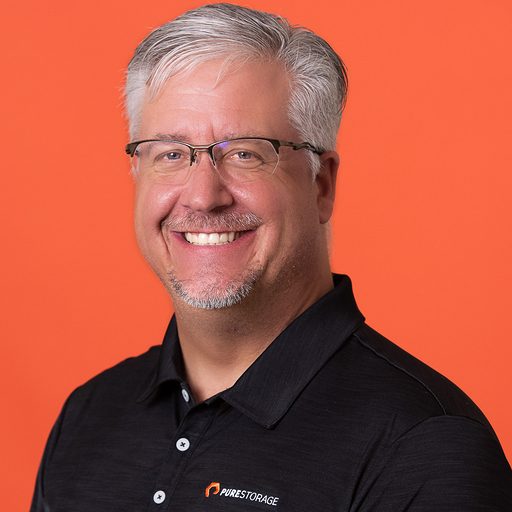
Don Poorman
Sr. Technical Evangelist, Everpure

Dan Angst
Global Director, Practice Lead, Data Services, Nutanix
The virtualisation landscape has been disrupted, leaving organisations evaluating their next steps. Join us to explore a game-changing solution: the convergence of Nutanix Cloud Infrastructure (NCI) powered by the AHV hypervisor with the Everpure data storage platform. This deeply integrated stack establishes a new foundation for enterprise computing.
What you’ll learn:
- How Everpure and Nutanix have combined an industry leading all-flash SAN, a disruptive hypervisor, and integrated management to support enterprise virtualisation needs
- The simple, seamless way you can provision VMs and storage via the Prism management interface
- How this new solution helps you optimise costs via reduced licencing complexity and better storage TCO
- The shared, customer-centric mindset of both companies
We Also Recommend...
Personalize for Me
My Updates
No updates at this time.