
1:08:47 Webinar
Ask Us Everything about Everpure + Nutanix
In this month’s episode of Ask Us Everything, we’re talking about the next chapter in virtualisation—powered by Everpure and Nutanix. As IT leaders rethink their virtualisation strategies in the face of rising costs and rapid change, this joint solution offers a simpler, more cost-effective path forward.
This webinar first aired on 16 January 2026
The first 5 minute(s) of our recorded Webinars are open; however, if you are enjoying them, we’ll ask for a little information to finish watching.
Click to View Transcript
Hey, good morning, everybody. I'm gonna let you all trickle into the room. Welcome to the January Ask Us Everything through the Pure Storage community. I'm your gracious host, Don Poorman, Technical Evangelist here at Pure, month is a hot one.
It, it's a long time coming, and there's a lot of excitement around it, but today, the Ask Us Everything revolves around the Pure and Nutanix joint engineering partnership. I'm joined today with Cody Hosterman, the smartest product guy I know at Pure. You're welcome, Cody. I- is that an insult, or is No, absolutely not, man, 'cause I put you above, I put you, I put you way up there, man.
A- and, and I'm also joined, we're also by Joe Hughes, a Field Solutions Architect for Virtualization, the largest guy I know at Pure, and the smartest guy I know at Pure. So today our goal with this conversation, and I'm gonna turn it over to Cody and Joe to mostly riff, is talking about the origin story of the Pure Nutanix partnership, what it looked like as we developed things together, how it's looking now, and ultimately
observations that we've had now that it's GA'd, and the things that we've gone through since the whole thing started last year. I'm part and parcel to this thing very intimately, because I was at Nutanix before I came to Pure, so a lot of what we're here is such a natural extension to I what next generation virtualization looks like.
And one of the things I've said in the podcast is that, in a previous podcast, things that the VMware Broadcom thing has done with people looking at alternative solutions is that we're finally seeing democratization of virtualization. I think for the longest time we lived in a world where it was the Henry Ford thing, you can have any color as long as it's black, and I, I think the movements that have happened in
the market with Broadcom and other things have now really brought a lot of interest to this space where people are looking for next generation virtualization support, and this Pure Nutanix thing lands right in the middle of it. So Cody, Joe, introduce yourselves and, and let's get to riffing on this. We're gonna get a million questions.
I'm gonna keep an eye on it, but just take it where you wanna go. Yeah, sure. Thanks- thanks for the introduction. And just to, just to reiterate, we, we were intending to have a partner from Nutanix on this. He had an unfortunate very last-minute emergency- Yep and so he had, he had to back out.
So it's gonna be Pure covering this, but please ask your questions. We'll be looping back, so if we can't specifically get to your question because we, we don't have the person from the Nutanix here for it, we'll definitely follow up in the community, right? So just absolutely post them. We just, there's certain things we may not be able to cover for.
He's, he's okay, but, like, he's just got something he's gotta deal with, so we just do apologize for that last-minute change. J- but to introduce myself, my name is Cody Hosterman, Senior Director of Product Management here at Pure Storage. I've been at Pure for getting close to 12 years now.
Most of that time I res- responsible for our Well, I s- I say virtualization, but, like, kind of VMware. Like, that's really what I focused on for, for many, many years, which kind of leads into some of our conversation here. These days I'm responsible in the product team for our virtualization product and strategy, as well as our public cloud investments.
So Joe? Howdy y'all. Joe Hughes, Field Solutions Architect here, actually covering, everything that we do in the data center and cloud between FlashStack and Pure Storage Cloud. Honestly, I spent the first 20 years of my experience as a customer, and ran basically every traditional bare metal virtualization, converged, and hyperconverged platform, on the
market, and then because I was lazy and wanted to eat the lunch on time, automated all those things. And, yeah, I was honestly never super interested in storage. It was always a blocker for me. And I loved Pure once I got it in place.
I still remember actually tweeting at Cody when I got my first FlashArray online. It was, two hours and eight minutes from unboxing to having the thing online on a Friday night. And honestly, it's, it's just fantastic to see, to Don's point, what's happening in the market now because of the fact that VMware legitimately had commoditized everything.
It was easy to be a VMware user group leader and a vExpert and, and see that basically everybody had this platform, that these things were easy. So we had to work on the next interesting issues, inside of people's environments. And now everybody's having to go back and look at things, and those of us geeks that have, you know, stayed playing around with everything in the home lab for 20 years, are
excited to share what's, what's going on. Yeah, great point. And to your point about simplicity and deployment, and, and I'll let you guys get back to it, Cody and I are veterans of a previous legacy storage company that really did believe in simplicity and deployment, so it, it's great to know that your experience was, was what we say it was at Pure, obviously.
So, Cody, so let's, let's talk about the origin story of this whole joint engineering effort, because it started over a year ago, and it has really evolved into something unique that I think carries a lot of strength with it, but give us a breakdown of it, what, what you see, what you saw, all that. Yeah, yeah. I mean, like, in reality it started, well,
well over two years ago at this point. It started with a tennis match, between some, some executives, if you really wanna go down to the, to the root of it. Ah. But, but I mean, I guess, what is it? If you wanna build a partnership from scratch, you need to first invent the we can go the whole way back if you
But in reality here, yeah, the, those, there was an inciting incident, right, of just the changes around VMware, and, one of our, one of our company goals, just 'cause it was, VMware's such an important part of our business. It still is, right? We don't really fundamentally check, expect a lot of that to change, but there's a big shift here, is-How do we, how do we
develop new partnerships and not just, taking some of the things that were out before and just like, "Okay, we support this. Let's add some more engineering on this plugin and that plugin," which But, how do we build some new partnerships in different ways that provide not only alternatives but potentially better options?
Only what you had before with VMware, but, like what the options were before all of these changes with Broadcom came through. And so, you know, we look at- looked at the overall ecosystem, and there's, there's a lot out there, right? There's tons of fragmentation, which I think is a good thing now. There's a lot of innovation coming, like,
across the board from all these different partners. But of course one that was on top of mind was Nutanix, and I You know, I even think back to, you know, my, my previous role at a different company, right? I worked, I, I worked on the s- the old Symmetrics platform back in the day, right? Yeah. And I left that team, 2014 to come to Pure.
And I, I came to Pure for a variety of reasons. Like, I was young-ish, I guess, right? And I was like, "All right. I wanna try something new and kind of go to something more startup-y." but really what I was interested in, the opportunity in front of me, was I had built a lot of VMware integrations, like, on- based on what existed,
and I wanted to come to a company where I could do it new, I could do it better, right? I could take the lessons that were learned and come up with some neat ideas and build it from scratch, right? That was kind of what draw- drew me to Pure in many ways, was that opportunity. But the nice thing about it too is that it was a much, much, much more modern platform, and
so it's much more simpler on that side, so I could focus up the stack a lot more. And that was kinda what brought me there. But at the same time I left, my, like, friend, mentor, colleague left pretty much about the same time and went to Nutanix. I think it was maybe three or four months after I left, right?
And he's on the N- N- NDB team, right? Over at Nutanix, their DBaaS offering, and, today. And, you know, we, we were texting, I remember, and we're like, "We'll work Like, "It'll, it'll happen. It'll happen soon," right? Now fast-forward 12 years, we are finally here, right?
But I The reasons he went there, were the same reasons that I came to Pure, right? It's just like, "Hey, it's, it's, it's a, it's a, it's a newer, refreshed technology. There's new opportunity to rethink how things work," and, was excited about those changes. And that's exactly what I think brought our leaders together and then brought our companies together too, is that we recognize
this one, the general opportunity here for, for our, our businesses, for our customers, but also just, like, there's just a shared blood and engineering principles, around how we think about building our products, and working with our customers. You can talk about NPS score and all that kind of stuff. Yeah. And this is really what brought a lot of this
together, and we're like, "Okay, can we do something different?" 'Cause I, I think there's some interesting questions here in, the chat already I'm kinda keeping my eye on, on the right here, about, you know, how do we, how do we work together? There's a couple ones that are fairly similar, so I'm gonna kind of glob a little bit of this together here, but, around, like, ransomware and protection of, like, anomaly detection,
how do we do this? One of the things I think is interesting about what we're doing here with this partnership is that we're not just NVMe namespace, right? If you wanna get newer. And then presenting it to some hypervisor and then putting a file system on it, and then the top does whatever.
It doesn't really integrate with that other than it's like a place to slap your virtual disks. What we've done here with Nutanix is we've taken our product and they have integrated it into their stack, right? So we didn't build a, a framework.
We didn't build a plugin. We didn't We- There's nothing you install, right, to get Acropolis working with the FlashArray. Nutanix's engineering team has taken our product and integrated its features into its stack.
And so we're both building this from both sides. So we're doing work on our side around Pure1 with anomaly detection and automation of snapshot management and things like that, so you get that value prop coming on the FlashArray side and everything that we do at Pure there. But also Nutanix, as they're building these things into their stack, whether it's their
hyperconverged storage or whether it's Pure FlashArray, these functions and protections, like it's, it's agnostic to what's happening up here. If they detect something, they need to a snapshot, it goes down to their layer, yeah, the back end translates it to a different call because FlashArray is sitting there, but that protection will occur.
So this is one of the cool things around how we've integrated this at level, is that it's not like two independent companies with things that you can kind of put next to one another and they you have your own silos. And while there are things here won't work or there are things there won't Like, these things are integrated together, right?
That, that core piece of it. Now, there's a roadmap. Like, there's things that we still There's some hooks that we still need to build, and there's improvements that need to be made. Like, we officially GA'd this, what, like a month ago, I guess? Yeah.
And it's the holidays- Yep so that's basically yesterday. But, like, so there's things to still do, and we can talk through some of these gaps. I'm sure these questions will come up. But overall, the foundation of doing that in, like, the tightly, like, tightly coupled way, but still allowing the value to show up on either side is really what we've done.
So these questions around how Nutanix flow can work with, how it work with us and how it, how we can work with them, they all come together in that way. And so as we're building these things, that, that value will come through. Yeah. The strength of this thing, in my mind, is this is why APIs were invented in the first place, right?
This, this whole thing is about us integrating our APIs together and cohesive environment that, you know, seems seamless between the two and doesn't require a lot of relearning or anything, and that's the nature of integration, right? Like you said, we're not just opening up an iSCSI channel from AHV to our array. No, there's an entire integration that allows for a top to bottom level
able to manage this environment, and that's actually different from some of the competitors who are starting to look at getting into this space as well. We- we're taking a completely different approach here that I know you're gonna highlight as you talk a little more about it. Yeah. So let, let's talk a little bit about the technology and what, what we're doing there.
And, and so it's like a One of, one of the, the folks on, Alex Carver, who's one of our technical experts too, he'll be helping questions, in, in the text, in the Q&A, things like that too. So, like, he'll, we'll be, we'll be answering these on both sides. I already see him answering a few of them, so thank you, Alex. But, yeah.
So let's talk about some of the technology choices that we made early on. So one, you know, Don mentioned iSCSI. We're not doing that, right? Just to be clear. I know that was just an example. But, like, NVMe/TCP is the focus.
Why, right? So, early days when we discussed, like, how we're going to integrate this, what makes the most sense, you know, we looked at Nutanix stack, we looked at where we saw the growth, we looked at where we saw the innovation, and we very quickly landed on, like, let's, let's make a modern choice, right? That, that was kind of the idea. Let's build something where
the, the market is going. And in particular, like, with these hybrid deployments going out or these high bandwidth Ethernet backends, we saw more and more customers moving towards Ethernet, specifically NVMe/TCP. And there's a variety of reasons behind this, but a big piece is, well, certainly
performance, simplicity of it. A lot of lessons were learned building TC- NVMe over Fabrics TCP compared to iSCSI, for instance. So this was really the path that we wanted to link. Cause wh- when you see what's coming down the p- the, the pike here with this, things like
TLS, in-band authentication, these things are actually being well-designed and actually implemented. There's stuff in the iSCSI spec that just nobody has ever built, right? These things are now actively being built into the stacks because not only are they well-designed, but they're also useful and honestly, frankly, mandated, right?
And things like IPsec and iSCSI just killed performance, and nobody really did it. TLS is a much better implementation. So this is where the winds were going. So we quickly landed, like, this is the place to start. I use the word start 'cause, you know, I'm sure more will come down the road, but this is
certainly where we've started. And so that was, like, kind of a key piece of what we're doing here, what we built together when it came to the data path. The other conversation that we had, was, like, what should the data store look like? Like, what, what, what makes the most sense?
Yep. And- Yep we had a lot of conversations. And, and this actually re- like, went back to a chat I remember I had at, Pure Storage headquarters, I don't know, 2000 and maybe, like, 18 or something like that, where someone asked, like, "Can you define the difference between NFS and object?" Like, give me, like, explain it like I'm five type of
And I think the best one I heard overall is that essentially the object, the things there, you're addressing as an API object. In an NFS, it's a file on a file system, right? So you can address a file on a file with an, with a GET or a POST call, but you can do that with object. Fundamentally, like, that's kind of, I think,
a good way of looking at it. And, you know, even if you go look at the VMware stack, you know, essentially what we did with vVols there, that's basically what it was. It was an object-based data store- Yeah because all those objects were API objects that you could manage, and manipulate, and clone, and snap, and that's where a lot customers drove that value.
That made the most sense there, too. Let's make this effectively an object-oriented, data store so it could be orchestrated and easily a, automated by not only Nutanix but also by us. And that's effectively what we've done here is when you create a vDisk, it goes to us, it creates a volume.
A- and the cool thing about some of these pieces too is these limits that we used to, used to exist, or still exist in many ways on the VMware side, like a VMFS is 60, 64 terabytes minus 512 bytes, right? And virtual disks can only be 62 TiB max. Why are these limits? They're file system limits.
Yep. And everything else that was built around it uses those same limits 'cause it's like, well, we need to be able to move it back to VMFS if you need to, so let's keep everything the same, and there's this least common no- denominator problem. This does not exist with what we've done with Nutanix.
You can create, technically, virtual disks, vDisks, right, that are petabytes in size if you want to, right? I think we David or Alex or one, one of the t- folks on the team tested just the other day. Q deaths, they're passed on to us, right? It's NVMe/TCP, so you can push a lot.
So having to paralyze performance because of VDisk or, like, to get more VDisk to get more performance, like, these things just are very, very different with how we've We've questioned a lot of these early limits, or, like, these limits that have existed out there and we're like, "Why do they exist?" 'Cause this is how it worked in 2002, right? So there's a lot of cool stuff around how we've overall built this, you know, over the
past couple of years. Yeah. Well, let me add something to that. You said something very, very paramount that I mentioned at the TechTalk last week. A question came in and asked why we didn't do Fibre Channel for this, and we w- I was very delicate about it. I was like, "Listen, Fibre Channel has merit. It, it still exists for very specific reasons, but it, it's almost like a
kind of thing with Fibre Channel when we know that Ethernet is the largest emerging standard out there." So we are looking forward and implementing for where the puck is going versus where the puck has been, to use, overuse that cliché. And I, I think our choice to do a vVols-like experience capitalizes on that. It, it does say, listen, there's merit in what they wanted to do with vVols even though
they're sunsetting it. We're going to do it here because this is what people need. They need petabyte-sized volumes sometimes, you know? No workarounds with RDMs like the old days with VMware. You know, we're, we're doing something that 10 years from now will be relevant, and I think that's a huge point to call out.
Well, I mean, I remember working with the first customer that, that implemented 64 gig Fibre Channel finally, you know, last year, on a, on the FlashStack side. But we wrote our first 100 GB end-to-end design back in '22, '23, you know, and finally got that thing, to where there are some customers now that are pushing 400 GB, right, as their, as their backbone- Yeah especially as AI workloads
come through and things. Like, it's the need for bandwidth and the need for that innovation is, is there.And we're hitting 800 now too, right? I mean, like, it's just, like, it's just doubling. It's, like, Moore's law is now the networking side, right? It's just kinda- Yeah got going a little wild.
So what's So, so give a breakdown, Cody, logically how the architecture looks. You know, you've mentioned NVMe/TCP. You know, how does the hypervisor get to it, and ultimately what are the moving parts in all of that? Yeah, absolutely. And, and just, I, I just noticed here too, and
I, I should know better, David Same is also helping Alex with the Q&A there too. David's everywhere, right? So he's also helping there too. So we got ton of people. Ask, really slam him with the technical questions, and we'll bring them into the chat too as we're, we'll, we'll triage these as we, as we work through.
And I'm trying to work some of the questions overall into the, to the, about too, so just keep my eye on it. But let's talk a little bit about the, the kind of the, the technical pieces. To me, like, this was, this was the most, like This is the thing I was kind of most surprised about was that this is You know, people are like, "Oh, Nutanix, like, they have their own
kind of KVM thing, and that's basically what it is with some fancy management on top of it." Right. But that's not what it is at all. They've actually have put a ton of differentiation into that stack. Yeah, there's shared libraries. They do a ton of con- contribution to the KVDB like, just Linux stack in general.
But the, it's very, very different architecture, right? And it provides a lot of flexibility. And I think a great way of kind of getting some quick insights around this, there's, one of their, I think, you know, chief, I can't remember his exact title, distinguished engineers or something like that, Koustadis.
You can find him on LinkedIn. Yeah. He has a great blog, The Nutanix-ist, or something like that, where he goes 'Coz he worked at VMware for many, many, many years, right? And recently came over to Nutanix, and he's kind of been walking through his same revelations around how they've, how they approach things differently.
Like, one of the things that struck me most is that, you know, in a VMware world, you're Yeah, there's clusters, but you're really still kind of, it's hosts. Like, you're, you're really thinking about hosts and how that works. Nutanix has got a very, very different approach, where it's like it's a cluster. Like, so, like, whether you have one, like, three hosts, right, five hosts or, like, 50
hosts, it, it's still treated as one, like, managed object. It's a very, very different model, and this is why they have distributed services that run across it, right? Even if you look at our FlashArray, if you, like, literally look at the host objects being created, like, you create a host object on the FlashArray and you plop an NQN in it.
If you have 10 hosts or you have three hosts, it's actually the same configuration looking on our side. Because really what we're doing is we're configuring that cluster on the array. So as you expand that cluster, as you shift things around, it's ready, right? So this whole concept, you know, in our vSphere plug-in we have, like, add, add, add
host to cluster type of thing, and so it goes, "You don't need to do that." and this is, and this goes up to, like, how, what's There's a thing called a CVM, a controller VM. This is some of the brains of it. The, the, a bunch of different services that are distributed across the servers, and this
is what's doing a lot of the management and the API calls to create a volume and figure out, all right, let's make sure the connectivity there, and, you know, are things appropriately balanced across the cluster. There's a lot of intelligence put into that layer. That used to do a lot, and still does a lot when it comes to their
hyperconverged offering, right? It's, it's doing a lot of the data and all the placement and things like that. All of that's gutted, like, effectively for us, and it's just like, hey, array, I just make sure I have this volume or it's resized to this or give me a snapshot, right? So a lot of that stuff that's in there is completely removed out, but the top end is and
where a lot of this intelligence comes in. And this is, this is a really im- important piece of how we have built that they've, they have literally taken our APIs, our SDK, and built it into that stack, and the CVM is simply just making those calls instead of also doing and so it, you create a Vdisk, it goes and creates a volume.
When you resize it, it resizes it. There's a question in the chat around snapshots. You, we have two concepts around snapshots in general when we're thinking about these, like, tightly integrated systems, what we call managed snapshots, which, like, all right, you're in Prism and you create, click, Snapshot and we go and create a snapshot.
That is actually a snapshot on the array, not just a volume copy. It's a snapshot. And then there's things like protection groups and, like, our auto on SafeMode type of stuff. These also create snapshots, but Nutanix is not aware of those snapshots, so we call them unmanaged, right? So things that are created on the array, they
are unmanaged. Things that are created by Prism are managed. Effectively they're the same thing on the array. They're snapshots. But, like, Nutanix has a management of a certain amount of them, and then you can do what you want more. And there's some stuff coming here in the, over the course of this upcoming year here to
make those much more integrated. There's some caveats on how you use unmanaged right now. That is top of the pri- I just met with their PM yesterday. That's top of our priorities to clean some of those pieces up here really soon. So, it's th- this, this, this underlying architecture is a key piece of how we've
integrated these things together. Yeah, and to Flex, my old Nutanix muscles, to add to what you said architecturally, if we look at it from a hypervisor perspective, meaning AHV itself, right? Nothing has changed as it relates to AHV talking to the CVM. It's still an iSCSI connection.
It's out of the back of the CVM where the NVMe takes over, and we feed the data up through the CVM to the hypervisor, which i- when I first heard it, I'm like, "Okay, there are valid advantages to the CVM that are able to do this, right? Visibility to the stack for Prism and all of that stuff. The other thing that I really like with them, I assume is still in play, you're gonna have
to correct me here if it's not, Cody, but they have a thing called path failover that if the CVM dies on a hypervisor, it automatically gets redirected to another host in the cluster. So, you know, that idea of multipathing is almost automatically in there, at least to the CVM. Now, from the CVMs into the, into the FlashArray, it's a different story.
But I, I, I think the lines that and where the integrations happened perfectly placed to take advantage of the strengths of the products themselves. Y- yeah, I, I think, like, that's, you know, in a, in a weird, nerdy way, that was kinda one of the things I was most excited about, is that, like, like-I mean, you know, Joe, you can tell me if I'm wrong or not here, but in many ways I built my early career on just
telling people what, like, the best practices for, like, configuring VMware with tech storage was. Like, that's literally all I did all day long. It was fun. Like, I'm not saying it was wrong. And we still do that, but the difference is who we're telling, right? So f- what we've done with Nutanix here is that we're not telling you how
to go do this appropriately. Our engineering teams are building it together, right? So we went through all types of best practices around how to, like, you know This is essentially what allow, like, you know, NVMe, TCP timeouts and should we configure queues differently?
How many different TCP connections? So this is all built into the code and configured together to be optimized, right? And so when we have new best practices, like, we just we roll out a new release with them, right? There's no tweaking and tuning to get this stuff working. You just- Right give us the, management IP and
then Nutanix configures the rest. And so that, like, this is effectively, like, this is the experience that we wanted to end with was very similar to the experience of, like, a hyperconverged stack, where you're not You don't have to configure the target, like, connection to the disk that's in This is the same thing, right? It's like, "Hey, I need an endpoint.
Here's a credential." Everything else is done. And so building that into the stack was a really important thing. I'm sure we're gonna start getting RFEs, like, "Well, I wanna tinker, I wanna, I wanna tune," and things like that. And we're really trying to overall avoid running into those situations where that happens, 'cause I've always said this too,
around best practices, is it is better to consistently configure it wrong than inconsistently configure it right- because it's, like, a terrible thing to troubleshoot, and that's an important part of what we've done here, is how do we better support it together? Well, because we wrote all the code, we configured the settings, it is a lot easier to
support, and we've optimized it for high-end performance, right? So the monster VM sessions, like, you know, it's just, it's there, right? Just start with it, right? You might need to hold back with QOS, but it's built for bandwidth. Yeah. And I- Yeah I think the, the other thing that this brings to bear, and it's the first
question that we got that came in, is that y- you know, this doesn't invalidate the HCI value that Nutanix brings, right? Hyperconverged infrastructure still has amazing value in the enterprise, but for customers who have a specific performance need that they may want to take advantage of or they find themselves out of balance between compute and storage, this is where the
advantage comes in, because storage can scale completely independently of compute. I know Nutanix has storage dedicated things like that, but the Pure way of doing this, provides an even wider net, I think, especially for VMware pilgrims I've got an ESX cluster that operates like this to my third-party storage. I need an apples for apples thing." And, and that's where this is landing in there.
Yeah. So- Yeah, it's, it's always funny to see how many people ask about the nerd knobs, 'cause, you know, I, I do remember doing a comparison. First of all, I, I did honestly send somebody to Cody's blog just article he wrote in probably 2014, 'cause, yeah, we had to go f- track down a serial number on a, on a LUN, of course.
But, comparing notes with somebody after we sat through, Cody speaking at, at VMworld, right, on, on core storage best practices, and finding out that there were people that had different interpretations of what that was, even though it should be pretty with what's there in advanced and settings and things like that, lot of people coming from the VMware side that want to know about all of the nerd knobs, and
a few of them actually have been a little bit upset that, like, they don't have to do anything because it's baked into the platform, right? Yep. All the engineering is done on the back end. Everything basically works as intended rather than as you configure, right? Which is a massive change just for the fact that you don't have to do anything.
Like, out of the box, it, it works and it's on newer protocols. It's inherently just better because it doesn't have 20 years of tech debt that everybody's having to make sure that they implement properly. Yeah, and I think you bring up a very good point. When we talk about simplicity, w- we're not talking about, you know, eliminating jobs or
any of that stuff. We're, we're talking about streamlining things. And to Cody's point, you wanna be consistent. You don't want inconsistencies in it. And if you open up the hood to the engine, there are gonna be inconsistencies. And honestly, I, I, I think there are better things to do.
It, it's not that it's invalid that people like their nerd knobs, especially when you're talking tech debt, but if a system's been designed to self-optimize, take advantage of that. That Because you have other things to do anyway, right? And th- that's what this thing is all about as it relates to its integration with Nutanix, that's for sure.
And I think that's a good segue into, like, a theme I'm seeing of some of these questions as well, which is migration, right? Yep. So, like, you know, a lot Like, so, our, our very, our very first Pure and Nutanix customer was a complete new customer to both products, right? Right out of the gate. They're just like, "We don't have either of
these things, but this is what we wanna do." And they bought it before GA, so- Yeah, you know, they- let's, let's talk how much that excitement that was, right? Exactly. So you know, like, but the point I'm making here is that a lot of these, a lot of these deployments are not necessarily greenfield. There's, there's existing infrastructure that you're going to move, right?
And so there, there's a couple things to think about, right? There's a couple specific questions I'll kind of hit on here, but the other piece here is, kind of speaks a little bit to that decision, is that, people have got Like, they've got a timer here on when they need to get these migrations done. And so doing Having to learn not only how to connect these things, but then also learn a
new stackUm, is a lot to do while you're also figuring out how to migrate everything over. And so the simplicity piece of that and that automation of the back end was really important, so you don't have to spend time on that piece. You can spend time on learning the up to stack features and offerings within Central and Nutanix itself, right?
That's where, that's where we want you to spend your time learning, not having to, to, to get the guts of these two things working. That's our problem to solve. If you have feedback, if you wanna improve it, if you want changes, please let us know. If you do want some flexibility on this too, like let us know.
Like, we'd like to understand, like, you know, the use cases and why it matters. Like, both teams are, are really like we, spent a lot of time yesterday, like this PM exchange about talking about not like features we wanna build, but like how simplify this, how do we make Like, there's a lot of focus between the companies on that. So please do drive that feedback back.
But back to some of the questions on migrations. I've seen a few kind of threads, but they really come down to two things. Like, where does Nutanix Move play into this? And like, hey, if I already have a volume, like what can I do with it? So first off, Nutanix Move is completely supported, right?
And if you use Move on the same array, right, we'll preserve that. If you're using Move to also move it, it will we'll preserve that data reduction, right? So, like the amount of swing space you need is minimal, if nothing, right? Because dee, doo, cool, same data- Yeah we're good to go. Yeah. Moving it from, VMware or anything, right,
into Nutanix doesn't change the data, right? And so we can reduce it identically to we did before. Or we don't have to reduce it again because it already is reduced. We're just like, "Yeah, we got that block, we got that block." if you have existing objects, like what, what maps?
Like, what do you need to do? So effectively, Move is generally, the recommendation. Like it's the one that's most integrated in their stack and things like that. But I wanna talk a little bit about the object model here and like what's possible. So we built a vdisk granular approach.
I've mentioned that many, many times. So single volume, there's no special Nutanix file system or encapsulation on it. It's a direct raw volume that's presented to your guest. So anything else that is also that can be copied into that volume. Like, so if you have a raw device mapping from VMware, if you have a bare metal server that
just has a volume on it, if you have a vvol, if you have a persistent volume claim presented to a container directly, on the Those things are the same thing. If you have an in-guest iSCSI volume, if you have an in-guest NVMe TCP namespace, like they call them namespaces, they're gone, it's all the same thing, right? So technically, yes.
Now, there's a little bit of a caveat here, 'cause I can, I can feel David getting nervous, I am, with the way I'm saying this, is, and he's off camera. So, is that there is a caveat with that right now, and that's what we're working on closing, is that Nutanix still tracks their change block tracking. We're working on that. Yep.
CBT is there. So if you overwrite the volume and that CBT is already populated 'cause that VM's been running, that CBT will be invalidated, and that needs to be refreshed. And so it's generally one of those things where like, we're gonna streamline that like very soon. But early on, really should be only used to
refresh from an unmanaged thing, like for, like for break glass type of scenarios. Like, oh, if something went terribly wrong, I need to copy it, I'll figure out my CBT thing later. Cause that would CBT being wrong will cause backups to have to be redone, that kind of stuff. So but for migration purposes,
technically it works. Pure vol copy, there you go. It's ready to go. You boot it up. There's some caveats around that. So if you It's a workflow that you want to do. So from an architecture perspective, RDMs, in-guest iSCSI, in-guest NVMe TCP,
vvols, persistent volume claims, right? For like- Yeah bare metal Kubernetes. These all are the same object that we have for a vdisk with Nutanix and are compatible technically. There are some orchestration caveats around that.
So if you're interested in that workflow, like if you have your whatever source environment on a FlashArray in that model, and you're like, "You know what? I don't wanna go through the whole software move copy, and I wanna get that in," reach out to your Pure team, right, or your Nutanix team, and then we can walk you through, "All right, these are the caveats and this is how we do." We're putting some more documentation and
things like that. That will go away in the future, right? So like, eventually we want to just like go nuts, like Pure vol copy all day long, like refresh. There's just a little bit of co- work that we need to do to kind of streamline that. So if you're interested in it, reach out and we can work with you.
But that's kind of the starting model, right? So the Conceptually, the goal would be like if you're not using vVols, you into it, and there you go. It's, the data's prepped, and then pop it over. Or if you have RDMs or whatever, like those are, those are fair game for that. And there's some interesting things we've seen too around just in general with migration,
with VMFS or even NFS, is where you can use VMKFS tools to, like clone it to an RDM, right? And if it's VMFS to that, then it offloads it with VAI, right? And so that makes it a really efficient copy there too. So there's some interesting things, and we can definitely go into more details as we put this
stuff out. But I just wanted to answer kind of There's, there's a thread of that question I saw, and I wanted to hit on it because I think it was a good segue from, from Don and Joe. There's one, there's one also- You got it that I wanna throw up there, e- Sorry, Joe. Especially as it relates to Move that I
learned with the tech talk. One of the things Nutanix Move could do, and there's a question in here about Nutanix Flow. If you're running NSX, Nutanix Move will move the NSX rule sets over to Flow as well for micro-segmentation. So they're not just simplifying the migration between hypervisors, they're
outside and helping with the network configuration stuff as well, which was powerful when I heard it. 'Cause when I was there, they didn't do that. So I was pretty excited to hear that. Yeah.It's, it's honestly got the capabilities of doing pretty much of VCF into the AHV stack.
It's, it's pretty amazing a lot of the stuff that they've done. Honestly, when we went through the, the cross-training with them just a couple months back, I, I was having tons of fun just catching up on what had changed in Nutanix, cause I hadn't, I hadn't really had- Yeah a chance to work with it much since about, 2019 on.
But to the point of, of folks getting nervous about all the things that Cody you're gonna try these things, including even some of us that may have tried QEMU image just to see how easily we could, uh- Ah clone things and move them around, do this with a clone of your workloads and maybe not your most critical. So, like, it can be done, just still there be dragons.
Like, take care of yourselves, folks. Yeah, absolutely. And to that point as well, and Cody you hinted at this, and we've got Dave Stevens on the line who we've talked with related to this, that if you have pressure from your CIO or your CFO, quite honestly, to say, "Rip and replace. Come on, how hard could it be to change
hypervisors?" Slow roll it, because there are things you have to consider when you move from VMware over to this. It's not that the options or the tools don't exist, it just requires a very specific tabletop exercise to go through. It- it's not like Indiana Jones replacing the gold object with this bag of sand like at the
beginning of Raiders of the Lost Ark. It is something that you definitely have to think through. And to that point, Cody, let's, let's talk about architecturally some of the things to think about if you're looking at this. You know, the HCI thing versus compute nodes, things along those lines, if that
You know, Don, him swapping it out without thinking did get his tour guide killed, so like- That is true actually it is kind of similar to that, if you really think about it. Yeah, absolutely. But, yeah. Yeah. Yeah. I mean, like, so you're just, like, referring to just, like, kind of the, the, the, the
considerations of moving from another one to us, or just, like, the differences between, like, hyperconversion external or Sorry, I was My mind was thinking about my comment around Indiana Jones, and then I completely lost track of everything. I can always distract with Raiders of the Lost Ark. But yeah. So you're referring to essentially, like, you
know, like, the, some of the considerations and differences between, like, kind of the default hyperconverged stack and Pure? Yeah. Right. Yeah, yeah. I mean, overall, there's, there's various There's a lot of similarities, right? Effectively in the sense of, like, the, the end user experience, right?
Like, the workflows are configured into Prism, and things that work on top of out of the box, right? This is an important part of what we did here, is, not break things. Like, I'll, I'll give another VMware analogy, is, you know who cared the most in many ways about vVolts with, with VMware?
It actually wasn't often the sto- the, the VMware admin. It was the storage admin. 'Cause the VMware admin, almost nothing changed unless they wanted to do interesting things. Beyond that, it was pretty much the same. Like, just creating VMs and doing whatever, and just the back end that happened to be
maybe faster or different, but fundamentally their life didn't change unless they wanted to take advantage of some of the advanced things. Yeah. And so we wanted that same experience here, right? If someone was experienced with the Nutanix rack-and-stack, they don't have to relearn things, right?
There's a storage endpoint for that cluster, and there you go. In this case it happens to be Pure, so authenticate, but beyond that it's very similar. Now, there are certainly are some differences, right? So, like, in the sense of there are some things that are to be validated, right?
We're currently working on Nutanix Kubernetes platform, right? So there's, there's no, like, direct support there yet, but that thing is coming. Actually this is Maybe, maybe while we're getting to this, I think maybe while we get to the comments, right? Yeah, so real quick surprise curveball. Right after me. Andy Brown was able to join us.
I hope everything's fine with your emergency earlier, Tom. Yeah. Thank you for- Apologies for being late. It's all good. No worry. Hey, you, you, you showed up. Oh, no worry. That's all that matters. Yeah. We're, we're getting into the finer nuance details of deployment scenarios and, and what it looks
like, so I'll let you and Cody riff it out. Go for it. Fantastic. So maybe Thomas you can take that one, right? It's just, like, some considerations overall around, like, what, what to expect migrating over, some, some differences on up the stack that might, that might matter,
kind of guidance. Just to kind of just feel free to riff on just as fo- as folks are moving to the Nutanix platform, like, what should they be thinking about and what problems do people run into? And just make sure you get ahead of anything like that. Yeah, absolutely. So I mean, you know, Nutanix i- as, our cloud
platform's been around for over a decade, right? So, AHV has been around for more than, more than 10 years now, so it is a enterprise-grade hypervisor with all the features you would expect. You know, HA, DRS, vMotion, et cetera, right? As far as the migration, I think you'll find that the migration's pretty simple.
We have a couple different utilities that we can use to help migrate your virtual machines over to Nutanix, most popular being Nutanix Move. There's a free virtual appliance that you deploy. You connect it over to, Give it credentials to vCenter, give it to Nutanix. It'll start copying that data over in the background while your VMs are online.
And then when you're ready to cut over, you can tell Move, "Hey, I want to cut over these 5, 10, 15 VMs," whatever it is, and Move will power them down on vCenter and then power them up on AHV. So, you'll If that migration goes sideways for some reason, you can easily power on those original virtual machines on the, on the ESXi side, right?
So we made that process very, very easy. You know, there, there are thousands of different, solutions that are already validated on AHV. You know, things like, Cisco ICE, Cisco Call Manager is gonna be, validated in the next couple months, right? So as I coach customers on, you know, how to
migrate to AHV, start thinking about all the, the third-party things that you use- Yep connected to vCenter, right? Your monitoring, your, your backup system, your disaster recovery. You know, you know, those kind of systems, let's, let's look at those together and make sure that those are gonna work just fine on AHV.
Most likely they will, right? Like I said, we've got thousands of solutions already validated, but that's to, to look out for.Yeah, your, your comment of AHV supporting virtual appliances, when I was over there and we were pitching AHV, that was always the longest pole in the tent- Yeah if a vendor would validate it on AHV, because ESX was the easy answer.
But it, it sounds like you've had a cascade of stuff. I mean, you mentioned Cisco, that was one of the bigger challenges when I was there with virtual appliances, was it supporting AHV, which that opens it up completely, right? And to your point as well, and this is something else that y- we- you have to think through if you wanna migrate from one to the other, is what are the things that surround
your system that may still have some kind of dependency on the VMware stuff? Chances are it's supported on the Nutanix side, but those are those fringe things- Yeah that will always catch you on the other side. You're like, "I forgot to take inventory of that, and now what do I do?" kind of thing. Yeah, it's usually not the applications or the VMs, it's those third-party things that, that,
you wanna really, take a second look at. Yeah. So Thomas, there's, there's a thread of questions here- Okay that I think maybe you and Joe might be able to, to address. You Oh, I know you can address better than I can. But networking, right?
So there's a lot of questions around just, like, you know, just, overall just like Nutanix Flow and, like, what if I am an, NSX customer? Like, what do I need to be thinking about? Yeah. Like, so, like, I'm cur- curious if you have some thoughts around, and guidance and recommendations on how to, how to manage that and what to think about. Yeah.
If you're coming from NSX, I think what you'll find with Nutanix Flow is that it's dramatically easier to use, right? For example, there's no change required to your physical networking topology, right? There's no VX LAN requirement, right? When we enable Flow, we go into Prism and we turn it on, and we start, we start
creating firewall rules, right? So, and these firewall rules are application, org centric, right? What I mean by that is, you can categorize your virtual machines on Nutanix. Let's say I've got a prod- VMs with a production category, and they can never talk to VMs with a dev category, right?
That's an example of a firewall rule on Flow. It's extremely easy to do. You can get much more complicated and as granular as you want, right? But, to start off, it's very easy. The other aspect is there's no separate management appliance you have to deploy, no
separate UI you have to go into. You literally go into Prism, turn on Flow, start making your firewall rules, and then Prism passes those rules down to the Open vSwitch on every, AHV host, right? So this is not something that you have to stand up and deploy. It's already there, you just have to turn it on.
That's awesome. And let's talk a little bit, Cody, we brushed up a little bit against this, and I think it's important to bring it back up to the highlight. Existing integrations that people have that are related to DR and business continuity, you know, Veeam, all of those things, if, if I'm looking at it from an integration
perspective in the ESX space or in the Nutanix space, what does that look like? And it mainly revolves around, Cody, you talk about change block tracking and ultimately how those products interact and where they interact in this different way of looking things. What, what does that look like, Thomas? Yeah. So, with the, with the fantastic
with Pure, right, we're leveraging Pure's, f- fantastic storage capabilities, right? You guys are handling the, the compression, the deduplication, the erasure coding, the encryption, all of that. So we're primarily giving you the, the management interface to manage the virtual machines in front of that Pure Storage. So, you know, I'd say we're, we're It's a fantastic combination of the two technologies.
Yeah, and I think, like, you know, an interesting thing about this too is I, I, I was having this conversation maybe about two years ago with, a partner, right? And they were trying to get into the DR space, right, DR orchestration. I was like, "Well, you know, like, it's really hard to break into that because people don't want to change their DR orchestration for just a random reason, right?" Because it just it's
too integrated, they're too reliant on it. They're Unless there's a really, really massive change, even a disaster is not gonna get them to not use their disaster recovery tool. That's what it's for, right? It's, it's, there needs to be something that's really forcing a larger change here.
And so a lot of those things are just kind of stuck there for a long time in customer environments. Whether there's something better or not, it almost doesn't matter, 'cause it's like, you know what? Maybe it's great, but this works, and I'm not getting fired because I chose a fancier tool, right?
Yep. I think what is interesting about this too is that since there's, there is a fundamental change here in many ways, right? The Nutanix stack and how it's architected, it's very different than other stacks, right? In, in good, positive ways. That also means, hey, maybe there's a chance here to look at something different, right?
So Nutanix has DR orchestration tools. Their asynchronous replication- Yep is, is, is integrated to external storage orchestration there too, and we're working on a roadmap to extend that in both directions, right? And so this is also an opportunity to r- relook at how some of those things work and
what, what options you might have. The, the I think the first conversation I had with Nutanix well, second one. The first one was fiber channel. But the second one was backup recovery. Like, I, I remember I, I said I, I this vividly, and I think, Thomas, I
said this exact same thing when we were in that kind of joint s- training session, right? Yeah. Is that, m- my f- my gig before Pure, I built all this integration with backup vendors to solve architectural problems, right? It's like, all right, it's performance impact, so let's offload it. Just make a copy of the data store and bring it up and do all this.
And then I came to Pure, and I did it all over again. Better, but I did the same thing all over again. And I was like, "I do not wanna do this again with Nutanix," right? Yeah. I don't wanna have to, like, all right, there's a backup way. But you know what? In order to make it really work at scale, we
gotta go work with the engineering team at Commvault, at Veeam, at Haiku, at, at Rubrik, at, you know, whoever, right? To then solve that problem, and then it, you know, it's a never-ending roadmap because we're constantly changing, changing- Yep chasing changes on that side and this side and this side, and we never get to do anything interesting.Uh, please do not do that again.
And they were very, very happy to agree with that. And so one of the important things here is that, like, this, this, like, backup procedure here is by default, like, when you- a backup occurs and a snapshot's created, to Thomas's point, that's offloaded to us, our snapshot. And so part of that core problem that happened before is not a problem at
all ar- architecturally. And we have a nice roadmap too to streamline that integration further down the road to make that even better, right? But the good thing about that, at the first step and then down, it has no impact to the backup vendors, how they operate with us, just makes it more efficient. And so the backup providers, like, the engagements that we had here to get to GA was
just like, "Let's just, just test, right? So make sure there's nothing wrong." But there's no engineering work on their side they need to do, 'cause it just works right out of the box. And that's a really important part, 'cause the one thing that people do hold on very, like, across We've seen this in the public cloud.
They've moved and shifted and changed all their vendors moving to AWS except for Commvault, right? They're sticking with that because the kind of the three, two, one rule in many ways keeping these things of separation of and state. And we see the same thing in many ways with Nutanix. But what we wanted to make sure is that it's
not, it's not broken or doesn't require a, an Evergreen//Forever list of engineering work just to maintain what you built 15 years ago. And that's, that's a key piece, I think, of what we've done together. We really, really We got a whiteboard, and here's all the things that people hate or we waste a lot of time.
Let's not do that. And I think that's a good example of what has changed there. I think this is really, a really aspect of the integration where, you know, Nutanix, is doing the disaster recovery replication. So, you know, you could even replicate those workloads to the cloud if you wanted to, right?
So it's giving you that flexibility. But for those of you that already have, you know, Rubrik, Cohesity, Veeam, Commvault, HYCU, other backup vendors I'm thinking of, right? All of those already have integrations with Nutanix Prism. They already work with this solution.
Perfect. So before we pivot to finishing out the Q&A, Joe, I'm gonna turn the spotlight on you because you've actually been out in front of customers talking about this. And in the interest of balanced reporting, l- let's s- give us some ideas of, of what's really resonated well with customers, but also what has made some hesitation happen out there.
I think it's important to round the story out that, like, yeah, we'd love this, but there are some things that, you know, customers would say that seem to So, you know, give some ideas on that. Honestly, it's, you know, it's been more where customers are, are asking, like, do?" And, and honestly, the last year that we've spent, doing office hours for all of our
SEs, I'm rather impressed that we've gotten to the point that we've become such trusted advisors for customers. They're asking their storage vendor, like, "What virtualization platform should I go to?" But the conversations are really turning more into, like, what are the things that I'm not thinking about, right? What are, what are the dependencies that I'm,
that I'm possibly not aware of that I have from a third-party vendor or some virtual appliance or some application that's in my environment that somebody somewhere is going to pull up a PDF that says not supported, right? That's, that's the stuff that they are basically saying, "That's my concern right now." Because other than that, like, customers are looking to replace an
and Nutanix is honestly the story that gives them the easiest migration and the best expanded capabilities for what they had that were, you know, honestly piecemeal Broadcom did actually consolidate VMware on the VCF stack. That was one of the biggest problems that a lot of customers had, was they had environments that they truly crafted themselves.
Every one of them was some special snowflake, because almost- Uh- nobody actually rolled out the entire VCF stack and, and had built or configured properly, to Cody's point. You know, a lot of them were, were configured as a standard, but maybe they could be. And so customers are really just trying to figure out, like, what is the easiest
migration path to a platform that doesn't put me in the same situation where I am the individual, you know, admin or organization that owns our destiny based on how well we can read directions and keep up with release notes on, you know, what bugs are out performance improvements we have to do that are manual tweaks. So customers have been more interested in just understanding, like, what are the things that
I'm not thinking about, or what have in the past on the customer side or with other vendors that have these strict requirements or have those weird corner cases that, that customers have run into? And other than that, I mean, they got the pitch. They heard the story. They've You know, a lot of them have, have dug
in and really read about the Nutanix platform, and there aren't concerns about it other than basically, like, am I gonna overwhelm my environment if I try and migrate it all over a weekend? Yeah, right? It, it, it's always the worst compressed timeline too, right?
Oh, I gotta do 25 TiB of migration in a Saturday night. Yeah, that ain't gonna happen, man. Nice try. License deadlines are always more, more compelling of a reason to do something than a project manager, honestly. Indeed. So we do have somebody who wants to ask a question live.
Let's try and unmute him and get in here. Carol, if you can hear me, let's unmute Kevin and have him ask his question live. Kevin, you're on. Hey, can everybody hear me? Yes, sir. How are you? All right. Doing good.
So we have a, a, a, well, I guess let me first say I, I, I'm a m- infrastructure manager for a hospital, and we have a, a huge push to get away from VMware. My question, I've got a couple actually. Are there any specific hardware requirements needed to support, the storage side into Cisco UCS?And, and I guess to, to elaborate around
that, I, I, I'm trying to understand if we can implement this with the existing infrastructure that we have, or do we need to add some cards into our arrays, or buy new Cisco Fabric interconnects that can support this? Or is our existing infrastructure with iSCSI backing, is all that's needed? And I would ask for a twist.
Before you jump in and answer that, Tom, Thomas, talk a little bit about hardware support, 'cause we did get a question come in, "Oh, I only heard that it's UCS only," and it's not. But definitely use Kevin's question as a way to slingshot that if you can. I'll, I'll address the hardware support, and then Joe, you, you address the, the storage
aspect of it. Does that make sense? So on the hardware side, Cisco UCS is a perfectly supported platform, right? So we're, X-Series blades, M7 and later, C-Series, you know, servers, M6 and later. We even do have support, support for B200, M5 blades, if you can believe it or not.
The one major thing that you wanna consider, on those is if today, SAN, you likely don't have any storage in those blades or servers, right? So in order to load AHV on those servers, we do require local M.2 cards, right, for the hypervisor to, to boot, right? So a lot of customers are s- are trying to reuse their existing hardware where they've
traditionally done boot from SAN, and they don't have those M.2s. So that might be something you need to add. But other than that, yeah, so it's The models that I mentioned there for Cisco, on HPE, it's, I think it's Gen 10 plus servers and later. On Dell, it's the 15G and 16G servers as well.
So we do have other, other hardware options if you're not a Cisco UCS shop. And then on the Cisco UCS front, of course, Intersight, plays a big role there too. Joe? And Kevin, Kevin, when you're looking at your speeds, your bandwidth, before we get to Joe, what speeds are you looking at? Cause I know you mentioned iSCSI.
Are you at 10 GBs, 25 GBs, 100 GBs? Where are you landing? We're, we're, we're currently 10 GBs right now going across iSCSI. And, and there might have been con- some confusion around FlashArray//X. I meant we're, we're running an, a Pure FlashArray//X array, not necessarily UCS X.
We're, we, we've got the B Series M6 blades. The, the I guess the other question So, so as I understand it, no would need to go into the Pure Array as far as support for this. So probably. It depend There, there's only a little bit exception.
Depends on how old it is, right? So I, if I recall, and, and Joe or David, you know, might be able to answer in the chat or Joe live, I, I think if, if you have a, like an R2, you might need to get a new NIC, shipped for that, and then anything beyond that, like, it should have the default stuff. So I think there's some older FlashArray//X and that, but C technically is now supported.
It just, we need to flip the documentation, like, tomorrow or Monday or something like that. Yeah. But FlashArray//C is now supported. Y- maybe you're here to hear it first, but, like, that is ready. But X, yeah, I think it's, like, R2 needs that, and then- I think it, I was up to an R3 that we needed to add R3 and, and earlier needs it.
But- Yeah, that's what Stamen just said. Stamen just said that R3 requires a card. R4 and 5 are- Right are needed ports. Yeah. My, my, my other question is, is more Pure-centric based. We currently have on our FlashArray//X, we're under a subscription model, and what we
have found out is all these benefits of deduplication that we're getting on the array does not take effect on our subscription. So we don't get the benefits of deduplication. Pure gets the benefits of the deduplication. So as we are migrating this data over, even though it will get deduplicated, it will be
calculated into our subscription utilization. So are there any plans to massage that during this, these types of migrations? And the reason I'm asking is because if we do decide to, to go this route, if I have a 16 terabyte document management system that I need to convert from VMware into Nutanix, that
16 TiB is going to be calculated on my subscription even though it may be, a net zero, size during the migration on the array. Yeah. So I think- Yeah. Cody, I don't know if you have an answer on that one, 'cause I've, I've got An answer on the pre-sale side at least.
We, we know that this is a concern. I've worked with a couple of customers that have some very large data sets that they're trying to do this, and we've, we've started kicking around the ideas to go work with the, with the team around reporting or with the customer success manager team to try and basically put some, some values for burst or some forgiveness around migration for certain
time periods that we are knowing that we're actively working with customers to try and plan out and, and work these migrations. Cody could answer more on the backside, though. Yeah, yeah. I mean, I think it's, it's actually, it's a, it's a, it's a, it's a good question.
And I, I, I wanna go ask our EG1 folks about how they might deal with this, right? Coz for people that don't know, like, how we do our subscription licensing, it's based on what we call effective use. And so basically what you kind of It's, it's consensually, it's essentially what you write to it, and then the back end around how much capacity is needed and stuff is, like, kind of
up to our services team to ship more capacity if you need it because of things, right? So it's just kind of on that model. It's not, it's not exactly just that there are optimizations around clones and things where you don't necessarily pay for that, and then there's also, there's, there's some options around snapshots now that So, like, I'm not a super expert on a lot of those
pieces there, but, like, it's, it's, it's slightly, it's kind of like that. So that's effectively what he's referring to. Um-Now, the, the thing about like, hey, if I am just copying a bunch of data and it's temporarily creating more effective use, 'cause I- it's still maybe still written here and, and also written here, and so, like, it's more effective used even though on the back
end it's the same. Now one thing is this is why Unmap is really important, right? Is just make sure that when these things get moved and deleted, it unmaps it, and then that will release those blocks, and they'll no longer be written. But, like, that's asynchronous in a VMware environments, and other ones may or may not actually have it turned on, and so there's
caveats around that. So it's a good question. I, I don't personally know the answer. If we have, like, you know, grace ways Certainly I would engage the account team on that and just say like, "Hey, I have this concern. Like, we're trying to do this.
How can you help me deal with this running into on-demand because we're bursting and things get cleaned up later?" So definitely reach out to them. I'm gonna go and personally ask about it 'cause I'm kind of curious about that too, cause we see migrations all the time, so see how that's handled. I wish I had a better answer for you other than talk to your account team, and I will, I
will talk to our AG1 team, but it's a good question. And I certainly would like to think about- Yeah how we manage that because it's gonna come up a lot, and I'm very glad you asked around that. But, yeah, that's at least my, my initial kind of thoughts around how that works. And, all right, Kevin, I'll jump in around the, the Cisco stuff as well.
There, there are gonna be some specific requirements, but that still goes back ways for just the NVMe TCP support overall. I know for sure that it's supported on 5th Gen FIs, and Cisco VIC 15000s, 'cause that was what we rode our, our 100 GB, end to end with all of the NVMe-oF, included into that design. But I wanna say that there are certain, at least NX-OS versions for 4th Gen FIs that will
support, NVMe TCP, and I believe also the 14000 VICs, but I'll need to go chase that down. I have the documents on all that stuff. I will get it posted up on the link that they put, dropped in the chat for the, Pure Storage community. We have a thread going about this, and then, once we work out anything as well for the EUC
and, and anything around a grace period or migrations or things like that, we'll put a note in there to, to let you know that the account teams also should have some updates about it, you know? And if you ever need to, honestly, just y- you See our names, just ping us directly. Like, it's not hard to find us on, you know, Twitter, Reddit, email.
Anyway. Yeah. Thank you. And- So Kevin, did that, did that land- Yeah in the, the area you needed to know? Yeah. The only other question that I had was around, VDI. We're a pretty large VDI shop, and from what I understand, Nutanix has some type of
constraints that doesn't support VDI- Correct or, or Citrix VDI. I- if you could briefly just touch on that limitation and where that sits in the roadmap for maybe future versions. Yeah. Thomas, I'll leave it up to you. Yeah. You know, Nutanix is a
fantastic platform for VDI. We've been running VDI for a long time. With this solution specifically, Cody, have you talked about vdisks, and how that kind of translates? Oh, yeah. I mean, there's, there's, there's a couple
things here. I think I came up already. Yeah, sure. So there's a, there's a couple things here, right, I guess I would, I would say, is that, early on, like, there's a lot of solutions that we didn't necessarily get to validate right out of the gate, right? So, some of, like these things like NKP, like this one I mentioned before, like this is kind
of in process. And other ones require a little bit more work and a little bit more partnership. And one of the things around VDI in particular too is that they do create because there's also a lot of different, like, back-end operations around, around VTPM that create more volumes.
And so there's just some s- scale testing and things like that that needs to be done. But the other piece here too overall is that, you know, as we're, as we're releasing, as we're releasing these solutions, what we wanted to do is make sure that we're really focusing in certain areas where, you know, Pure does really, really well of additional value here, and like kind of gaps as, as well on the solution side.
So what we're, we're focusing on here is a lot of higher-end capacity type of deployments, things that need a lot of additional, kind of, basically major imbalances around compute and capacity and so forth. And so, like, one of the priorities early on wasn't necessarily VDI, because that's Generally it's not as capacity constrained, right?
And so we're just kind of focusing on use cases. So it's one of those things where if it's something that you want the teams to jointly, like, prioritize of getting it tested and validated out sooner, please let us know. And let, you know, certainly let the Nutanix team know. Let us know, like, what use cases, volume counts, things like that, so we can try to
prioritize getting that done sooner, right? So just kind of one of these things that just didn't pop up in the, in the first GA release. Awesome. All right, guys. Well, we're getting the stage hook left. I figured this one would go long, and I figured the Q&A would flow in quite well.
So I really, really appreciate everybody's attendance here for the Ask Us Everything today out there in the community. Tom, Cody, Joe, thank you for your help a lot. Thomas, I'm glad everything's good for you. Any parting thoughts you guys wanna make before we sign off for this one?
I mean, the thing I'd like to say is just, like, we're WEKA We have We didn't just stop with the GA release. There's a lot more to do, and there's a lot more to prioritize, just the conversation that we have. So if you have specific asks around use cases, feature integrations, Nutanix stack, like, just validations or whatever, please, please, please let us know.
We have a pretty nice roadmap we're working on. There's still room to make some changes. There always is. So please drive that feedback not only to the Pure team, but also the Nutanix team, right? We're working closely, so either path is good.
But please do let us know what, what you need and what, what needs to come next. Thank you. Awesome. Awesome. Thomas- I'll tell you- What you got to say? Yeah, for those, for those customers that are, you know, looking for an alternative for their VMware environment, we've, we've helped migrate thousands of customers off of, off of
that platform over to Nutanix. And we're really excited about this partnership with Pure Storage, right? This is, this is a, a dramatic change in, our technology, right? And that, we, we see a lot of synergy between the two companies. So look for Like, like Cody said, there's a whole lot more coming, and we're very excited
about the roadmap here.Yeah, and those synergies extend beyond just our technical execution, right? Exactly. We both have incredible NPS scores. We're very customer-centric, so I, I think it's a natural marriage. Joe, what do you got? You got anything to say before we leave?
Honestly, this has been, the biggest excitement that I've seen in the, you know, community space in quite a while around, you know, hypervisor and platform and everything. And more people are seeing how easy it's going to be to not only get kind of a best-in-breed solution that, that really has just some fantastic engineering behind it, but we're starting to use this a lot more to, to discuss with customers that honestly, like, the nerd
knobs are great, but as some of us learned earlier on in our careers, like, you need to go work on the problems that actually, like, make money for your business, widget is the thing- Yep that drives your business, go do that and go report on it, right? Make the infrastructure migrations and all these things kind of easy and a story of the
past, right? None of us should have to keep, you know, telling war stories for the next 10 years. Yeah, and, and between the aggregation of all of us here, we've got a ton of them, so if there's a chance to eliminate some of that, I, I say bring it on. So, on that note, guys, thank you very much for joining us.
Thank you for joining the Ask Us Everything. Cody, Thomas, Joe, thank you again. And to everybody out there, if we didn't get to your question, please post it in the Pure Storage community. We not only have people like Joe and other senior technologists in there, but Thomas and
others from Nutanix are also a part of that community as well, and can answer these types of questions that maybe we didn't get to. So again, sorry we went long. It's a huge topic with a lot of interest, but we hope you got out of it what you needed today.
And again, guys, thanks for joining everything. We'll see you guys on the next Ask Us Everything. Have a great weekend.

Cody Hosterman
Senior Director, Product Management, Everpure

Joe Houghes
Consulting Field Solutions Architect, Everpure
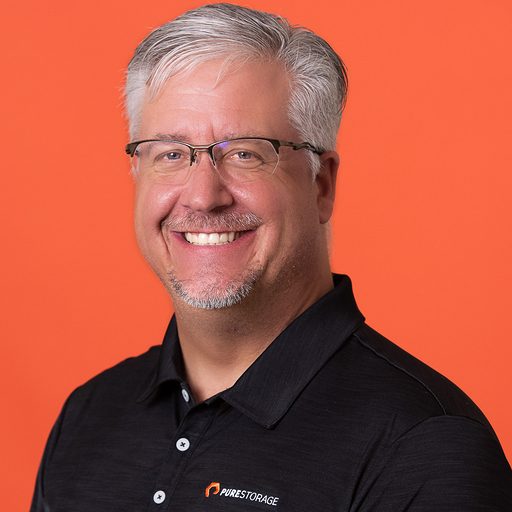
Don Poorman
Sr. Technical Evangelist, Everpure

Thomas Brown
Field CTO, Nutanix
Got questions about Everpure + Nutanix? Get answers.
In this month’s episode of Ask Us Everything, we’re talking about the next chapter in virtualisation—powered by Everpure and Nutanix. As IT leaders rethink their virtualisation strategies in the face of rising costs and rapid change, this joint solution offers a simpler, more cost-effective path forward.
We’ll start with a quick overview of how Everpure FlashArray™ and Nutanix Cloud Platform (AHV) work together to deliver the performance, scalability, and cyber resilience you need—without the complexity of legacy infrastructure. Then it’s your turn. Bring your questions for our experts, who are ready to discuss deployment options, migration strategies, and how Everpure + Nutanix can simplify your virtualisation environment while lowering TCO.
We Also Recommend...
Personalize for Me
My Updates
No updates at this time.