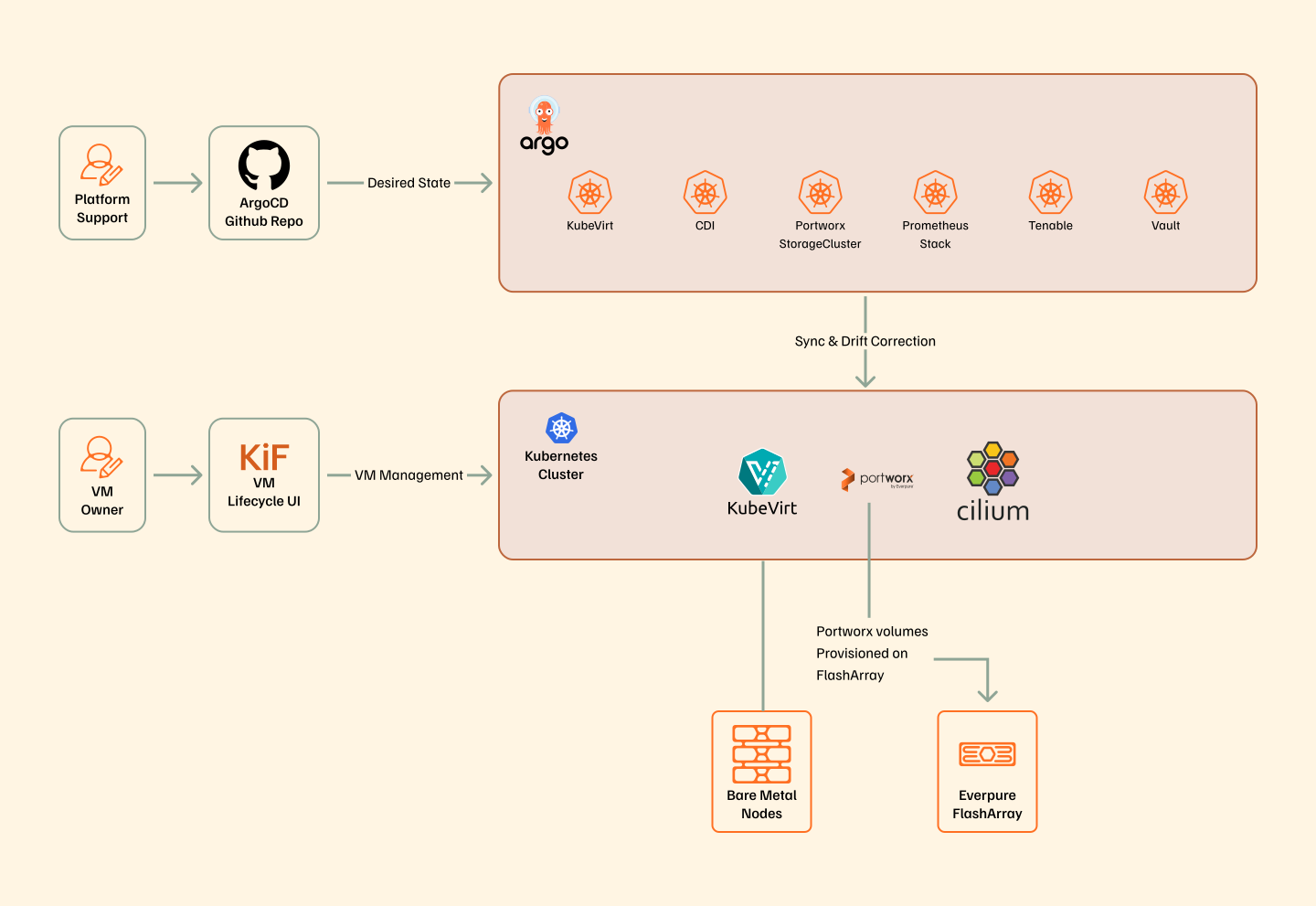
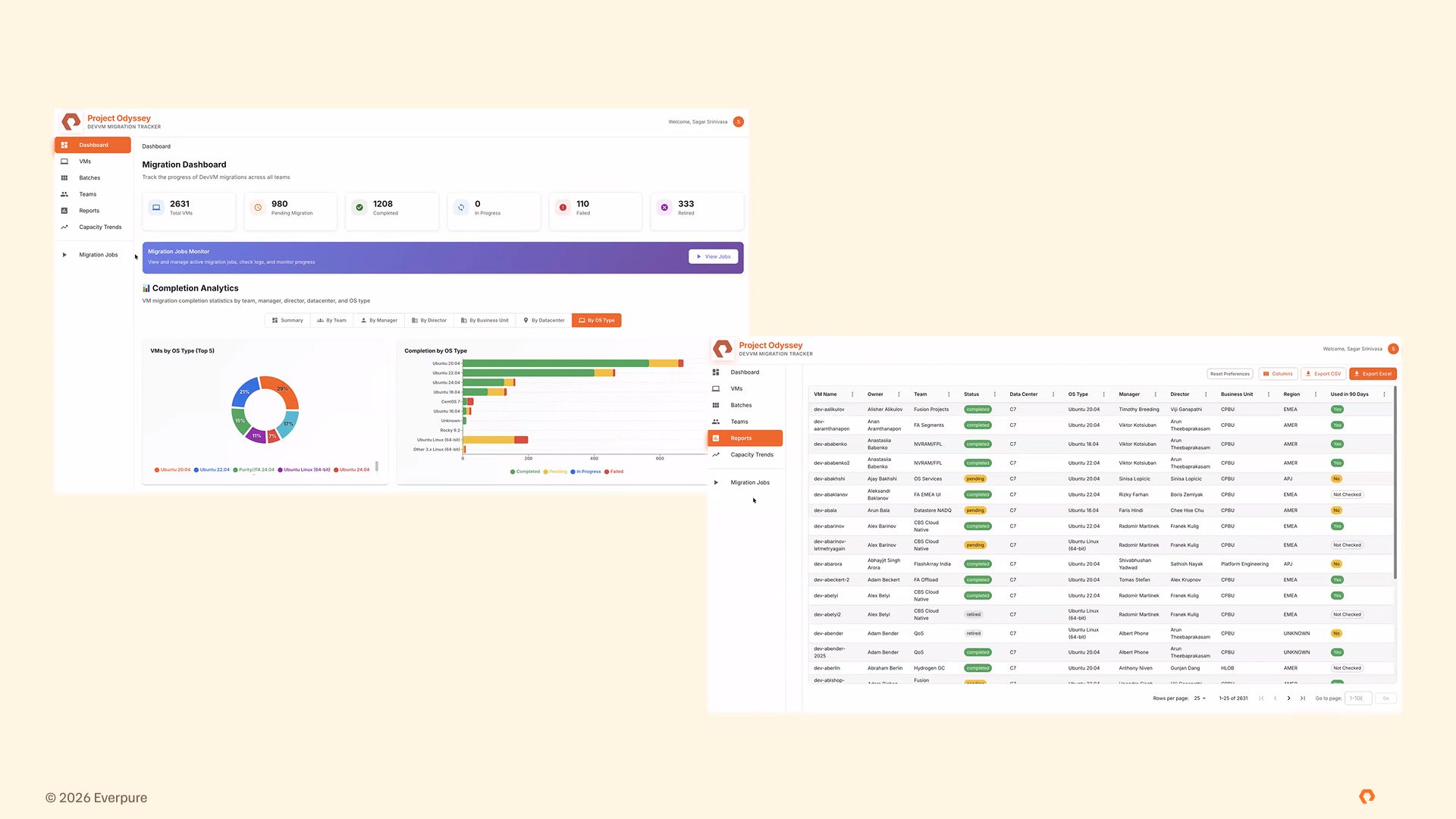
Three lessons stand out. First, start with developer workloads to build confidence; they have enough variety to harden the platform without putting production at risk. Next, invest in automation early because it lets a small team manage a large fleet. And finally, plan for network bottlenecks. Most virtualization tooling still isn’t as dynamic as teams assume, and ephemeral workloads expose those gaps fast.
Sagar Srinivasa, who led much of the migration engineering, comments: “Automation is critical, not just to start the journey but to sustain it. With one Kubernetes API, our developers get faster provisioning and the full benefit of the ecosystem, instead of orchestrating across multiple platforms.”
We’re currently migrating Tier 1 and Tier 2 workloads, including DNS, Artifactory, and our build infrastructure. The goal is to land about 90% of our estate on the unified platform, with the remaining 10% going to software as a service, public cloud, or retirement as appropriate. We’re already building hybrid applications that mix VMs and containers, and we’re preparing for GPU scheduling and AI/ML workloads on the same stack.
When customers ask us whether this path is ready for enterprise use, we can point to our own environment and answer honestly: we’ve walked it, it works, and the tooling is available to them, too.