
1:00:09 Webinar
Ask Us Everything About Intelligent Control with Everpure Fusion + Pure1
This month we’re diving into how Everpure Fusion™, Pure1® Workflow Orchestration, and AI Copilot help automate workload placement, protection policies, upgrades, and ongoing operational tasks.
This webinar first aired on 17 April 2026
The first 5 minute(s) of our recorded Webinars are open; however, if you are enjoying them, we’ll ask for a little information to finish watching.
Click to View Transcript
Well, good morning, good afternoon, everybody. Welcome to another Ask Us Everything here at Everpure. Again, I'm Don Poorman, senior tech evangelist for Pure. Thank you for joining us on this Ask Us Everything. This week we've got a really, really good topic that we're covering, all things
intelligent control plane. So we're going to be talking about all the things that you can think of in thinking long-term and large ways of managing your fleet, and knowing the intelligence behind it. And today we're joined by two real rock stars, Zane Allen and Mike Nelson. Mike's a good buddy of mine.
He's another tech evangelist like me, and Zane is a principal technologist. You guys are out there in Seattle with a bromance-looking thing, so thank you very much for joining today, guys. Yeah, there you go. I love it. Guys, I'm really looking forward to this, conversation, because obviously, Mike, you've
been working so hard on Fusion. A- and Zane, you know, I know how much you guys work on all the automation and things that come out of Pure1. So today is a really, really good topic, I think, for us to bring the audience in and really talk about the advanced things that you can think of with this intelligent control
plane, which is such an important part of our platform strategy, right? That eventually heads towards the EDC vision, if you will. So I'm gonna turn it over to you. Zane, tell us about who you are, why you're here, if you were a tree, what kind of tree you would be. Whatever you wanna say there.
Cause there is a nice tree behind you there. Yeah. Yeah, that's, that's a heck of a tree. With the- I love that tree. Been growing this my, my whole life. Yeah, my name's Zane Allen, as you said, principal technologist with Everpure now, right?
Pre- previously Pure Storage. A- and my specialist team, we are kind of across the board, kind of set strategy for customers and, do a lot of discussing about obviously where Fusion fits in in our intelligent data plane, and you know, just how to customers can solve their problems with kind of the next generation of storage.
So really happy to be here. Fusion's near and dear to my heart, by the end of this we realize that just Purity, Mike, right? That's right. That's right. It's part of Purity. Yeah. So, I'm Mike Nelson.
I'm a technical evangelist, here at Everpure, and, I've been working with Fusion actually since, day one, way back, many years ago. It's been, something that, has really been, embedded into the core of our Purity operating system and, and, I, I really have pushed for a lot of, things around the automation, portion.
And we really, you know, now that I, I bring it on, I, I we really wanna, kind of frame it out there that, when we talk about Fusion, Fusion is, is basically just one component, that is part of our Purity operating system. It really is. And yeah, Zane, you can bring up a slide here for us if we could. As you can see here, you know, I, I and we're
only gonna show this one slide, just so you know. It's not like we're gonna do a lot of, of marketing here or anything like that. It's, it's we just wanna give, give you a kind of an idea of where the Pure1 and Fusion kind of sits inside of, our, what we call the Enterprise Data Cloud. And, Zane, do you wanna talk a little bit about how that stack kind of works out a
little bit? Yeah, absolutely. So th- these are kind of the components, it's a lot of what Pure brings to the market from a, from a value perspective. So at a, a unified data plane, right? Really, really honing in on very simplistic.
We really only have two products, scale up, scale out. And on those we, we strive to have a unified data plane, meaning you can run really any protocol you need, right? You don't have to worry about different storage for different use cases. And so what we've built into this over, it's been a few years, right?
It's been some iterations of, of the intelligent control plane, but we've built this intelligent control plane, so we take that one step further and say, we have this kind of virtualized cloud of storage. You can address it as such. So again, we're stopping to think about individual parts in the, in the, in the
solution, and really more about your data services. Of course, we build that on top of our Evergreen architecture. That's our EverModern, as we used to call it, that basically gets better over time. A built-in roadmap is what I like to say. So that, you know, as you use the storage, it actually gets better.
You know, we, we put out more data 'cause we're really a largely software-defined storage, in my opinion. And then we have our purpose-built hardware for it that also gets better Better density, more performance, better, better efficiency, in, in that, right? So we can do a lot more with a lot less.
Then, of course, wouldn't be, useful if it couldn't support all your workloads. And this is a talk track I talk about a lot, is workloads come and go, right? Applications come and go, but your data's what is, durable, right? That's the thing that's the most important, so it's gotta be able to support the workloads you have today, as well as those you're gonna have in the future, right?
As we get into this agentic world, for instance. Right. And when we look at, look at this layered effect, that we, that we've developed, it allows for actual, other things to come into the in- the, the ecosystem, as we call it. It allows for integrations.
It allows for, partners, to actually, you know, create hooks and, and talk to our APIs and things like that to create the, the automation-Um, and, have the flexibility of utilizing, our intelligent control plane along with the unified data plane, and being able to do all these really cool and, and, things that, that, you know, can help you in your infrastructure. Yeah, we can really say we're API first, right?
We have a UI- Yeah. Yeah, that's what, that's what I was gonna say. It's- And how do we tie it into their APIs and their workflows, yeah. Yeah, that's what I was gonna say. You know, when I work shows as you guys work shows, one of the things that I get the biggest leaning in on is when I tell somebody that we're API first in our strategy with
Purity, right? The API is there before it even shows up in the GUI, and everybody was like, "Really?" I'm like, "Yeah, we just want to be an integrated part of the data center. We don't want to be the silo that everybody genuflects-" Yeah in front of, right? It's just an integration point.
And to your point too, Zane, with the workloads, I think that's a really good point, is that workloads come and go, and I've asked people that too, is like, okay, all the rage is over AI right now, and you should be modernizing your data management thoughts. But are you manage- are you, are you planning for what's coming after AI? Because we know- Yeah something else will be out there, right?
So- Yeah this all sets a great foundation for what our strategy is at least as far as data management's concerned. Yeah. And I, I just want to comment on the, what you said about API first is, a- a- and I'm being totally honest here, being in the, this, you know, business for a long time, especially on the engineering side, which is where I come from, right?
So I'm on the engineering side. I really have a, a big background with that. But e- a lot of companies will say they're API first, but they're actually not. A- and it, it all depends on how you frame it. But Pure- Pure actually is.
Everpure is actually, you know, we build the API, we build that core first, and then it gets exposed after that point. Mm-hmm. That's what being API first is. And without that API, you know, you, you pretty much just rely on that, you know, something coming out, via the UI or the GUI.
Yep. Which, you know, i- i- it doesn't help with the, with the automation piece, which is, you know, what I'm passionate about, being able to, to automate this at a level where if you already have automation in your infrastructure, you can just plug it in. You basically are just gonna be able to take it and, and, and call these endpoints and, and
be able to, you know, just plug in whatever workflows, that you need. And w- and speaking of workflows, we're gonna get into that as well. We'll get into something that Pure1 has, with the workflows, you know. So, if, if, if we have any questions out there right away, Don- Yeah, yeah anything, to start with? Not, not yet, but I do, I do want to pull a
thread on something, because this is very f- this happens frequently, right? We see things from our perspective with the product, and we say things like, "Automation, you should just do automation." You know- Yeah let's, let's dig into the nature of automation, because some people are fearful of automation because it, they lose control people embrace automation because they wear nine hats.
So when we're talking automation here, pitch it in a way that it works for the crowd that's here, right? 'Cause I, I have my own ideas, right, that lowering friction and human error, but when we're talking automation, give the better, you know, the, the better outcome, if you will, with regards to it. Well, a- and I'll take this.
Yeah. Yeah. Yeah, go ahead. I have stuff to add, but, uh- Yeah, um- let the automation guy go first so, it's all about outcomes, right? That, that's the way I frame it, is when you're working with automation, you're working towards an outcome. You're working to solve a problem, and you
want to provide a complete solution. So, when you think about how you structure automation, don't think about it as, you know, I want it to do everything and all the things. And because i- if you, if you take it from that standpoint, you know, you're gonna run into a bunch of, hurdles and roadblocks.
You don't want to do that. You want to take it slowly. You don't want it to encompass, you know, your, the entire, world as it is of your infrastructure right away. You want to take, take it and, and do it in, in pieces. And, and it's really kind of the SafeMode do it, because automation can be dangerous
when it's not, when it doesn't have guardrails. Yeah. And you, you want to be careful about how you actually set it up and structure it. So, my, my pretense is always to take a little bit slower, you know, a little i- in the stand of being cautious over just trying to get something accomplished. Now, in the today's world, you know, a lot of things are done via AI, and a lot of people
are paranoid about AI. They're paranoid about automation. Like Don, you mentioned, hey, you know, is it something that, you know, is gonna take away my job? Is it something that is going to, you it really, it, it Think about it as that can help you, not, not really hurt you.
Think about it as something that can, that can help you learn and also help free you up to do other things. Yeah. Other important things. And that's the way we kind of look at it from our, the ICP, the aspect, is we really want to free people up to do more important things.
We want those workflow tasks, to be, you know, self-motivating, self-moving, self-healing, to free you to start working on bigger and better things for your business. And I'd, I'd say our approach too, and you tell me if I'm wrong, but the way I see it, our automation, we kind of hand off that the storage can do f- Yeah storage layer can do for you, right? You don't have to think about in your
automation, you know, I'm just doing automation tasks, so I need to know every Array name. I need to add them- Yeah and make them changes. We, we take care of that for you. We give you insights into where you might place a workload, because the most, because we have that data as well. So kind of even simplifying automation, right,
to make-Free you up to get to that automation so you can be freed up to do other things, so. Right. Yeah, and free you up- That's, that's kinda how I think of Pure Fusion. Yeah, and it frees you up to get to the data level, right? Cause that's what- Yeah we're saying here with the EDC is that it, it's not as much
about storage management anymore. It, it's about managing into the data that you've got, putting it where it needs to be, when it needs to be to service what it needs to service. And- Yeah that's a different conversation, right? We're, we're higher up in the stack, and I think, to your point, both of your points,
automating into storage, yeah, that's great, but the whole point of this is to get you free cycles to think about how the data's being leveraged, right? Right. And- Right that's, that's massive. Like you said, Zane, workloads come and go, and the success- Yeah of whether they come and go is really about the data management, not the storage.
The storage is there, but- Get ahead trends and not a- ahead of, like, you how your storage is serving the data. Absolutely, yep. Right, and we always used to think, you always used to think down that path that it was just storage, right? Yep. We were focusing on that. Right. But now you've branched off into all
kinds of different architecture that deals with the data. It's not just storage anymore. Y- you know, different integrations, when you look at cyber resilience, you the, you know, the even backup and recovery, you look at all these different pieces and parts that are being put into Data management itself is evolving, right?
Oh, yeah. From a analytics standpoint, from a, being able to actually understand what data you have inside of those workloads. Yeah. Because that, that just opens up a whole, you know, a new world of thinking around how that data is actually, managed and where it is and what it is and what you can actually do with it, and how you can recover it, right?
And, and if you understand what data's where, maybe you don't have to move things around and take all that time to do things with it, right? Right. Get some insights to, to spend time with these new agents in the agentic and, and, and do other things with your data, right? Bringing, bringing that to you as well.
Right, and you get to the point of doing, like, workflows, okay? So, you know, with, with And just an example, you can do workflows with many of integrations and stuff like that, as you know. Absolutely. Pure1, but allowing Pure1 to actually, you know, do the workflows for you, be that automation piece where you can, ins- you know, create a recipe, create a recipe
everything from start to finish. As an example, taking something that is like a, a Snow ticket, a ServiceNow somebody fill out a ServiceNow ticket and say, "I need this storage, but I, I need it for this type of workload. I need it to be this resilient.
I need it to be, you know, backed up this much," whatever. Whatever parameters they want to put around it. Yep. And then actually have that workload execute all of those different pieces and parts, through the mechanism of not only Fusion, but also other types of agents that are used on the workflow.
Yeah. And bring that all together back and, and to an actual accomplishment where the user who, who actually submitted that original ticket gets something back that says, "This ticket is now, you know, complete. Take a look at what we've done, make sure it's good for you, and now we can And, and maybe handing it off at the layer that they care about, right, at
Right. They're like, "I don't need to know- Yeah the hypervisor it was deployed on or the storage layer- Yeah or where." Right, right. I just asked for this certain workload with this SLA, and I need it to be available in this way. Great. Yeah, why don't, why don't you let the system do that. Right.
Yeah, that's one of the- And I think- What Go ahead, Zane, finish the thought. I was just saying something you had said earlier is the, you know, eliminate mistakes, right? Kind of do that- Yeah, right in a consistent manner. Human error. I think that's a big thing.
Human error. Human error. Exactly. Yeah, and, and I think one of the things that you're highlighting is something that I learned very quickly when I was selling to service providers at a comp- couple companies back is time to service for them is everything, right? Oh, oh yeah. Somebody provisions a service, they can't bill
for it until it's actually working, right? So now you may not be paying for services that are getting automated and provisioned in a, in a regular corporate world, but you can definitely aim for time to value, right? How long does it take you to get a critical data service aligned with a If it's a manual process, it takes a lot longer than if it's something that's automated.
Yeah. Which I think, you know, what we're combining with the automations in Pure1, as well as what Fusion can do, we are really starting to answer some serious questions about integrations in a ServiceNow loop, like you said, that doesn't require Python scripting and everything. That was- Yeah always the biggest barrier to entry, where we're like, "Hey, use your APIs."
And everyone's like, "I don't know Python." Yeah, yeah. I mean, you can go to Claude Code now if you want, but- You got the example, you gotta hack it. Yeah. Exactly, Don, exactly. What, you know, this whole getting into AI/ ML and having folks who just wanna use
just being able to go into ChatGPT, going into Claude, going into whatever, and being able to say, "Hey, I need this, and this is the outcome I want." The end goal, which Yep. Give me what I need to do that." even at, e- even with Everpure, we've actually taken a step of, of helping with that because we just released, as a matter of fact, two weeks ago we released, the Pure1 MCP server.
Mm-hmm. Which allows for, you know, those AI agents to be able to talk to the MCP and help tools that, you know, provides tools agent to, to help with that, type of response that it wants to generate for you. The same thing with WEKA, we have a Fusion server that'll be released here in a couple weeks, which will be totally open source, and we'll be able to- Amazing bring that out to
the community and- But- and have it out to the public, where, you know, they'll be able to do the same thing. "Hey, I want to be able to, to take this workload and automate it and, and, and end up, you know, in this type of, of, P group or pod or whatever, inside of the environment. I want to have it resilient.
I want the snapshots to be this. I want that." all of that can be formulated inside of that AI agent with the help of those MCP servers because they bring in the tool sets that knows our environment, knows your environment, understands the language you talk to, and be able to build those automations out for you. Fair to say it makes it a little more, your
workflow's a little more dynamic, right? Yeah. Hey, I am asking for this task. And then the system can say, "Oh, this is the best tool-"And here's the change that- That's just a conversation with the agent though at that point, right? Yep. So you're just continuing the- Yep chat- Yep or conversation with that
agent as things change. Yep. Right? Yep. You add things, you remove things, you just continue that conversation. Yeah, yeah. So i- this, this is a great segue into the first two questions that have come in, and I'm gonna kind of combine them both.
The, the first one is related to I mean, I think we've talked enough about the value of automation, you know, reducing human error, faster time to value- Yeah But talk about how Fusion would work as the Actually the, the entire ICP. How would the entire ICP be integrated into an existing, like, mature auto, AM- mature automation framework, you know?
I've got Terraform or I've got something out there that I'm already using. How do we fold this in? Well, you wanna, do you wanna talk about it or you want Okay. So, um- That'd be nice, sure. Yeah. So you have to look at this from the standpoint of, th- what
tools you're currently using. Like you mentioned, you might be Terraform, it might be Ansible, it might be something else that you're using for automation. It may be a, a homegrown, you know, I got a bunch of scripts that I do all this stuff with- Yeah which we find a lot with customers, is that they, you know, they scripts that they threw together- Think that'd be the most popular. Yeah.
Yeah, yeah. Exactly. Exactly. You know, and you have to think about it from that standpoint, of, of how we can actually get Pure Fusion, and Pure1 to integrate with that. Yeah. Simplified down to the core is gonna be straight APIs, right? Everything is an API endpoint.
When you bring it into the fleet perspective, when you're dealing with a- accessing another API endpoint and you're adding a parameter, that allows it to identify with the fleet. Yep. That's basically all you're doing. And then the, the fleet lets you understand what- Exactly behind it- Exactly you don't
have to charge for the work. Yep And that's, like, you just add that. If you already have automations that work with workloads or work with, you know, data, you can just add that. Mm-hmm. It's, it's really simple to do. And, you know, when you think about it holistically, if you're running a playbook
that Okay, as an example, you, you do a playbook, in Ansible. A playbook will run through and create a, a virtual machine- Yeah will add all the networking, will connect the storage, will set up the snapshots for the machine, will set up the resiliency for the storage. You know, will set up services, add applications.
That all can be done within a single, automation, playbook- Yep or s- run book, if you will. Yeah. Okay? All we're gonna do is we're just gonna add, you know, hey, this little, this little API call, you're just gonna add that, and that's gonna solve that. Yeah. It's gonna solve for that problem.
It's going to add that capability. It's going to, you know, produce that outcome for you. Yep. And it's really that simple. A- and you address it at a fleet level and not the array level. Right. Yeah. Right, right. But you can go from, from fleet
thinking of more like a holistic view rather than just I've only focused on this array, I'm only focused on this VM, I'm only focused on, you know, this particular piece of the environment. Yeah. Think about it more holistically. Um- And, and it can simplify your scripting too, right?
It The type of workload I ask for is where it gets placed in the fleet, right? Yeah. Be it scale up, scale out, you don't make those decisions either. Right. Right, right. Right. Yeah. Exactly. That's kinda where that intelligent control plane is.
So I- Yeah, let's, let's- I, I, and I love that question because it's, I think that's the fear, is like, "Oh, now I have to change everything. I've already built this." No, we've actually simplified it. Right. Your scripting, your automation still works, you just have to address us, a lot simpler. Yeah. Right.
And as you know, I mean- Yeah we talk to customers, I've been in customer calls where they, they're just like, "Hey, we've already got this whole thing set up- Yeah do we really need to tear it all down or do we need to sit here and spend, you know, all this resources and time and, you know, six months, a year to, to, to re-" Because they to get there. Yeah. Yeah, yeah.
Yeah, exactly. Yeah. And we're just like, "No. No, you don't have to do that. Don't, don't think of it that way. It's not like a rip and replace." Yeah. You know? You're just adding the simplicity of, of being
able to address, you know, those APIs directly. That's all. And then- Yeah, and, and, you know, to, to go back to something, 'cause I wanna make sure that we've got a solid understanding out in the crowd who's here, let's talk about the origin story of, you know, Pure1 and Fusion as it relates to what's needed to get everything started, right?
Cause Fusion's in its own camp, Pure1's in its other camp. You know, just give a basic building block of, of how you get started with something like this. You know, I, I've never put Fusion in, right? So I wanna do it.
Talk about setting up Pure Fusion? Give me a quick rundown. Well, I mean, the Pure1 part's easier, right? Just buy, buy Pure Storage. You got that. Yeah. You're, you're already in, right?
So the Pure1 piece, our cloud plane. But, Fusion, yeah, it's, it's, it's very simple to get in there. There's a, there's a couple of prereqs, but they're, they're, they're not hard, and one of them is just having the right code base, which is very easy with us, right? That's something a lot of our customers, or our customers are just doing anyway.
You know, think of a, think of an i- an iPhone or whatever, you wanna update it, you get the new services. Especially if you're upgrading the hardware, you're gonna wanna go along that path. So that, that's a very easy prereq. We do have a, a centralized management piece, or a authentication, excuse me.
We can do that a couple ways, so even have SSO now, so that's great. But that's just to actually, I believe, kinda harden your security, right? And make it a lot easier to manage across that fleet. Cause again, as Mike was just saying, you control this as one entity. But really, there's nothing to install, right?
I mean, maybe that software upgrade I talked about. And this is a point I like to drive home. There isn't the setup of Pure Fusion. There isn't some other control plane. There's no switch. No switch.
It's, it's in, in the, it's in the Purity code. That's why I joked earlier. There's no Pure Fusion. It's just how Purity works, right? It's, it's based in there. And you'll see a little icon in the bottom left that says Fleet- Yeah and it's three easy stepsYou name a fleet, you get a key
so you can join it, and then you join arrays to that fleet. And we can do that across FlashArray and FlashBlade, right? So our entire- And everybody gets it. Everybody gets it. It's not, it's, it's not a special SKU, it's not anything else. It Everybody, everybody who's on the- Yeah the
software revision gets it. And, and then to your, kind of your point you were hitting, it doesn't change really anything- No except for the way you manage it. So there isn't, like It's still Pure Vol Create. It's still the p- Yeah it's not a whole nother- No construct that you're doing.
It's just an easier way to address our storage layer, easier way to, to see what's out there and ask for resources. And once you create the actual fleet, I mean, then, you'll, you'll start to see new things actually show up in the UI, right? Yeah. So if you're using the GUI, you're gonna see all these new things pop up, options and things like that. But, e- if you're working at it from a CLI or
an API standpoint, it's still the same. It's- It's, you're just adding another parameter to what you're using. Using fleet, fleet parameters. Yeah. And then, there is actually a tool, we talked about Pure1, and I joked buy Pure, but that's true, right?
You have an organization, your arrays go in there. We just added tooling there. I, I love Pure1, there's just tools come, it's, at, at the speed of cloud, as I like to say, that will allow customers So say you're a current Pure customer, you can go into your fleets of storage, or to your, your set of storage under that org, and you can see which
ones are ready, maybe have the right code base, which ones might already be in a fleet, which ones aren't, and then it'll walk you through how to set that up. So it's re- these three steps I talk about are all documented there. As we move forward, it'll make that easier to actually be able to control it through that control plane, meaning it's not a control plane for Pure- for Fusion, but it's a way for
you to easily configure, figure those fleets and see the- Well, and that's, and, and that's an important thing that I wanted to Pure1 obviously is a big component to the intelligent control plane, but I can hear some friends of mine here at Pure yelling and screaming, "But what about dark sites?" So- Oh we're going to assume, a- and, and we need to be clear, right?
There is no dependency of Fusion on Pure1. Positive. But Pure1- Yeah adds a lot of value to Fusion- Right as well, right? Yeah. Yeah. Cause Fusion runs on-prem wherever Purity is. Pure1's in the cloud, obviously. Yeah. That's- That's, that's the distinction.
That control plane's on-prem, or wherever the arrays are, yeah. Or if they're in- Yeah our cloud version. But yeah. The key thing to remember here is that it's just part of Purity. Yep. That's all it is. It's just part of the Purity OS.
There's nothing special there. And, you know, we have to Even from a dark site perspective, this has been top of mind for, at least, you know, at least two years now, and we've been developing, the, the, the roadmap going forward, is this actually came up. How do we actually, you know, make things so they're totally on-prem?
We don't have this cloud, we don't have to rely on the cloud. Yeah. Well, one of the things that came up that we do inside of when you create a fleet and you do something called use presets and workloads, it allows you to actually get recommendations about where you should put those workloads. Yep. And those recommendations
are coming from Pure1. Okay? Yes. We have something in Pure1 called Capacity Planner. Yep. Yep. That ac- actually telling you, "Hey, this is probably the best location to put that workload based off of its size, based off of what we know from a analytics, standpoint of
your arrays, you know, everything else." Storage type. It's all just- Yeah. A whole bunch of different- Whatever it is. Yeah algorithms in there. Which, which you can pre, all preset in a preset, so again, no human error. Right. But when you run into a dark site, not possible, right?
Yeah. So they've actually taken it, and we've actually taken that capability of getting the recommendations into the fleet itself. So the fleet actually knows about other arrays within the fleet. It understands what the wor- load, workloads are. Yeah. What the current capacity, everything, and you know, the different models that might be
within the fleet, and it takes all that into consideration. And it contains it within the fleet. It then never leaves, it never goes out. Okay? So, dark sites will operate just like transparent to what a normal site that can connect it to, to the cloud would be.
Just a lot of flexibility in the way that we build the code. What's the- That's why I love that flexibility, but- When we're talking flexibility, y- when we're talking flexibility, talk about flexibility outside of the on-prem stuff. So the Everpure Cloud stuff, Portworx, CSI, you know, I, I think clearing up everything that's in our portfolio as it relates to Pure Fusion, whether it's there or not,
good thing to talk about, right? So Fusion, can it work with the Everpure Cloud stuff? That's probably a good, good question to ask. Yeah. Yeah, yeah. Ever- Everpure Cloud is just Purity. It's just Everpure, so, And that, that, that
makes a really good point. So now you can do core to the edge to the cloud, right? Make that all look like one, or manage it like one data plane, right? So kind of that picture we had earlier. And it's, it, it, it's for both, right? It's, it's for the dedicated version as well as the managed service versions, right?
They're both- That's, that's correct. Yep. Yeah. Yep. Yeah. That's an important distinction too, a lot of folks think that the managed you know, it gets all the bells and whistles, right? Because it's, it's managed- Yeah by, you know, on the back end. Yeah. Yeah. But it's, it's important to note that they, they both get the same thing. Yeah.
You know? There's- We just simplify the infrastructure part for you in the managed version. Right. We're just simplifying the infrastructure for them. That's all we're doing now. It's even more abstracted, so even- Yeah more- Exactly. They get more- About data services.
Oh, wait till I bring up a que- wait till I bring up a question that's gonna come out about abstraction. I'm gonna, I'm gonna ask this in a little bit. Ooh. But- Ah. Right let- let's round the perspective out- King's abstraction let's, let's round the perspective out on the Portworx side, 'cause we don't do anything with Portworx yet in Fusion, correct?
Oh, no, we do. Yep. Oh, do we? Yes, we have- Okay, good yes, we do. Yeah, we do. Good to hear. From the- All right actual Oh yeah. Yes. From a Portworx perspective, we actually have an integration, that will allow,
that Portworx integration within, the Purity operating system with Fusion. So from an automation standpoint, Fusion can work with the CSI driver, you know, with, uh- Okay with Portworx, and be able to direct it to do certain things. Okay? So again-If you think about it, Fu- Fusion is like an automation robot.
We actually have an image, I think, on a slide- Yeah, yeah at one point. The PM that created that, or was the, the leading PM for Pure Fusion, created this little robot. And, we called it the, the Fusion Automation Bot. But that's basically what Fusion is.
It's just a robot. It, it, it's basically If you think about it, it's got, like, 10 arms, and it's like, you know, "I'm gonna put you here, I'm gonna put you there, I'm gonna..." You know, it's kind of like an automation, robot. It forwards commands to the other Fusion robot- Yeah on the other arrays. Yeah And it's g- it's doing the exact same thing for, like, Portworx.
So it's gonna actually integrate directly into Portworx, just like we do with partners like Rubrik, right? Yeah. So we're, you know, Rubrik is coming in and we're giving out to Rubrik. We're, we're throwing things at them, they're throwing things at us. Yeah. That robot, the Pure Fusion, is actually the, the thing that's ingesting that and,
know, being able to, you know, do those tasks outward bound as well. So, but it's not- But it's still pretty lightweight, right? It's like the, the Fusion fleet, it knows about the other things in the fleet- Yeah but then it'll let the, the individual arrays do the work. Absolutely. Absolutely. Or Portworx do the work. Absolutely. Absolutely.
You, you subtract it, but the, you know, everybody's doing their piece- Yep and it's just kind of- Yep, and that's gonna evolve Yeah That's actually gonna evolve. I mean, as, you know, as with anything, any software, you know, it's gonna evolve over time. Sure, sure. But it is actually very
lightweight, like you mentioned. Yeah. Um- Take a lot of overhead on it it doesn't try and- Yeah it doesn't try that the, you know, that that integration can already do. Yeah. It doesn't make sense. Yeah. Why would we- Yeah why, why would we task it with that? So yeah, exactly.
And just to clarify as well, 'cause we, we brought out the idea of the lack of dependency between Pure1 and, and Pure Fusion. It's a nice to have, obviously. How about Fusion running inside of Purity? It goes offline, "Oh no, all my FlashArray are dead." No, right? Right.
Fusion is just I- it's an aside that's there. If it's working, great, but it's not bring you down if it's not running, correct? Because each, each individual array within a fleet, runs Fusion. Yeah. Okay? So if you have an array that actually loses connectivity for whatever, somebody, you know, kicks a power cord.
Remember those old days when somebody would actually walk over and- Don't push the red button not- Yeah not that I've actually- Pull the arm out and it's, like- experienced that or done that. Yeah. Yeah, of course not just, you know, talking as a, you know, for a friend.
But- He's read, read a post. Yeah. Yeah, so y- you know, if for some it goes offline, the, a data center gets g- disconnected, you know, all things could happen. Anyways, the fleet itself understands everything about the fleet, so every array knows about every other array in the fleet.
It's self-contained. It's not something that, you know, will break if one array just falls o- falls off. Yeah. And that's, that's the beauty of it. It, it, it allows for, a, a shared brain, if you wanna call it that, amongst all of the arrays.
Yeah, there isn't, like, one array that's keeping Fusion in ch- There's, there's one coordinating it at any given ti- any set time- Coordinating but, but it'll move around. Yeah. So yeah. The fleet coordinator is- Are we using, are, are we using the same metadata service for Pure Fusion stuff, or do we run our own separate database for that stuff for Fusion?
It's all contained within the, the core Purity database, yeah. Car- can we Okay, good. Yeah. That's, that's good to know. Um- OneFlash. Yeah, yeah. All right. Here comes the fun abstraction question.
I've been excited- Oh about this one 'cause Guy So Chris Olsen put this in. It's really cool. Are there any plans on allowing a single Array to participate in multiple fleets, or a fleet hierarchy, like fleets for sites?" And listen to this, this is awesome, "And armadas made up of multiple fleets." Armada.
Armadas We need to put that in. Armada. Come on. I like that. That is incredible. Yeah, what, how, how many petabytes is a m- armada? We gotta use that as a name for something.
Oh my God, Chris. Yeah, we gotta do Armada product. Chris Olsen- Fusion Armada you need, you need to come over to the PM group. That is incredibly- That is really well done. So, but it does beg the question, right?
That's a great name. Because people start to get, you know, organizational things go through their heads when they think about grouping things in fleets, and where fleets can exist, and all of that. And I know we're building on that, but give us a lay of the land right now as far as fleet management and, and logical progression of how things can be grouped and stuff.
Give. Yeah, I'll take it. Okay. Absolutely. Topography. You just keep on pushing everything on, but that's okay. No, you wanna talk about topology, it's all right. Yeah. Let you call the automation stuff Mike.
Why would I touch that? Yeah. So, we have this thing coming out, that'll be here in probably a week or two- Yeah, yeah that'll be released. Very cool. Yeah, and it's something called It's called topology groups, or fleet groups, if you will, if you wanna call them that.
But we, we call them topology groups, and that allows us to actually organize those arrays within groupings. And the, the plan is, with that, the of that concept will be to actually be able to, do different things within those groups. And what I mean by that is to apply policies, to, to, only have, you know,
of if you're going to send a workload to something, you only send it to that topology group, not the entire fleet. Yeah. So they actually become little entities within the hierarchy of the fleet. So that definitely will address that directly. I mean, that will allow you to create, And it doesn't have to be, like, if you think about
it from a cloud perspective, it doesn't have to be like availability zones. It doesn't have to be based off a geo region or anything like that. No. It can be based off any type of organizational, aspect that you want to assign to it. It could be like you do line of business. Maybe you have a finance or an HR or whatever, group, group, type of grouping.
Or you have a actual, you know, maybe a geographical. Maybe it's, you know, I have, my, my main corporate data center, but then I have one in the West Coast, one on the East Coast, one in the UK, one in, you know, wherever. So all of that is, you know, pretty flexible. You d- you, there's not, there's not There guardrails around it, but it's, it's pretty
wide open.And we just plan on, on bringing more to that in terms of compliance. Okay? So you, you need these type of arrays to be compliant in this manner. Well, maybe you just want that to be a subset of your entire fleet. Maybe you want- Yep that to be just with, you know, this particular region that
you want to be compliant in this, in this type of aspect. Right. Or you want something around, you know, maybe you want to group them together based off capacity. Maybe they're like you have FlashArray//XLs, you have FlashArray//Cs, and I'm talking models here, if you will. Or even if you're working down on FlashBlade
because, you know, FlashBlade have models as well, different number of blades, things like that. Maybe you want them- Yeah to actually be kind of grouped together in some organizational way. Or file, file across both. Yeah. One, one, or test in dev or something.
One, Well, first it lets you see a fleet, but be able to break them up, right? Yep. The healthcare industry where I've kind of talked about this, maybe that's not out there, but something like Epic the same fleet, but I know I'm never anything else on there, but I definitely want to see it and manage it from a to- and maybe I have more than one FlashArray//XLs like you say,
but I can, I can put that in the same fleet as the rest of my organization. But I can, yeah, 'cause then just kind of only address the, the pieces- Exactly in that. That's right. Now- So With a single, with, with a single array m- being member of multiple fleets, which I don't think is supported, there is an angle to think about though as it relates to needing certain control in a subset
of the array, and that's in the case of realms. Has there been any thought about Fusion You know, let's say I've got an array with four different realms that have four different configuration requirements that can be managed by four different fleets. I know I'm getting really confusing, but, you know, there is somebody asking- So,
realms are in the fleets, since not the, not the arrays? Or maybe I'm- Well, that's the question, right, is- Yeah. The, the original question was can a single array belong to multiple fleets? I'm gonna guess the answer is no. But- Yeah, so, yeah.
Go ahead. So I don't mean to interrupt you. So this has been a, a topic that has been brought up. We haven't You know, i- what's interesting about this, Don, is we haven't had a lot of customer feedback that, that is saying that they'd really like to have an array as part of multiple fleets. And, and the thing is, is that we need to
understand the whys and wherefores of, of, of that. You can't do it today, right? Right. You're absolutely right about that. You can't do that. And there's a lot of technical, you know, kind of nuances and things that we have to look at because if you have an array that actually has a configuration, even Let's take an example
from a government, so a governance or a compliant situation. That array is, is set up a specific way, and it has- Mm-hmm specific parameters that are set. Say it's set for a, you know, a, a NTP and DNS and syslog, and that's talking about from a configuration just a base- Right configuration standpoint.
If you start to introduce that array into multiple fleets that maybe have a conflicting compliance or governance set up- Mm-hmm for that, that's gonna cause problems, right? There has to be some way to remediate that or to be able to say Well, you know, you start getting into a lot of whys and wherefores of, of how you would actually manage that. It gets harder to manage, actually, in my opinion.
Yeah, I think- so I, I think that you have to take this from a standpoint of is it really something that's gonna be needed? I understand there are use cases around it. You know, there may be a use case where you want, a particular FlashArray, okay, to be in compliance this way, but you also want it to be part of this fleet, which has, you know,
this type of policies assigned to it. At the same time, you know, we, we need to understand why that would be and why you wouldn't just assign those same policies to the other fleet. There are all kinds of different things you can look at. I think maybe the idea was, and maybe I'm going into this, we're talking about
abstraction, is the realm is the entity- Yeah that can float around. That, it And I'm looking at it- The realm, because I know you have a bunch of arrays that are almost like in a trunk network. Right. I'm, I'm looking at realms like I'm looking at it from a basic- Yeah just a basic array standpoint.
If we abstracted abstraction, maybe- Right we could do that. I think realms adds that. Yeah, yeah. I'm looking at it from a service provider perspective too, right? Yeah, yeah. If I've got multi-tenancy on my array, it,
they could be belonging- Yeah the realms themselves could be managed by different fleets. But- Yeah again, it's a very niche use case. No, no plans for that or, you know, roadmap stuff. It is. But, but interesting idea. Yeah, yeah, yeah. Yeah. But more basic, a more bas- a few more basic questions because there are some really good ones coming in.
Maximum number of members in a fleet I think is 128 arrays right now. Is that, is that the max- Yeah on, on a the other question, which I, I didn't think of it this way, quite honestly, about fleet management. Look at me, I'm in my FlashArray UI managing my fleet.
I can't manage a fleet of FlashBlades from the FlashArray GUI, right? You've got to be in the FlashBlade GUI to manage- No, no FlashBlade based- No. You can put them together. It'll, it'll Actually- Really? So it'll take you over to the FlashBlade, but what I, I actually like this point because it's something, as we think about adoption of especially presets, and we haven't really
gotten into a lot about presets, I think presets make the file provisioning a lot easier. Absolutely. And what I mean by that is I have a preset catalog. I have presets that go to FlashArray. I got presets that go to FlashBlade.
I don't care. When I choose the fleet, that, that, that operation, no matter what I'm logged into, goes to the appropriate place. So you can very In, in that sense, you can very much manage either one from either- Right. Yeah. So we've, we've got a little bit of- But it would be blocked on FlashBlade, et cetera federation. We've, we've got federation in the
GUI for this, quite honestly, right? And I can reach to both sides of the fed-, which is great 'cause I hadn't worked with it enough to do-Now- Cross volume individual, management of, like, I want to go just go see a volume or a share, yeah, it's gonna to the, to the appropriate UI, but- Right you know, you do it in API sense, it doesn't matter, right?
Yep, and I think that's gonna evolve. I think that- Sure the journey is gonna to a point where we'll be able to add more of those components to it eventually, where we can just do- Yeah you know, go into one array, whether it's a FlashArray or a Flash Blade, and be able to manage each other. But that's gonna take time, right?
And to address also the capacity, like you mentioned, the maximum number of arrays, that, that is actually increasing, right? So we started out at 32 was the maximum. We've gone to 128, and now we'll be just going beyond that point, and we're scaling in the, you know, i- in the Going from there and going, like, 100% more.
We're, we're talking about going into, the realm of, like, four dig- you know, four or five digits, of being able to- Yeah, that's- Right it's obviously- That's with the topology- Because we do have- or topology groups, right? That would really make the most sense. Yeah, and we've got Right, the topology group thing is gonna matter for that and, and it, and we do have some customers who have, you
know, 1,000 arrays, so- Yep. Yeah, yeah it's definitely very handy for that. Another, real quickly, sorry Mike, it I wanna make sure we get some basic stuff in. Enterprise ready long life release Purity version that Fusion is running on right now, is it 6.10?
What is it? What's, what's the version? Nine. Nine? Six, 6.9. Yeah. But 6.11's around the corner, so. 11's around the corner. LLRs are odd. Yeah. Yeah. Okay. Remember, LLRs
are odd version numbers. Yep. That's right, they're odd. And so it- And- Fusion came in eight, so nine is the, is the roll-up. Yeah. And nine is, is nine enterprise ready? I thought I saw that the other day, that it is.
Yeah. Yeah. That they've, they've run the code enough to where it's enterprise ready. All our LLRs are enterprise ready now. Okay, perfect. Yeah, that was just another basic one that I wanted to get out of the way, with regards to it. Yes.
Yeah, you should, you should feel very comfortable, and we have quite a number of customers. Honestly, I look at Pure Fusion adoption. I actually look at it pretty daily basis. That number of customers that could be in fleets that maybe aren't there yet is actually
growing pretty fast every day, so, so customers are, are adopting the code level is what I'm- Yeah, I saw we tipped over 1,000 the other day now. We're- Adoption, but I mean, we have almost 3,000 that are ready to go, right? So- Yeah, I mean- Yeah you have to think- Just meaning their code, their code upgrades are going pretty, you know, quite well. You have to look at it too from the
I think, some numbers that we've gotten in, you know, from telemetry is, our STaaS, you know? Yeah. Our self-service upgrades. Right. And our, you know, dealing with the non-disruptive upgrades have just gone very well. Yeah.
Extremely well. Yeah. and we've had very low incident rates around- The, the stat I've heard, I don't have the stat, but I've been told less CSAT issues or customer, issues- Right when you use an STaaS, and you stay current, cause LLRs probably fixed the problem that you're finding in something that's Like, probably, I'm sure it did.
Like, something you may have found a while ago if you're, if you're behind So yeah, if you're not, if you're not familiar with STaaS yet, that is something I recommend everybody go out and take a look at- Yeah and see how it goes. It's the same process as an upgrade. You have support on a speed dial, if you will, if you need it.
We don't We back out of anything if we You know, we do all the same tests, like, you don't have enough paths. Yeah, all the prerequisites. Yeah. If you don't have enough controller, you're in trouble. I won't do this upgrade." in fact, I had that, I had a lab here and I only had one connection. I couldn't use it until I fixed that so I, I know- firsthand that that's how that works, so.
Right. How I mean, you guys, you guys think about this from the past, though. We've all been in this industry for a while. We've all dealt with storage. Think about it 10 years ago, 15 years ago, about a company actually telling customers to do their own upgrade- Yeah. Of their arrays. I mean, that just There are other companies
out there that still don't- It's a paid engagement problem. You're, you're giving me- I know it's a paid engagement- Yeah with a lot of the companies. Yeah, you're giving me PSTG from a couple of companies ago- when a controller blew up in the middle of it and I had to get one drop-shipped in the middle of a snow storm. Yeah. Yes. I bet it, I bet it
was running Windows XP too. Oh, man. You gotta check the firmware- You're very close. You're, you're at Yes. You, you, you nailed it. You, you nailed it. I wanna go back to- Been there a little bit
about the intelligent control plane, you know, we have talked about abstraction, organization of fleets. We got a question about the Pure AI Copilot, right? Asking for recommendations and things along those lines. When AI Copilot recommends things, does it pull in any type of
local governance challenges, like Pure, you know, I could see it, right? AI Copilot, I'm, "Hey, where can I move this data?" And I'm in Germany, and it's like, "Oh, move it over to the FlashArray." No, you can't do that, right? Data sovereignty. Does, does Copilot, in any of the recommendations that we bring to bear through Pure1 and Copilot, does it fold in localized
requirements that a customer would have? My understanding is, my understanding is that you need to provide that context. Yeah. Right? Right. Because, um- It would have to come from somewhere, right? Correct. We'd have to provide context to the, to, to the act- to AI to be able to do that.
Now, that's not to say that, you know, the, the Copilot itself doesn't have the tooling, if- especially if you're, you know, bringing an MCP server to it, add an MCP. That would, you know, understand that you are in a different region and be and understand what the governance laws are around data and things like that. And, and maybe if you use, the workload construct- Yep you could tag those things to
say- Right. Exactly "Hey, this is, this is"- Exactly. Going through- Yeah going through Pure1 with workloads, exactly. Yeah. You could tag those, and- Like, they'll, they'll, you know, stay inside this. Right. But it's not- Stay inside of a certain place. Yeah. Right. To answer the question, if Copilot
itself, when we ask that question, I don't know the answer to that. I don't know if it actually understands that without having Kontxtual. Right. It would be- Yeah, if somebody- It would be some kind of- if you tagged it, maybe you could say, you know, "Hey, tell me what-" Right "region might this be in." And I could be wrong.
I don't know. Yeah. I could be wrong. Yeah, and I think, y- you know, the-The, the one thing that I could see an advantage there being, right, is we use Glean internally, right? And- Yep Glean points to certain data sources. It would be pretty cool if Copilot could say, "Yeah, here's my repository
of security requirements. Go look there before you give me the recommendation." I, I wouldn't be surprised if that's something that, adding data- Yeah. Or maybe the SCP server can help yeah, data classification, and, being able you know, data around your data.
I, I'm using the word data too much, but- should buy a company that does that your data for your data We, we should buy a company that does that. Oh. Oh, wait a minute. I was gonna say. We did. I think we did. May have figured it into the change. I think we did. Yeah, that's the 1touch thing, right?
That's the 1touch advantage right there. Exactly. Yeah, look, look to what we're gonna do there over the next, uh- not too long ago, I think we did that. Done. Yeah, yeah. Yeah, and you can see the, like A- and we're kind of alluding to it, but all this foundation we're talking about, you, you get
onto that now. I'm managing fleets, I'm doing things maybe at the workload, the presets, this, the, the intelligent data plane. It lets us easily layer that right on top of it. Right now I'm truly just managing at a data layer. Mm-hmm. Hey, I, I want to know about my data, where it is.
Is it in the right place? Okay, now I gotta move it to the right place. Oh, I can use that data for another operation. Makes that a lot easier. And now I'm just managing on this plane, you know, kind of getting into that next level, that next layer I guess that'd be- Yeah like three or moving up and, and, and truly not even thinking about- Data
classification that storage. Yeah. Yeah, that's kind of key. That's, that's the direction. Right. It might be why- Yeah, it- we took storage out of our name. Hey, yeah. But I think it is.
I, might be. I, I'm not sure. I know I've been railing on against the Right, exactly. To, and, and to recap, one thing that up again in the Q&A, and, and we talked it earlier, you know, Purity being able to manage into FlashBlade, FlashArray, PureCloud stuff.
W- we're still saying, listen, a fleet can be across multiple sites, and the fleet- Yep can also include FlashBlade and FlashArray in a big kumbaya kind of smash together, right? I mean, we're- Okay. Yeah we're allow- W- No- It needs to be management, management connectivity, right? We are cross-platform. Yeah.
We are totally, uh- Yeah Pure Fusion is In the state it's in, the Purity operating system is cross-platform. So we have the ability to, you know, create presets and workloads cross-platform for file block, and, soon to be, you know, object on FlashArray, you know, object on FV obviously.
That's trying to cover all those types of outputs. Talked about it a couple weeks ago. We're already there. Right. Object. I was gonna say, object on FA is, has pushed. We're gonna- It hasn't pushed yet.
The Pure Fusion, the Pure Fusion pieces will come shortly and- Yep yep. Yeah, and I, I think one of the neatest things that you've mentioned a while back, Mike, when we put objects in FlashArray. Now all of a sudden we can set up a replication strategy between FlashArray and FlashBlade if you're using object, right?
Well, yeah, you can. But then I would go back to you why. You know, you, you have to, you have to understa- you know, why you would wanna do that because you- Right you have FlashBlade for specific purposes. So, I think that, some of the, some of the product people, even the PSTG, the
technologists would be That'd be the first question. They would be like, "Why do you want to do that? What's your goal?" Yeah, what are the goals? What's the outcome you want? Right? Outcomes are- Yeah number one. Yep. Right.
Because, I mean, you have to, still understand that the platform, when we talk about plat- the Pure platform, we have the, these, these different, dif- different devices that do, you know, have specific traits about them. And- Yeah they, they do specific things. So it, it Sometimes it's just, you know, it's good to keep things where they are and what
they're doing because that's what they were made for. But that's not to say you can't, you know, mix them together. You can't, you know, use, you know, advantageous if you only have FlashArrays, now you can use object, right? Mm-hmm. Which you couldn't do before unless you actually bought a FlashBlade.
And, and maybe- But if you have a mix- like an edge use case- Right or a small Right. Absolutely. Right. If you haven't mixed the two, you need to, you need to, I think you need to take a step back and evaluate why you'd want to actually, you know, intermingle those things together. Yeah, and, and we, we do talk about that, right?
Like, when we talked about object a couple of shows ago, Justin Emerson brought the point up that, you know, you just don't heavy lift the mess that you've made with file over to object- and it all goes away, right? And- That sounds like Justin, the mess. Probably need to get your house in order a little bit and ask a few questions why- And
take advantage of- before you do that the actual technology, right? Though, 'cause- Yeah. Right. Yeah, yeah. Yeah, yeah. Which it, it, it's the, it s- definitely sounds like Justin. It's like taking your mess- I know that, so- Right it, it makes perfect sense. Imagine, like, you're moving house, you just
shove everything in bags and just throw it in the new house. You know, when, when I was in the service provider space, when I was in the service provider space, our, our running line was, "Host your mess for less," you know? Yeah. "Just give me your mess and I'll take care of it for you." So yeah, that's, that's a, that's a good 1touch as far as that's concerned.
Real quickly, since we're getting close to time here, let's wrap it up a little bit. First off, I always love asking these kinds of questions. All this functionality in Pure1 with the workflow, automation and Pure Fusion and all of these th- what, what does this cost? Is this Like, what are the licensing costs here?
Um- Well, if you, if you act now, we're gonna throw it in for free, Dom. Yay. Need one of those flashing- That's issue need one of those flashing things, right? Yeah. Right. Right, and the whole point of this, right- $300 is that this is- No. Right, right. Sorry.
The point of this thing is it's Evergreen, right? Need a car. You need a car. It gets better over time, right? I need a car. Yeah. You get automation. You get automation. You get automation. Yeah, the, the AI/ML and I said it before, like,
just built-in roadmap, right? Where the function comes because you, you, you took advantage of the upgrades, the stuff that, you know, is part of your, your maintenance agreement, your subscription, to look at it.So yeah, you, you download. You get on 6.8, I'd say two or three, 'cause that's when presets came around.
I'd say just go to 6.9, 'cause it's the LLR. 6.11 comes in May-ish maybe after that, you can always take advantage of everything else that came in there. But it, yeah, it's all for the low, low price of free. And it will continue to, right? We're gonna add, like you kept saying, more functionality as the code gets better.
Fusion's gonna do more and more, right? It's gonna, you know, replicate more replicate- Do we see, do we see charging for it in the future, as somebody has come up with? Pure Fusion- It's not in my head. I don't- I, I mean, yeah, it's above our pay grade, but I don't see it.
It's li- If it isn't a fundamental part of Purity, it would be kind of hard to- It's, it's a fundamental part of the OS. Yeah. So, Yeah, I was gonna say, right? Yeah. Yeah. I th- yeah, there's no separate, right? It's not like, hey, I gotta upgrade- Right Fusion or install it, or even turn it on.
I just have to turn it on. Or I need a license key or something like that, right? Yeah. Yeah. No, it's just all included. And- Now, the automation piece we talked about inside Pure1 workflows, have to install it, actually. It's already running.
But, you know, over time that may come in different flavors depending on what it does for people. But, that's all, that's all out there and ready to use for our customers as well. But the Fusion part is obviously included, 'cause it's part of Purity- Oh, correct like you said. Yeah, part of Purity. Right.
Yeah, that makes sense. That's it. All right, guys. Maybe, maybe it- But we're- Maybe it won't ever not be configured someday in the future, right? It'll just be how we work and, and, uh- It'll just be there, man. It'll just be there It'll just be.
And actually, I like to underscore conversations like this with something that I've said, that I know some people in the company are like, "Oh, you can't say that," but I, I, I've said that, like, Pure is the first It, it will be the first storage solution you bought that you forgot you owned. Like- Yeah we're so leaned in on- For a while automation.
We're so leaned in on integration. We're so leaned in on simplicity. And I know the, some of the storage people are freaking out with automation, that they can't do their knobs, but it's like we, we need to move the industry along, right? It's not that it's wrong that you can't store, you know, do your configurations anymore, but
w- w- we really need to move down the line. Well, what if you could, right? What if you can just concentrate on the automation, and you don't really- Yeah the storage just hands you the things you need. Right. That's really what we're saying, right? Right. Yeah, absolutely. Maybe you can just operate the service now.
Maybe you can just operate on your automation layer, and storage just follows suit and gives you all the goodness that it provides. One of the core principles of Pure is, in, in Everpure I'm sorry. That, I just call Pure. Okay. Pure, I think. Yeah. but one of the core, core principles
that our company was founded on, and we always follow, is we try and make it simple. Yeah. I mean, we don't wanna make this hard. This is not We don't wanna make this into a, i- i- into an, a, a, you know, an exam or, or turn you into rocket scientists by an interface that you can't understand UI that just is so messy you couldn't, you know, find your way from point A to point B.
We wanna make this as simple as possible. Pure Fusion is part of that. Pure Fusion's just part of the o- the operating system. It's like- It's simple, and it makes all of your automations just simple. Yes. Storage is still hard, but we solved all that for you. Yeah.
You can just use it, right? We've solved those problems for you. You're welcome. You're welcome. That's what you were gonna say. Yeah. He actually, he coined that phrase. He coined that. There you go. And by the way, by the way,
somebody steal the Armadas thing and get it into- Oh, that the pipeline, man. That's a good idea. We need Armadas in there. Yeah. Yeah. And then, and then once it's Armadas, then the storage administrator can be the commodore, right? Like, we c- we can invent- Oh an entire brand-new job description.
Commodore. Commodore. Of the fleet. I like that idea. I mean, the fleet's in there. Yeah. I like the idea. Gents, we are at the top of the hour. Zane, give me one parting thought, and then we'll turn it to Mike, and we'll close it down.
I mean, we had it up before, legacy storage holds you back. So I mean, these, these, these things are all If you're already a Pure customer, take advantage of these. And we're all here, very excited to talk about it, so, so, you know, please explore and, and give us back your feedback so we can even make this product even better. So.
Yeah, I agree. Yeah. If there's one thing that I could, say is, it's not something that you actually have to turn on. No. Okay? just go out today, you know, flip the switch. Go ahead and, and, and go ahead and, and get in there and create a fleet. Just, you know, click on the, the fleet, click
on create a fleet, give it a fleet name, okay? And click create a fleet. You are actually just enabled. You just opened up a, a whole new set of, of things that you can do, within that environment.
It's that simple. It's, it's Re- realistically, it's three clicks to do it. Yeah. Yeah. Yeah, it's good stuff. And, and again, this is part of the Evergreen thing. It's always getting better, and it's always included as far as that's concerned.
So guys, I can't thank you enough for talking today. We got a lot of great Q&A in, a lot of great questions, a lot of great answers. Again, Zane, Mike, thanks for joining us today and stepping us through all things intelligent control plane. I know I'm looking forward to seeing where everything is going.
So- Thank you yeah. Good. Appreciate it. All right, guys. Thanks a lot.

Zane Allyn
Principal Technologist, Everpure

Mike Nelson
Sr. Technical Evangelist, Everpure
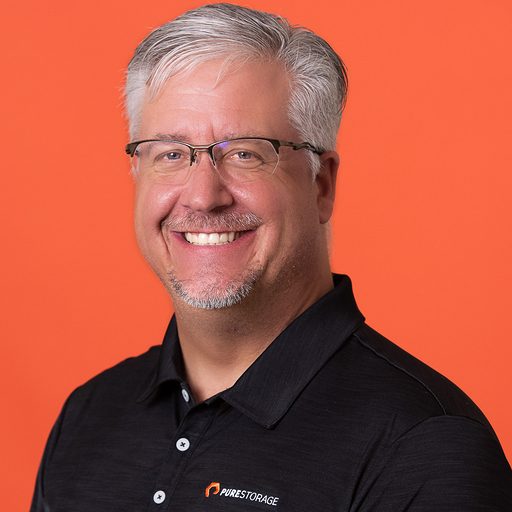
Don Poorman
Sr. Technical Evangelist, Everpure
Got questions about automating your Everpure platform at fleet scale? Get answers.
This month we’re diving into how Everpure Fusion™, Pure1® Workflow Orchestration, and AI Copilot help automate workload placement, protection policies, upgrades, and ongoing operational tasks. As fleets grow across sites and tiers, day-two management becomes harder to scale without consistent policy and orchestration.
You’ll get an overview of how these capabilities enable:
- Policy-based workload placement and protection across your fleet
- Automated lifecycle operations, including provisioning, upgrades, and configuration changes
- Copilot-guided recommendations to streamline troubleshooting and optimisation
- Centralized orchestration that scales beyond single-array management
We Also Recommend...
Personalize for Me
My Updates
No updates at this time.