
9:17 Video
AI That Delivers: From Raw Data to Mission Impact (Federal)
Federal AI starts with data readiness. See how agencies can move from raw data to real mission impact with a more secure, AI-ready foundation.
Click to View Transcript
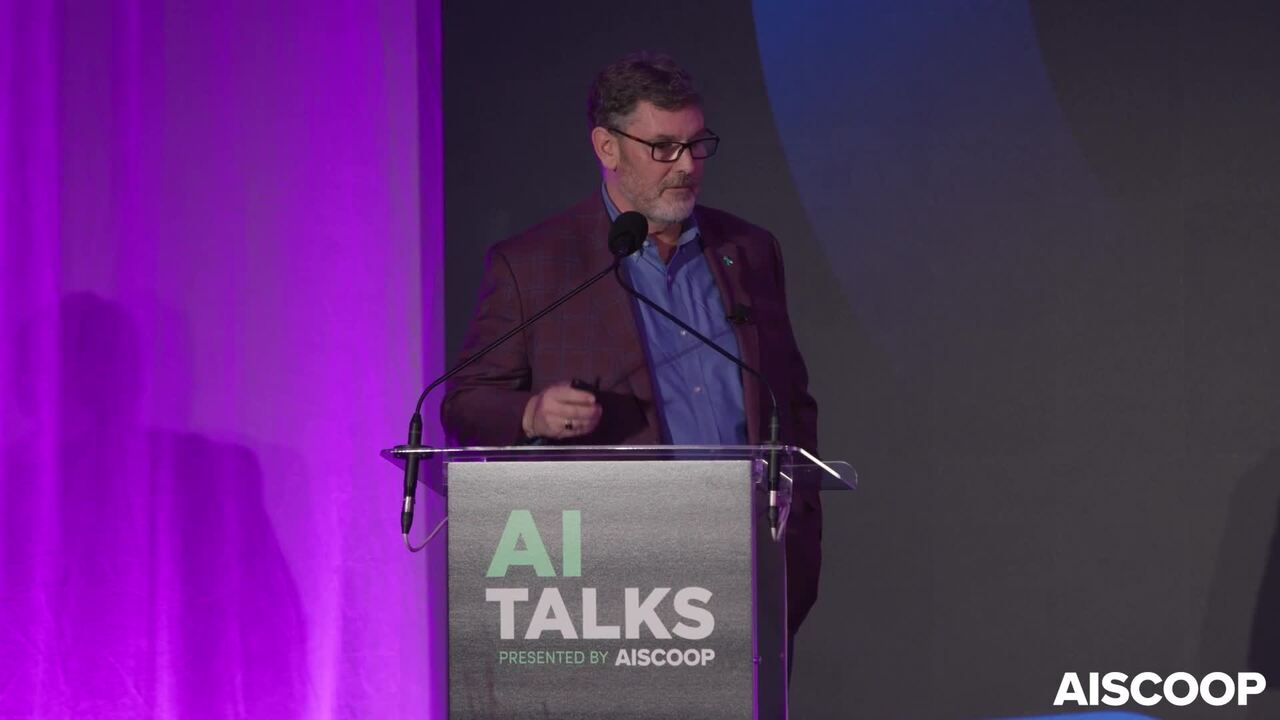
All right, good morning. So as Bill Cerreta said, my name is Dan Kent with Everpure. People you probably don't know or have never heard of Everpure, we're formerly known as Pure Storage. This year we re-renamed our company based-- acknowledging the fact that we've been evolving over the years from just, from just strictly a, a storage company to a company
that's more data management and how important that is in the age of AI. So we're now called Everpure. And I am gonna talk about data and the value of data in AI/ML and how that will help make mission, much more impactful. So when we think about AI/ML, clearly you've heard lots of stories today already about AI/ML,
but most of us using AI/ML on a daily basis, we think about it around workforce maybe operational efficiencies, how we use it, whether it's with chat or assistance. Then we have certain functions in our organizations that have been using AI/ML for a while, classic AI/ML around risk and, cybersecurity. And then we've turned around some of those tools and helped us with our, whether it's
citizen or customer experiences. We've opened up our digital front door with the tools, the classic chatbot, so get-- the citizens can get a different experience with us, a 24/7 experience. But you've also heard where now AI/ML is coming into the mission, into the business side of our, companies and our entities in public sector, and that's
really where it gets exciting. You've heard a lot of those stories already today. Giving some examples here, everything from in schools and universities using it for AI tutors and helping manage the student life cycle, to STaaS and local governments using it to finding water leakages and things that they'd never been able to do before without
using pure.ai. Certainly how they can help optimize traffic, which we could use in the DC metro area. And then of course, in the federal government, you've heard cases in, ISR and very, use cases around, the mission within DoD, but also within civilian agencies where we're seeing it being used for trade enforcement, fraud detection, et cetera.
So we're using AI/ML everywhere in our mission. But let me remind you that these applications have all been built within the last two years. You know what that means? They are version 1.0 applications. That just means we have a lot of work to do. We can clearly see the benefit.
We know the benefit of AI/ML in the mission, but we still have work to do with that, and gonna talk a little bit about that because AI/ML does make mistakes. And I want to give a couple examples of how AI mistakes have impacted people's lives as the companies. The first one, of course, is Air Canada. They use a digital front door to get to their citi-- consumers.
One of their consumers looked at Everpure fares, asked a chatbot, got a response, went and bought the airfare, came back to get his refund, and the company said, "No, we can't give you a refund. That's no longer our policy-driven." He sued Air Canada. He won the case, and Air Canada was found to be responsible for their chatbot's actions and
had to refund this, the employee. Now, clearly that did not help them in customer satisfaction. Remember about fourteen or eighteen months ago when Google started introducing AI assistants into their search? That was interesting, wasn't it? It gave some really interesting, funny examples, but it also
gave some serious examples. One-- a couple examples. One person asked about, "How do I make p-- cheese stick to my pizza?" The answer, of course, non-toxic glue, right? Another more serious, mistake was when someone who had cancer was asking for dietary information, and they were given wrong information.
And why did this happen? Well, because Google was using Reddit and other sarcastic websites to train its data. Looking to the last example, this is a STaaS and local example. Angela Lipps, who's a grandmother from Tennessee, she was arrested and spent five months in jail in North Dakota because her face came up in a facial recognition for fraud,
bank fraud in Fargo, North Dakota. Well, in the investigation, they found out that Angela had never been to North Dakota. She'd never been on a plane until they put her on a plane to extradite her out of Tennessee into North Dakota. So clearly, mistakes can happen with AI. That doesn't mean it's the end of the world.
This is new technology. We're still trying to figure it out. But rest assured, these were all self-induced mistakes. These weren't cyber attacks. These are self-induced mistakes. So how do we learn from this, and how do we make ourselves better?
By understanding the mistakes AI can make. So, like, taking a step back, we already heard it several times today, AI really is about Kontxtual. You get value in the mission when you get the Kontxtual, your Kontxtual, your business, your mission into the pure.ai.
It is about, how do I get my data to be used by pure.ai? And we can really do that three major ways today. First is to make your own training, make your own models through training. We might do that in DoD and intelligence agencies. Most civilian agencies, most public sector organizations, and most public entities cannot
build their own models. It's too expensive. But that's one b-- way of getting your Kontxtual into the AI model. The other is to do fine-tuning of a commercially available model or maybe even an open source model. More, user-friendly, a little less expensive, but you still have to have, obviously, skill
sets, and you have to have technology to do that. And then the last one is called RAG, and you've already seen, I think, a couple speakers talk about RAG, Retrieval Augmented Generation. This is how we take our own datasets and put those into a language that AI models can understand and to help build the Kontxtual, and we can do this on a regular basis.
So these are three ways that we can get our mission Kontxtual, mission data into AI models.All of these, though, 100% depend on having a data management strategy, and that's what's most important to get out of this So we had to get our data ready for AI/ML And you've heard some examples of AI/ML gave you some examples of when you
don't have it ready, right? If I don't have enough information, I give it wrong information, I'm actually gonna have the AI come back to you with wrong information. Not that it was inaccurate. It wasn't even a hallucination. You gave it the wrong information, trained it.
So we have to have our data ready to do that. What does that first mean? We need to make sure we anchor on the mission need. I don't need to give it any more data than what's important for that mission. The more data, the more capability of getting wrong information out of it.
So we wanna make sure we have, identify where the data is, who owns the data, know that whether it's structured or unstructured data, and have it available. Once we have that, we have to improve, curate that data, make it accessible to the pure.ai How do we do that? We look at the, the nulls, the deduplication, the one-offs.
We get rid of all of that. Get rid of the, anything that is not relevant to our data set. We then start to look at governing. How do we-- We start to look at how do we put access controls in place? How do we make sure that we have time, freshness of our data?
How do we make sure that we can track in the linkage of, the lineage of that data? That all has to be built into this. Once we do this, now we can start to transform that data, and if we're gonna use RAG, we can start putting them into the KVDB database that the LLMs can start to use. So this whole process needs to be operationalized because based on your data and
the freshness requirements of your mission, you might have to do this process once a day, once a week, maybe hourly. So this has to be an automated process that you go through to make sure that your AI, your data is ready for that pure.ai. Because clearly you do not want to have outcomes that don't achieve the mission that
you're trying to put in place. So operationalizing this is about building pipelines that will help you go through the cleansing and the curation of the data, then through the transformation of the data, and then to make it available for the AI/ML. So at Everpure, we wanna help you do just that.
It really is about having a data management strategy based on a framework, right? And this framework can be, about unifying your data, whether it's on-premises or cloud The data can be from, whether it's file store, file store, object storage, various types. We wanna be able to take any type of data you have, normalize that so that you can then put it through that process we're talking about there and have a single source of truth.
We do not wanna have to have multiple copies of data because I have, one application over here that is using a subset of my dataset. You wanna have a single source of truth, so having all that data in one Enterprise Data cloud-native that then you can normalize and modify to be used by that AI/ML app want to do. And at Everpure, we wanna help you do that,
start you on your AI journey by getting control of your data first, and then putting that data into your Kontxtual to your AI/ML. Thank you very much.
Federal agencies are being asked to modernise quickly while managing flat budgets, growing cyber risk, and rising expectations for AI. This session looks at the real blocker behind many stalled initiatives: data that is fragmented, hard to govern, and not ready for mission-scale use. In AI That Delivers: From Raw Data to Mission Impact, Everpure outlines how agencies can build a more unified, AI-ready data foundation that supports secure operations, faster access to trusted information, and a smoother path from pilot to production. The discussion connects data readiness with the outcomes that matter most in government: mission impact, cyber resilience, continuous modernisation, and more predictable cost and operational models. If your team is focused on turning AI into practical results, not just experimentation, this webinar offers a grounded view of what needs to happen first.
We Also Recommend...
Personalize for Me
My Updates
No updates at this time.